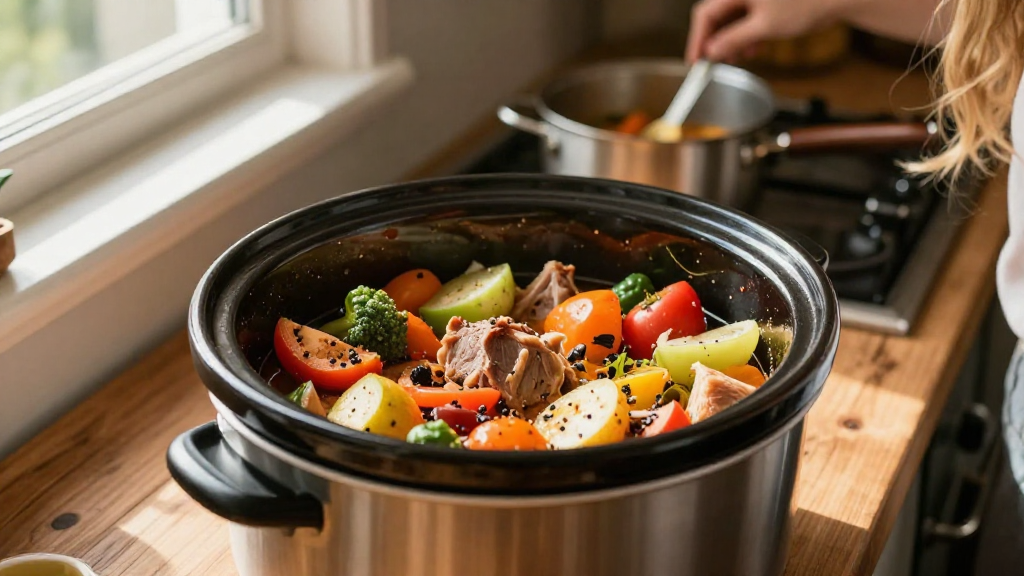
Have you ever wondered what happens if your slow cooker is too full? This common kitchen conundrum can lead to various culinary disasters.
In this article, we’ll explore the effects of overcrowding your slow cooker, how to determine the right amount of food to cook, and some tips to prevent any mishaps.
What Happens When You Overfill a Slow Cooker?
When you stuff your slow cooker beyond its capacity, several things can happen.
Here are some consequences to consider:
-
Cooking Time Changes:
– If you overload your slow cooker, the cooking time may increase significantly.
– The ingredients may not cook evenly or thoroughly. -
Doesn’t Reach Safe Temperatures:
– A tightly packed slow cooker can struggle to reach the recommended safe cooking temperatures.
– This can put you at risk for foodborne illnesses. -
Spills and Mess:
– Overcrowding can lead to overflow, causing food to bubble out of the cooker.
– This results in a mess that can be difficult to clean. -
Burning or Scorching:
– Ingredients at the bottom may scorch while others might remain undercooked.
– The separation of food can lead to uneven textures and flavors. -
Loss of Flavor and Texture:
– Certain ingredients might not cook properly or lose their intended taste.
– Overcooked items can become mushy, diminishing the dish’s overall appeal.
Why Does This Happen?
The potential issues with overfilling are primarily due to how a slow cooker operates.
A slow cooker uses moist heat to cook food evenly over an extended period. When overfilled, this process can be disrupted, leading to inconsistent results.
Moreover, the heat can take longer to circulate evenly when there’s too much food, leading to inadequate cooking.
How Full is Too Full?
To avoid the pitfalls associated with overfilling your slow cooker, it’s crucial to understand the ideal capacity.
What’s the Recommended Amount?
- Most slow cookers are designed to operate optimally when filled to two-thirds full.
- If you are cooking liquid dishes, such as soups or stews, you should fill the slow cooker only halfway.
What About Smaller Portions?
If your slow cooker is only partially filled, you can still successfully cook a meal.
You may want to adjust the cooking time or use a smaller slow cooker to avoid energy waste.
Tips for Proper Slow Cooker Use
To ensure your slow cooker works at its best without overfilling, here are some practical tips:
-
Use the Right Size Cooker:
– Select a slow cooker that aligns with the amount of food you typically make.
– A 4-quart slow cooker is usually sufficient for a family of four. Larger families may require a 6- or 7-quart model. -
Layer Ingredients Wisely:
– When cooking multiple ingredients, layer them properly.
– Harder vegetables should be placed at the bottom, while meats and soft vegetables can go on top. -
Avoid Overstuffing:
– Stick to the two-thirds guideline to prevent slow cooker mishaps.
– Remember that liquids expand during cooking; maintain extra space if you’re making soups or stews. -
Check the Recipe:
– Many slow cooker recipes specify the recommended capacity.
– Always adjust the ingredients according to the slow cooker size for best results. -
Use Less Liquid:
– Since slow cookers trap steam, you often need less liquid than conventional cooking methods.
– When using a slow cooker, start with a smaller amount of liquid and add more as needed.
What Should You Do If You’ve Overfilled?
If you’ve already filled your slow cooker beyond recommended limits, don’t panic!
Here are some steps you can take:
- Remove Excess Ingredients:
- If possible, take out some of the food before cooking begins.
-
This will help maintain proper cooking temperatures.
-
Switch to Stovetop:
-
If your slow cooker is already running with too much food, consider transferring it to a stovetop pot for even cooking.
-
Increase Cooking Time:
- Be prepared to extend the cooking time if the slow cooker is overly full.
- Check the internal temperature to ensure it’s safe.
What to Cook Safely in a Slow Cooker?
Now that you know what happens if your slow cooker is too full, it’s beneficial to be aware of what you can safely cook.
Popular Slow Cooker Dishes:
-
Soups and Stews:
– These dishes benefit from the longer cooking time and moisture. -
Meat with Vegetables:
– Ideally, layer tougher cuts of meat with heartier vegetables for delicious results. -
Chili and Casseroles:
– These meals work well, but should not exceed the cooker’s two-thirds capacity. -
Desserts:
– Slow cooker desserts, such as cakes or bread puddings, offer a unique twist and are generally safe when portioned correctly.
Final Thoughts
Understanding what happens if your slow cooker is too full can help avoid culinary disasters and maximize your cooking experience.
Always adhere to the recommended capacity, and don’t be afraid to make adjustments to ensure even cooking.
With these tips and tricks, you can relish delicious slow-cooked meals without the worry of overflowing or burnt dishes.
Remember to enjoy the cooking process and the delectable outcomes that the slow cooker can bring to your kitchen!