Choosing an espresso machine with flow control can make it easier to fine-tune extraction, manage challenging coffees, and build a more repeatable home espresso routine.
These 10 picks span dedicated flow-control machines, capable semi-automatic models, compact entry-level options, and feature-rich systems with PID temperature management and steam power.
Best 10 Espresso Machine with Flow Control Picks for 2026
Best for Advanced Home Baristas
Diletta Alto Flow Control (Black)

- Manual flow control with pressure gauge
- Dual boilers and PID temperature control
- Includes bottomless portafilter and shot timer
Best For: Experienced espresso enthusiasts exploring flow-profiling techniques
Best All-in-One Starter
Breville Barista Express (Stainless Steel)

- Built-in conical burr grinder
- Low-pressure pre-infusion and PID control
- Includes manual steam wand and accessories
Best For: Beginners wanting an integrated bean-to-cup setup
Best White Flow-Control Machine

- Manual flow control with group pressure gauge
- Dual boilers, PID, and shot timer
- White mid-century-modern stainless-steel finish
Best For: Experienced users wanting advanced control with a white finish
Best Black All-in-One Value
Breville Barista Express (Black Truffle)

- Integrated grinder with adjustable grind size
- PID temperature control and pre-infusion
- Manual steam wand and compact 67-ounce tank
Best For: Users wanting fresh grinding and hands-on preparation in one machine
Best Overall
Diletta Alto with Flow Control

- Manual flow control with group pressure gauge
- Dual boilers with PID temperature control
- Includes bottomless and standard portafilters
Best For: Hands-on home baristas who want extensive shot control
Best Budget-Friendly Option

- Fast Thermoblock temperature control
- Customizable single- and double-shot presets
- Adjustable frother in a compact design
Best For: Beginners seeking convenient everyday milk drinks
Best for Programmable Preinfusion
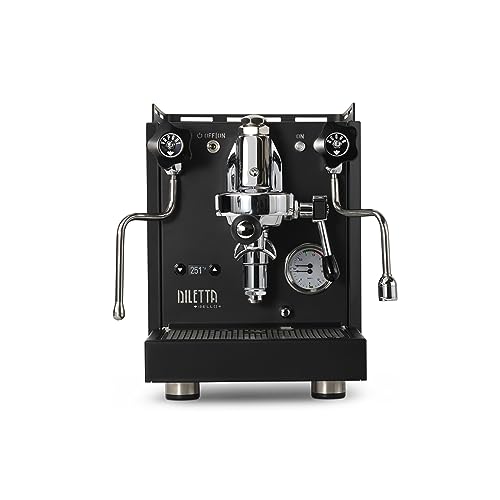
- Programmable passive preinfusion up to 10 seconds
- PID display doubles as a shot timer
- Manual controls and dual-boiler design
Best For: Experienced users refining extraction with preinfusion
Best Programmable Pick

- Adjustable temperature, pre-infusion, and brew time
- Dual display tracks pressure, temperature, and time
- Side lever and swivel wand support milk frothing
Best For: Home users who want detailed shot monitoring and adjustable brewing parameters
Best Compact Option
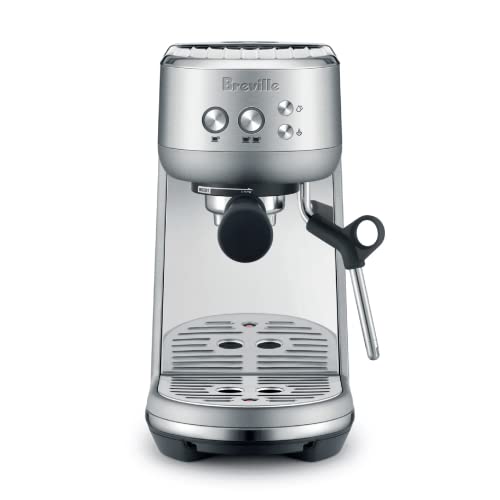
- Heats to extraction temperature in about three seconds
- Low-pressure pre-infusion supports balanced extraction
- Automatic steam wand creates adjustable microfoam
Best For: Compact kitchens and users who want fast startup with guided milk texturing
Best Cold-and-Hot Pick

- Makes hot espresso and cold coffee in one machine
- Adjustable temperature, pre-infusion, and brew time
- OPV pressure control helps reduce pressure spikes
Best For: Home users who want programmable espresso plus a cold coffee option
Best for Advanced Home Baristas – Diletta Alto Flow Control (Black)
The Diletta Alto is an espresso machine with flow control for home baristas who want to manually shape extraction. Its dual boilers, PID controls, shot timer, adjustable OPV, and 58mm portafilter support a more hands-on brewing workflow.
Best For: Experienced espresso enthusiasts exploring declining-flow and turbo-shot techniques.
Pros:
- Manual flow control and a group-mounted pressure gauge allow adjustment of flow to the puck.
- Dual boilers and PID controls separately manage brew and steam temperatures.
- Includes double and bottomless portafilters, multiple baskets, and a shot timer.
- Built by hand in Milan with a 3-liter capacity.
Cons:
- At 40 pounds and nearly 20 inches deep, it requires substantial counter space.
- The listed brew warm-up time is approximately 22 minutes.
- Its extensive manual controls may be more than beginners need.
The Alto is a strong fit when flow profiling is the priority. Its dual-boiler design and detailed controls make it a capable platform for experimentation, though the size and warm-up time suit a dedicated setup.
Best All-in-One Starter – Breville Barista Express (Stainless Steel)
The Breville Barista Express is an all-in-one espresso machine with flow control fundamentals rather than dedicated manual flow profiling. Its integrated conical burr grinder, low-pressure pre-infusion, PID temperature regulation, and manual steam wand simplify the path from whole beans to espresso.
Best For: Beginners and convenience-focused home baristas who want grinding, dosing, brewing, and steaming in one machine.
Pros:
- Integrated grinder delivers freshly ground coffee directly into the portafilter.
- Low-pressure pre-infusion gradually increases pressure for balanced extraction.
- PID temperature regulation supports consistent brewing temperature.
- Includes a steam wand, 54mm portafilter, trimming tool, tamper, and cleaning accessories.
Cons:
- It does not list a dedicated manual flow-control valve or flow gauge.
- The single-boiler-style all-in-one workflow is less specialized for simultaneous brewing and steaming than a dual-boiler machine.
- The included portafilter is smaller than the Diletta Alto’s 58mm format.
The Barista Express is better viewed as an accessible alternative for learning espresso fundamentals than as a true flow-profiling machine. Its grinder and straightforward controls make it practical for everyday drinks with less equipment.
Best White Flow-Control Machine – Diletta Alto (White)
The white Diletta Alto is an espresso machine with flow control that combines manual extraction adjustment with dual-boiler performance. Its front-mounted PID controls, shot timer, adjustable OPV, and 58mm portafilter give experienced users detailed control over brewing.
Best For: Home baristas who want advanced flow-control features in a white, mid-century-modern finish.
Pros:
- Flow-control valve and pressure gauge support manual adjustment at the group.
- Dedicated brew and steam boilers help separate brewing and steaming tasks.
- PID controls manage brew and steam temperatures, while the display functions as a shot timer.
- Includes bottomless and standard portafilters plus double and triple baskets.
Cons:
- The 40-pound body and 19.75-inch depth demand a spacious counter.
- Warm-up time is listed at about 22 minutes for brewing.
- Manual flow profiling features may be unnecessary for users seeking simple operation.
This model offers the same flow-profiling platform as the black Alto while adding a distinctive white exterior. It is a considered choice for enthusiasts who value extraction control, dual boilers, and matching kitchen aesthetics.
Best Black All-in-One Value – Breville Barista Express (Black Truffle)
The Breville Barista Express in Black Truffle is a practical alternative to an espresso machine with flow control for users focused on repeatable everyday brewing. It combines a built-in grinder, low-pressure pre-infusion, PID temperature regulation, adjustable grind settings, and manual milk steaming in one compact setup.
Best For: Home users who want fresh grinding and hands-on espresso preparation without a separate grinder.
Pros:
- Built-in conical burr grinder doses directly into the portafilter.
- Low-pressure pre-infusion helps gradually build extraction pressure.
- PID temperature regulation and adjustable grind size provide useful brewing control.
- Includes a manual steam wand, 54mm portafilter, tamper, trimming tool, and cleaning supplies.
Cons:
- It does not include the dedicated flow-control valve and gauge found on the Diletta Alto.
- Its 67-ounce water capacity is smaller than the Alto’s listed 3-liter capacity.
- Users seeking advanced flow profiling may outgrow its control set.
The Black Truffle Barista Express is suited to approachable, bean-to-cup preparation rather than precise flow profiling. Choose it for its integrated grinder and familiar manual workflow, especially when convenience matters more than dual-boiler performance.
Best Overall – Diletta Alto with Flow Control
The Diletta Alto is a strong choice if you want an espresso machine with flow control and the flexibility to manually shape extraction. Its dual boilers, PID temperature control, adjustable OPV, and shot timer support hands-on brewing, while the included bottomless portafilter helps experienced users refine technique.
Best For: Home baristas who want manual flow adjustment, stable temperature control, and dedicated brewing and steaming systems.
Pros:
- Manual flow control is built into the group with a pressure gauge.
- Dual boilers support separate brewing and steaming.
- PID controls and an integrated shot timer aid consistency.
- Includes both double and bottomless portafilters.
Cons:
- Its 22-minute brew warm-up requires advance planning.
- The 40-pound, 19.75-inch-deep design needs substantial counter space.
- Manual controls require more barista involvement than automatic machines.
Choose the Alto if flow profiling is central to your espresso routine. It costs more space and setup time than a compact machine, but its dual-boiler platform and manual adjustment offer substantial control for dialing in shots.
Best Budget-Friendly Option – De'Longhi Classic Signature
The De’Longhi Classic Signature is a compact, approachable option for everyday espresso drinks, but it is not an espresso machine with flow control. Its 15-bar pump, Thermoblock heating, preset single- and double-shot recipes, and adjustable steam wand favor convenience over manual flow profiling.
Best For: Beginners and households that prioritize simple espresso, cappuccino, and latte preparation in a compact design.
Pros:
- Thermoblock technology provides fast, stable temperature control.
- Customizable single- and double-shot presets simplify brewing.
- Adjustable steam wand supports steamed or frothed milk.
- Compact stainless-steel design fits smaller kitchens.
Cons:
- It does not provide manual flow-control adjustment.
- Its fully automatic operation offers less hands-on shot control.
- The machine uses a single thermoblock rather than dedicated brew and steam boilers.
This De’Longhi is worth considering when ease of use matters more than flow profiling. If adjustable extraction is a must-have, look to the Diletta models instead; for straightforward drinks and a smaller footprint, this is the more accessible choice.
Best for Programmable Preinfusion – Diletta Bello+
The Diletta Bello+ is a hands-on alternative for buyers comparing an espresso machine with flow control. It does not list a dedicated flow-control valve, but its E61 group, programmable passive preinfusion, PID control, shot timer, and manual operation provide useful tools for improving extraction consistency.
Best For: Experienced home baristas who want manual brewing controls, programmable preinfusion, and an Italian-made stainless-steel machine.
Pros:
- Programmable passive preinfusion can be set for up to 10 seconds.
- PID display also functions as a shot timer.
- Dual-boiler design is listed among its special features.
- Manual controls encourage direct control over brewing and steaming.
Cons:
- It does not list dedicated manual flow-control adjustment.
- Manual operation has a steeper learning curve for beginners.
- Its 17.75-inch depth still requires meaningful counter space.
The Bello+ is a good fit when preinfusion and traditional manual control matter more than a dedicated flow-control valve. For direct flow-rate adjustment, the Alto is the better match; for repeatable preinfusion, the Bello+ offers a focused feature set.
Best Programmable Pick – Gemilai Owl G3006
The Gemilai Owl G3006 is a practical choice if you want an espresso machine with flow control through adjustable pre-infusion, brew time, and temperature settings. Its dual display shows pressure, temperature, and extraction time, while the 58mm brewing system and PID temperature control support more repeatable shots.
Best For: Home users who want detailed shot monitoring and adjustable brewing parameters.
Pros:
- Adjustable temperature, pre-infusion time, and brewing time via touchscreen.
- Dual display provides real-time pressure, temperature, and time feedback.
- Includes a side steam lever, swivel wand, and dual-hole nozzle for milk frothing.
- Removable 57oz tank and detachable drip tray simplify routine maintenance.
Cons:
- Requires careful preheating and proper grind, dose, and tamping technique.
- Its larger 58mm commercial-style system may be more machine than beginners need.
With programmable extraction settings and live brewing information, the G3006 offers useful control for experimenting with different coffee beans. It is especially appealing to home baristas who want more feedback than a basic button-operated machine provides.
Best Compact Option – Breville Bambino
The Breville Bambino is a compact espresso machine with flow control features that include low-pressure pre-infusion and PID digital temperature regulation. It reaches extraction temperature in about three seconds, making it well suited to smaller kitchens where convenience and consistency matter.
Best For: Compact kitchens and users who want fast startup with guided milk texturing.
Pros:
- ThermoJet heating system reaches optimum extraction temperature in three seconds.
- Low-pressure pre-infusion helps draw flavors out more evenly.
- PID temperature regulation supports precise extraction temperature.
- Automatic steam wand allows adjustment of milk temperature and texture.
Cons:
- It does not provide the same on-machine pressure, temperature, and time display as the Gemilai models.
- The 54mm portafilter is smaller than the 58mm system used by the Gemilai G3006 models.
The Bambino prioritizes speed and a small footprint rather than extensive manual programming. Its pre-infusion, PID control, and automatic steam wand make it a straightforward option for everyday espresso drinks and milk-based beverages.
Best Cold-and-Hot Pick – Gemilai G3006A
The Gemilai G3006A stands out as an espresso machine with flow control for both hot and cold coffee preparation. Its touchscreen adjusts temperature, pre-infusion, and brew time, while dual PID control and an OPV pressure system are designed to support steadier extraction.
Best For: Home users who want programmable espresso plus a cold coffee option.
Pros:
- Supports hot espresso and cold brew-style extraction in one machine.
- Touchscreen settings include 176–215°F temperature, 0–30 seconds of pre-infusion, and 10–120 seconds of brew time.
- Dual display shows pressure, temperature, and extraction time while brewing.
- OPV pressure control is designed to reduce pressure spikes and uneven extraction.
Cons:
- Proper preheating, fresh coffee, fine grinding, and firm tamping remain important for good results.
- The 57oz tank and full feature set may take more counter space than a basic espresso maker.
The G3006A is the most versatile choice here for households that switch between hot espresso and cold coffee. Its programmable controls and pressure-management features give experienced users room to adjust recipes while remaining approachable for beginners learning to froth milk.
How We Picked the Best Espresso Machine with Flow Control
We selected machines across several use cases rather than treating flow control as the only deciding feature. The lineup includes dedicated flow-control models, machines with programmable preinfusion or adjustable brewing parameters, and simpler espresso makers for buyers who prioritize convenience or price.
We considered temperature management, pump and pressure controls, steam performance, workflow, water capacity, build style, and the level of hands-on adjustment each machine supports. We also looked for useful features such as shot timers, adjustable OPV systems, dual boilers, PID control, removable tanks, and accessible milk-frothing tools.
Quick Comparison
| Best For | Look For |
|---|---|
| Maximum extraction control | Dedicated flow control, adjustable OPV, PID, and a shot timer |
| Espresso and milk drinks | Strong steam performance, stable temperature, and practical workflow |
| Beginners | Simple controls, forgiving operation, and an accessible price |
| Small kitchens | Compact dimensions, quick heat-up, and a manageable water tank |
Key Buying Factors for an Espresso Machine with Flow Control
Flow and Pressure Adjustment
Flow control lets you alter how quickly water reaches the coffee puck during brewing. This can help manage light roasts, reduce channeling, and shape flavor across different stages of an extraction. Check whether the machine offers true manual flow adjustment or only preset pressure and preinfusion controls.
Temperature Stability
PID control helps maintain a more consistent brewing temperature, which is especially useful when dialing in coffee. Dual-boiler designs can improve workflow by separating brew and steam functions, while single-boiler machines may require waiting between tasks.
Steam Capability and Workflow
If you regularly make cappuccinos or lattes, evaluate steam power, wand movement, and recovery time. A machine with excellent espresso control may still feel inconvenient if it struggles to texture milk or requires lengthy pauses.
Ease of Use and Maintenance
Look for clear controls, a visible or timed shot interface, a removable water tank, and straightforward cleaning procedures. More adjustment usually means more learning and maintenance, so match the machine’s complexity to your willingness to practice.
Who Should Buy Which Espresso Machine with Flow Control?
Choose a dedicated flow-control model if you enjoy experimenting with recipes, rotating through different roasts, or pursuing greater control over extraction. A PID-equipped machine with a shot timer is a strong fit for buyers who want repeatability without relying entirely on guesswork.
Choose a dual-boiler or highly capable prosumer-style machine if you prepare several milk drinks in succession and want better brewing and steaming workflow. A compact semi-automatic model is more suitable for smaller kitchens, beginners, or anyone who values quick preparation over extensive manual control.
Finally, prioritize the grinder. Even the best Espresso Machine with Flow Control cannot compensate for inconsistent grinding, stale beans, or an improperly sized dose. Reserve part of your budget for a capable espresso grinder and a reliable scale.