Choosing an espresso machine with PID control can make it easier to brew more consistent shots by keeping water temperature steadier throughout extraction. The right model depends on whether you prioritize café-style control, an integrated grinder, compact size, or simple everyday operation.
These 10 picks cover capable home setups across several budgets and feature levels, from dual-PID machines to straightforward manual brewers and grinder-equipped options.
Best 10 Espresso Machine with Pid Control Picks for 2026
Best Dual-PID Versatility

- Dual PID control and live brewing data
- Hot and cold coffee modes
- Adjustable temperature, pre-infusion, and brew time
Best For: Experiment-focused home users who want hot and cold drink options
Best Integrated Grinder

- Built-in conical burr grinder
- PID temperature regulation
- Manual steam wand for microfoam
Best For: Home baristas seeking a bean-to-cup manual workflow
Best Programmable Compact Option

- Integrated grinder with programmable dosing
- Adjustable PID, pre-infusion, and shot volumes
- Hot espresso and cold coffee modes
Best For: Convenience-focused users who want customizable bean-to-cup brewing
Best Space-Saving Value

- Compact 7-inch-wide design
- PID control within ±2°C
- Fast heating and rotating milk frother
Best For: Small kitchens and offices needing simple PID-controlled brewing
Flexible Bean-to-Cup Control
AMZCHEF Grinder Espresso Machine

- 190°F–201°F adjustable temperature control
- 44 grind settings with integrated grinder
- Cold brew mode and milk-steaming wand
Best For: Home users seeking broad bean-to-cup control in one machine
Simple Manual Value
De'Longhi Stilosa Espresso Machine
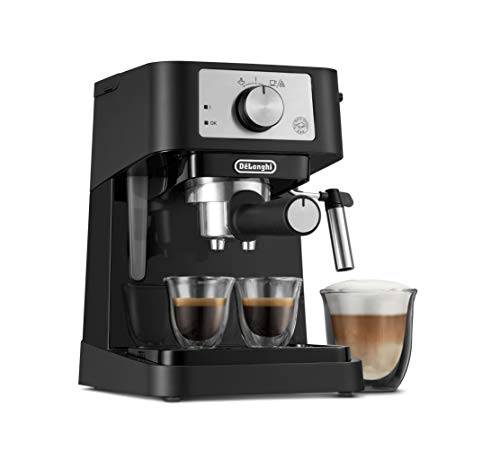
- Compact manual design with 15-bar pump
- Includes single- and double-shot filters
- Manual steam wand for milk drinks
Best For: Beginners who want an uncomplicated ground-coffee setup
Dedicated PID Brewing Control
AMZCHEF 20-Bar Espresso Machine

- Three-level PID control from 197°F–205°F
- 20-setting integrated grinder
- Adjustable 3–10-second pre-infusion
Best For: Home users prioritizing PID temperature adjustment and recipe control
Compact PID Starter
AMZCHEF Platinum Espresso Machine
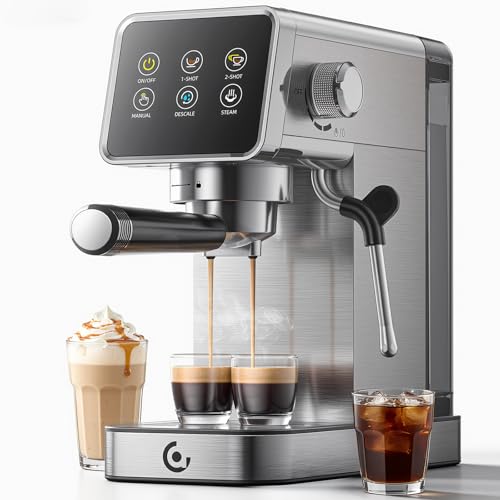
- PID control with touchscreen operation
- 44-ounce tank and self-cleaning function
- Manual 360-degree steam wand
Best For: Beginners and compact home coffee setups
Best Heavy-Duty Pick
Spacekey Espresso Machine with Grinder

- Built-in burr grinder with 30 settings
- PID control and pre-infusion system
- 61-ounce tank plus cold brew function
Best For: Fresh-bean brewing and versatile hot or iced drinks
Precision Dosing Choice
Espresso Machine with 44 Grind Settings

- 44 grind settings and 0.1-second dosing timer
- Three PID temperature presets
- Pre-infusion and anti-static grinding
Best For: Espresso enthusiasts focused on repeatable dialing in
Best Dual-PID Versatility – Gemilai G3006A
If you want an espresso machine with PID control that can handle both hot espresso and cold coffee, the Gemilai G3006A offers unusually broad control. Its dual PID system, adjustable pre-infusion, programmable brew time, and live pressure and temperature displays make it useful for experimenting with different beans and recipes.
Best For: Home users who want hot and cold brewing modes plus detailed shot controls.
Pros:
- Dual PID temperature control with adjustable brewing temperature from 176–215°F.
- Supports hot espresso and cold coffee, with programmable pre-infusion and brewing time.
- Dual display shows pressure, temperature, and extraction time during brewing.
- Includes a swivel steam wand, 57-ounce removable tank, and stable OPV pressure control.
Cons:
- Its extensive controls may take more time to learn than a basic button-operated machine.
- It uses ground coffee rather than an integrated grinder.
The G3006A is a strong choice when temperature stability and recipe adjustability matter more than simplicity. It is especially appealing for households that want one machine for espresso, milk drinks, and iced coffee.
Best Integrated Grinder – Breville Barista Express
The Breville Barista Express is a practical espresso machine with PID control for users who want a more complete bean-to-cup setup. Its integrated conical burr grinder, low-pressure pre-infusion, and digital temperature regulation help simplify the process while preserving room for manual dialing in.
Best For: Home baristas who want freshly ground coffee and hands-on control in one machine.
Pros:
- Integrated conical burr grinder doses freshly ground beans directly into the portafilter.
- PID temperature regulation supports precise espresso extraction.
- Low-pressure pre-infusion gradually builds pressure for more even extraction.
- Powerful steam wand produces hand-textured microfoam for lattes and cappuccinos.
Cons:
- The manual workflow requires grinding, dosing, tamping, and steaming skills.
- Its 54mm portafilter and single-boiler-style workflow may be less convenient for preparing several drinks in succession.
Choose the Barista Express if you value an established all-in-one workflow and want to learn traditional espresso techniques. The built-in grinder reduces equipment clutter, while the PID and manual controls support recipe refinement.
Best Programmable Compact Option – XIXUBX EM910
The XIXUBX EM910 is an espresso machine with PID control designed for users who want programmable settings without a separate grinder. It combines an integrated conical burr grinder with adjustable temperature, pre-infusion, shot volume, and steam settings, while its compact footprint suits kitchens and office coffee stations.
Best For: Users who want programmable bean-to-cup brewing with hot and cold drink options.
Pros:
- Integrated conical burr grinder with adjustable grind size and programmable single- or double-shot dosing.
- PID brewing temperature can be adjusted from 194–203°F, with programmable pre-infusion.
- Offers hot espresso and a 77°F cold coffee setting.
- Fast thermoblock heating reaches brewing temperature in under 30 seconds.
Cons:
- The 51mm portafilter is smaller than the 54mm portafilter supplied with the Breville Barista Express.
- Its programmable features may require setup and recipe testing before delivering consistent results.
The EM910 stands out for combining grinding, PID temperature control, programmable extraction, and cold coffee capability in a relatively compact machine. It is a sensible fit for convenience-minded users who still want control over recipes.
Best Space-Saving Value – AMZCHEF EM3131
For shoppers seeking an espresso machine with PID control in a compact format, the AMZCHEF EM3131 focuses on straightforward operation. Its PID system maintains temperature within a stated ±2°C range, while the 20-bar pump, rapid heating, and rotating steam wand cover the essentials for everyday espresso and milk drinks.
Best For: Apartment, office, and kitchen users who want a compact machine with simple controls.
Pros:
- Compact 7-inch-wide design is suitable for smaller counters.
- PID temperature control is specified to maintain water temperature within ±2°C.
- 1350W heating system reaches operating temperature in about 30 seconds.
- Rotating stainless steel frothing system supports lattes and cappuccinos.
Cons:
- It accepts ground coffee only and does not include an integrated grinder.
- The controls are simpler than those on machines with programmable temperature and pre-infusion settings.
- The supplied specifications list both a 50-ounce tank in the feature notes and a 40-fluid-ounce capacity in the details.
The EM3131 is best suited to buyers who prioritize a small footprint and easy operation over extensive manual programming. Its PID control adds temperature consistency to a relatively simple home espresso setup.
Flexible Bean-to-Cup Control – AMZCHEF Grinder Espresso Machine
If you want an espresso machine with PID control-style temperature adjustment plus an integrated grinder, this AMZCHEF model offers a broad set of brewing controls. Its 190°F–201°F temperature range, 44 grind settings, and one-touch operation make it suitable for experimenting with different beans while keeping preparation streamlined.
Best For: Home users who want an integrated grinder, adjustable brewing temperature, and simple one-touch preparation.
Pros:
- Adjustable 190°F–201°F precision temperature control for different roast levels.
- 44 grind settings support espresso, pour-over, cold brew, and other preparations.
- 1350W heating system and stainless steel steam wand for milk-based drinks.
- 60-ounce water tank, cold brew mode, descaling function, and touchscreen display.
Cons:
- The extensive settings may feel more involved for users seeking a basic espresso maker.
- Its integrated grinder and larger feature set may require more cleaning than a simple manual machine.
This is a versatile choice for households that want grinding, temperature adjustment, espresso, cold brew, and milk steaming in one appliance. The touchscreen and one-touch brewing improve convenience, while the wide grind range leaves room for recipe experimentation.
Simple Manual Value – De'Longhi Stilosa Espresso Machine
The De’Longhi Stilosa is a compact manual option for shoppers who want straightforward espresso and milk drinks rather than an espresso machine with PID control. It uses a dial interface, a 15-bar pump, and a manual steam wand, giving beginners a simple way to practice pulling single or double shots and texturing milk.
Best For: Beginners and budget-conscious users who prefer a compact, manual espresso setup.
Pros:
- Compact design with a removable 1000 ml water tank.
- Includes a portafilter, measuring scoop/tamper, and single- and double-shot filters.
- Manual steam wand supports lattes and cappuccinos.
- Stainless steel boiler is designed for long-term use.
Cons:
- It has manual operation and no listed PID temperature control.
- Requires ground coffee and a separate grinder if you use whole beans.
- Manual milk texturing takes practice.
The Stilosa keeps the workflow uncomplicated and compact, making it a practical entry point for espresso, Americano, latte, and cappuccino preparation. Choose it when ease of ownership and manual control matter more than integrated grinding or advanced temperature adjustment.
Dedicated PID Brewing Control – AMZCHEF 20-Bar Espresso Machine
For shoppers specifically seeking an espresso machine with PID control, this AMZCHEF model provides three temperature levels from 197°F to 205°F. It combines PID-assisted heat management with a built-in grinder, adjustable pre-infusion, and a steam wand, creating a flexible semi-automatic setup for dialing in espresso and milk drinks.
Best For: Home espresso drinkers who want integrated grinding, selectable PID temperature settings, and recipe adjustability.
Pros:
- Three-level PID control adjusts brewing temperature from 197°F to 205°F.
- Built-in grinder offers 20 settings for different beans and recipes.
- Selectable 3–10-second pre-infusion helps wet grounds more evenly.
- 20-bar pump, 1350W heating system, and steam wand support espresso and milk drinks.
Cons:
- Only 20 grind settings are provided, fewer than some integrated-grinder machines.
- As a semi-automatic machine, it still requires attention to grind, dose, and tamp.
- The feature-rich control system may have a learning curve for first-time users.
This is the strongest match in the group for buyers prioritizing explicit PID temperature control. Its three heat settings and adjustable pre-infusion provide useful tools for repeatability, while the integrated grinder and steam wand keep the full espresso workflow in one machine.
Compact PID Starter – AMZCHEF Platinum Espresso Machine
If you want an espresso machine with PID control for everyday drinks without adding a separate grinder, the AMZCHEF Platinum is a compact semi-automatic option. Its 1350W thermoblock, 44-ounce tank, touchscreen controls, and manual steam wand suit straightforward home brewing.
Best For: Beginners and households wanting compact espresso, lattes, and cappuccinos with simpler maintenance.
Pros:
- PID temperature control and touchscreen display support easier brewing control.
- 1350W heating system reaches operating temperature in under three minutes.
- 44-ounce removable tank supports multiple cups, while the self-cleaning function reduces routine cleanup.
- 360-degree manual steam wand offers control for milk texturing and latte art.
Cons:
- Uses ground coffee, so a separate grinder is needed for whole-bean brewing.
- Manual steaming requires practice to achieve consistent microfoam.
- The listed warranty details vary between the product bullets and specifications.
This AMZCHEF is a practical pick when compact size, PID control, and easy cleaning matter more than an integrated grinder. The 20-bar pump and manual wand give you room to develop basic barista skills.
Best Heavy-Duty Pick – Spacekey Espresso Machine with Grinder
This espresso machine with PID control combines a conical burr grinder, espresso brewer, and steam wand in one countertop unit. With 30 grind settings, pre-infusion, a 61-ounce tank, and a cold brew function, it is designed for varied home coffee routines.
Best For: Home baristas who want fresh grinding, adjustable extraction, and hot or iced drinks from one machine.
Pros:
- Built-in conical burr grinder provides 30 grind settings for dialing in different beans.
- PID temperature control and pre-infusion are designed to support more consistent extraction.
- Large 61-ounce removable water tank reduces frequent refilling.
- Steam wand and dedicated cold brew function expand the drink menu beyond espresso.
Cons:
- Integrated grinder adds more components to clean and maintain than a basic ground-coffee machine.
- Its 11.6-by-9-by-14-inch footprint may require careful counter planning.
- Includes a one-year limited warranty, shorter than some competing coverage claims.
The Spacekey offers strong convenience for users who do not want a separate grinder. Its PID system, pre-infusion, and wide grind adjustment range make it the more versatile choice for experimenting with beans and drink styles.
Precision Dosing Choice – Espresso Machine with 44 Grind Settings
For shoppers comparing an espresso machine with PID control and more granular grinding adjustments, this semi-automatic combo machine offers 44 settings, a 0.1-second dosing timer, and three selectable brewing temperatures. It also includes pre-infusion and a milk frother for café-style drinks.
Best For: Enthusiasts who want detailed control over grind size, dose timing, and brew temperature.
Pros:
- 44 grind settings and a 0.1-second timer support precise dialing in.
- Three PID temperature levels—194°F, 198°F, and 205°F—let you adjust heat to suit the beans.
- 20-bar pressure and pre-infusion are designed to promote balanced extraction and crema.
- Anti-static grinding, a dosing ring, and a bean hopper air blower help reduce mess.
Cons:
- The standard 51mm portafilter may feel limiting to users accustomed to professional 58mm equipment.
- The machine weighs 12.6 pounds and may take more counter space than a basic espresso maker.
- The supplied notes list only the coffee machine among the included components.
This model is aimed at users who value repeatability and fine adjustments. Its temperature presets and precise dosing features make it a compelling option for learning how small recipe changes affect espresso flavor.
How We Picked the Best Espresso Machine with Pid Control
We focused on features that have the greatest effect on home espresso quality and usability: temperature management, grinder capability, dose and grind adjustability, pump pressure, milk-frothing equipment, controls, cleaning demands, and overall footprint. We also included different machine styles so beginners, convenience-focused buyers, and hands-on enthusiasts can compare realistic alternatives.
Because product specifications and included accessories can vary by listing, confirm the current contents, dimensions, warranty, and operating instructions before buying.
Quick Comparison
- Best for temperature-focused brewing: Look for a model with clearly specified PID or dual-PID control and a temperature display.
- Best for an all-in-one setup: Choose a machine with an integrated burr grinder and multiple grind settings.
- Best for beginners: Prioritize intuitive controls, programmable settings, and a forgiving workflow.
- Best for small kitchens: Consider compact manual machines with separate coffee-grinding options.
- Best for milk drinks: Check the steam wand design, warm-up time, and room around the drip tray and portafilter.
Key Buying Factors for an Espresso Machine with Pid Control
Temperature Stability
PID control helps regulate brewing temperature, but implementation differs. A temperature display, adjustable settings, or dual-PID design can offer more control than a vague temperature-control claim. Stability matters most when you regularly switch between coffee styles or pursue precise extraction.
Built-In Grinder and Adjustability
An integrated grinder saves counter space and simplifies the workflow. Compare the number of grind settings, dose controls, hopper size, and ease of adjustment. More settings can help fine-tune extraction, but they do not replace fresh, quality beans or proper calibration.
Brewing and Steaming Workflow
A 15- or 20-bar pump rating does not automatically mean better espresso; consistent pressure and temperature are more important. Also consider whether the machine can brew and steam simultaneously, how quickly it heats, and whether the wand produces enough control for smooth microfoam.
Cleaning and Maintenance
Removable water tanks, accessible drip trays, cleaning programs, and descaling reminders make regular maintenance easier. Grinder-equipped machines require additional attention because retained grounds and oils can affect flavor over time.
Who Should Buy Which Espresso Machine with Pid Control?
Buy a dual-PID or display-equipped model if repeatability and hands-on temperature control are your main goals. Choose an integrated grinder model if you want a streamlined setup with fewer separate appliances. Choose a compact manual machine if low cost, small dimensions, and straightforward brewing matter more than automation.
For frequent cappuccino and latte drinkers, favor a machine with a capable manual steam wand and enough workspace for a proper milk pitcher. If you mainly drink Americanos or occasional espresso, simpler controls and a larger water reservoir may offer better value than advanced café features.