The right food dehydrator for backpacking can turn fresh fruit, vegetables, meat, and complete meals into lighter, shelf-stable trail food. The best choice balances drying performance with tray capacity, temperature control, cleanup, and the space available in your kitchen.
We compared 10 popular dehydrators with compact designs, stainless-steel trays, adjustable heat, timers, and capacities suited to different meal-prep habits. Use the guide below to narrow your options before choosing the model that best fits your backpacking routine.
Best 10 Food Dehydrator for Backpacking Picks for 2026
Best Adjustable Compact Option

- 95–165°F control in 1°F increments
- Five BPA-free trays; expandable to seven
- Quiet operation below 47 dB
Best For: Precise small-to-medium batches of trail food
Best Lightweight Small-Batch Pick

- Lightweight 3.9-pound design
- Five adjustable BPA-free trays
- Up to 72 hours of operation
Best For: Solo users and compact-space dehydration
Best Large-Batch Choice
Cosori 6-Tray Stainless Steel Dehydrator

- 6.5 square feet of drying space
- 600W motor with horizontal airflow
- Six stainless steel trays and 48-hour timer
Best For: Large home batches before group or extended trips
Best Simple Dial-Control Model
Elite Gourmet 5-Tray Dehydrator
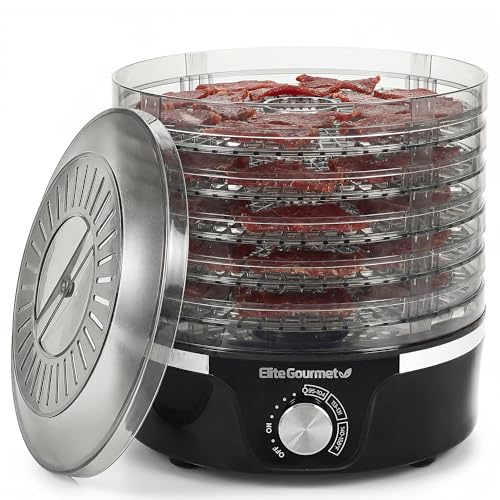
- Compact 4.6-pound design
- Five adjustable BPA-free trays
- Simple 95–158°F temperature dial
Best For: Straightforward small-batch jerky and snack preparation
High-Capacity Pick
Magic Mill Pro 10-Tray Dehydrator

- 10 stainless steel trays for batch drying
- Rear fan supports even heat distribution
- Timer, auto shutoff, and keep-warm function
Best For: Preparing large batches of trail food at home
Most Versatile
Cosori 5-Tray Stainless Steel Dehydrator
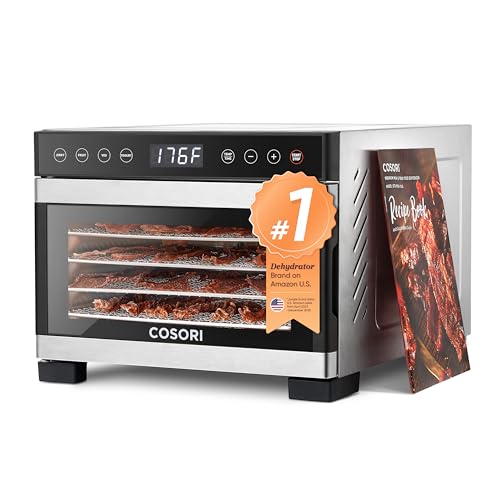
- 95–176°F control in one-degree increments
- Four presets for common foods
- Compact design with 3.1 square feet of space
Best For: Flexible, countertop trail-food preparation
Compact Value
Magic Mill 5-Tray Food Dehydrator
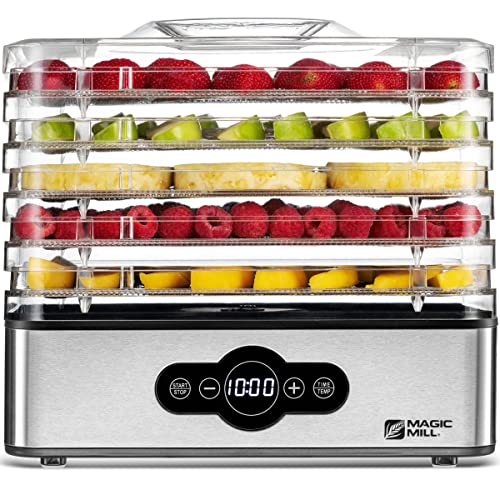
- Five adjustable stainless steel trays
- 48-hour timer with controls up to 167°F
- Compact and relatively lightweight design
Best For: Small-batch trail snacks and limited kitchen storage
Best Compact Pick

- 4.2-pound compact design
- 95–160°F control with 48-hour timer
- Adjustable stainless steel trays
Best For: Small-batch backpacking snacks and meal ingredients
Best High-Capacity Value
8-Tray Stainless Steel Food Dehydrator

- Eight full-size stainless steel trays
- 650W motor with 48-hour timer
- Mesh and drip trays included
Best For: Preparing large batches of trail food
Best Temperature Range
Rosewill 8-Tray Food Dehydrator

- 95–195°F temperature control
- Eight stainless steel trays
- Keep warm and auto shutoff functions
Best For: Flexible, high-volume backpacking meal prep
Best Adjustable Compact Option – Cosori 5-Tray Food Dehydrator
For backpackers who want precise control without a bulky appliance, this Cosori food dehydrator for backpacking offers five BPA-free trays, a 95–165°F temperature range, and a timer that runs for up to 48 hours. Its adjustable tray heights can accommodate thicker ingredients, while the compact 4.9-pound design is relatively manageable for storage before a trip.
Best For: Backpackers preparing jerky, fruit, herbs, vegetables, or dog treats in small-to-medium batches.
Pros:
- Precise temperature adjustment in 1°F increments from 95–165°F
- Five BPA-free trays with room to expand to seven
- Quiet operation rated below 47 dB
- Adjustable tray heights and included recipe book
Cons:
- Its 12.2-inch round footprint may still require dedicated storage space
- Only five trays are included, with additional trays sold separately
This is a versatile choice when temperature precision and quiet operation matter. The 350W motor and moderate capacity make it better suited to personal or small-group trail-food preparation than very large batches.
Best Lightweight Small-Batch Pick – Compact 5-Tray Dehydrator
This compact food dehydrator for backpacking is designed for limited spaces such as apartments, dorms, RVs, and small kitchens. It weighs 3.9 pounds, uses a 250W heating system, and includes five height-adjustable BPA-free trays for practical batches of fruit, jerky, herbs, vegetables, or pet treats.
Best For: Solo backpackers and beginners who prioritize a lighter, space-saving dehydrator for modest quantities.
Pros:
- Lightest listed option at 3.9 pounds
- Five transparent, height-adjustable BPA-free trays
- Temperature control from 95–158°F with up to 72 hours of operation
- Dishwasher-safe trays and straightforward knob controls
Cons:
- 250W output is intended for small-batch use
- Temperature range tops out at 158°F
- Its compact capacity may not suit group-sized meal preparation
With the lowest weight and longest stated operating time in this group, this model is appealing for simple, occasional dehydration. Its manual controls keep operation approachable, though the smaller format limits batch size.
Best Large-Batch Choice – Cosori 6-Tray Stainless Steel Dehydrator
For preparing substantial quantities of trail food, this Cosori food dehydrator for backpacking provides six stainless steel trays and 6.5 square feet of drying space. Its 600W motor, rear-mounted fan, horizontal airflow, and 95–165°F digital control are built for even, hands-off drying, although the 18.1-pound weight makes it primarily a home-based prep tool.
Best For: Backpackers or groups who dehydrate large batches at home before extended trips.
Pros:
- Large 6.5-square-foot drying area across six stainless steel trays
- 600W motor and horizontal airflow support even drying
- Digital temperature control from 95–165°F and a 48-hour timer
- Includes a mesh screen, fruit roll sheet, and recipe book
Cons:
- At 18.1 pounds, it is not practical for carrying on the trail
- Larger 17.8-by-13.4-by-12.4-inch dimensions require significant storage space
- Higher 600W power draw than the smaller models
This is the strongest batch-prep option for multi-day or group trips. Its capacity and stainless steel construction are useful at home, but its size and weight rule it out as a portable backpacking appliance.
Best Simple Dial-Control Model – Elite Gourmet 5-Tray Dehydrator
The Elite Gourmet food dehydrator for backpacking keeps preparation simple with a temperature dial, five clear BPA-free trays, and a compact 4.6-pound body. Its 350W heating system covers 95–158°F, while expandable tray height accommodates thicker cuts for fruit, vegetables, herbs, mushrooms, and jerky.
Best For: Backpackers who want an uncomplicated, compact dehydrator for routine snack and jerky preparation.
Pros:
- Compact 11.61-inch footprint and 4.6-pound weight
- Five transparent BPA-free trays with expandable stacking height
- Simple adjustable temperature dial from 95–158°F
- Dishwasher-safe removable trays and lid
Cons:
- No digital temperature display; the blue light only indicates power
- Temperature range tops out at 158°F
- One-year warranty is shorter than some competing options listed
This model is a practical fit for users who value simple controls over advanced programming. Its compact size supports small-batch home preparation, while the adjustable tray height adds flexibility for thicker foods.
High-Capacity Pick – Magic Mill Pro 10-Tray Dehydrator
For backpackers preparing meals, jerky, fruit, or trail snacks in larger batches, this food dehydrator for backpacking offers 10 stainless steel trays and a 600-watt heating system. Its rear-mounted fan is designed to distribute heat evenly, while the digital timer and adjustable temperature control simplify unattended drying.
Best For: Batch-prepping varied trail foods before extended trips.
Pros:
- Ten adjustable stainless steel trays provide substantial capacity.
- Rear-mounted fan promotes even drying without routinely rotating shelves.
- Digital timer includes automatic shutoff and a keep-warm function.
- Includes mesh trays and fruit leather sheets for smaller foods and purées.
Cons:
- At 14 pounds, it is better for home preparation than carrying on the trail.
- The 15.5-by-11.5-by-14-inch footprint requires considerable storage space.
This is a practical choice when backpacking food preparation volume matters more than portability. Dishwasher-safe trays and a transparent door make it easier to monitor and clean after a large drying session.
Most Versatile – Cosori 5-Tray Stainless Steel Dehydrator
The Cosori is a well-balanced food dehydrator for backpacking meal prep, combining a compact countertop design with 3.1 square feet of drying space. Its 95–176°F range, one-degree adjustments, rear fan, and dedicated presets make it useful for jerky, fruit, vegetables, and other trail ingredients.
Best For: Backpackers who want flexible controls and a relatively compact prep appliance.
Pros:
- Five stainless steel trays provide 3.1 square feet of drying space.
- Temperature adjusts from 95–176°F in one-degree increments.
- Four presets cover jerky, fruit, vegetables, and yogurt.
- Includes a mesh screen, fruit roll sheet, cookbook, and two-year warranty.
Cons:
- Its five-tray capacity is lower than larger multi-tray models.
- At 10.8 pounds, it is intended for countertop use rather than carrying in a backpack.
With horizontal airflow and no plastic contact with food, this model offers a straightforward way to prepare customized dried meals and snacks before a trip. Its compact dimensions make it easier to fit into a home kitchen than full-size alternatives.
Compact Value – Magic Mill 5-Tray Food Dehydrator
For occasional backpacking meal prep, this compact food dehydrator for backpacking provides five stackable stainless steel trays, a 48-hour timer, and adjustable temperature settings up to 167°F. Its 240-watt design is suited to drying fruits, vegetables, herbs, and jerky without taking up much countertop space.
Best For: Budget-conscious users preparing smaller batches of lightweight trail food.
Pros:
- Five adjustable trays can accommodate standard or thicker-cut ingredients.
- 48-hour digital timer and touch controls simplify operation.
- Stainless steel food-grade trays are detachable and dishwasher-safe.
- Compact 8.5-by-11.8-by-11-inch design uses less counter space.
Cons:
- Its five-tray capacity is limited for large meal-preparation sessions.
- The supplied details list a 158°F temperature specification despite the advertised control range reaching 167°F.
This model makes sense when storage space and purchase cost are priorities. The adjustable tray height is particularly useful for thicker slices, while the lighter 2.75-kilogram body is easier to move around the kitchen than the larger options.
Best Compact Pick – OSTBA 5-Tray Food Dehydrator
If you want a compact food dehydrator for backpacking meal prep, the OSTBA offers a practical balance of capacity, control, and portability. Its five stainless steel trays, adjustable temperature range, and 4.2-pound weight make it suitable for preparing dried fruit, vegetables, herbs, and jerky before a trip.
Best For: Backpackers who want a relatively lightweight dehydrator for small-batch trail snacks and ingredients.
Pros:
- Lightweight 4.2-pound design with a compact footprint.
- Adjustable 95–160°F temperature range and 1–48 hour timer.
- Five rust-resistant stainless steel trays with adjustable spacing.
- Dishwasher-safe removable trays and included recipe book.
Cons:
- Five trays provide less batch capacity than the larger eight-tray models.
- Its maximum temperature is lower than the Rosewill model.
The OSTBA is a sensible choice when storage space and carrying weight matter more than maximum throughput. It is especially appealing for preparing modest quantities of backpacking food at home.
Best High-Capacity Value – 8-Tray Stainless Steel Food Dehydrator
For backpackers who prepare multiple meals or snacks at once, this eight-tray food dehydrator for backpacking offers substantial batch capacity. The 650W motor, temperature control up to 167°F, and included mesh and drip trays support a wide range of ingredients.
Best For: Large-batch prep of jerky, fruit, herbs, and other trail foods.
Pros:
- Eight stainless steel trays provide ample drying capacity.
- Powerful 650W motor supports fast, even drying.
- Includes a mesh tray for small foods and a drip tray for juicy foods.
- 48-hour timer, auto shut-off, interior light, and quiet operation.
Cons:
- Its listed dimensions indicate a larger countertop footprint than the OSTBA.
- The supplied notes do not list the unit’s weight, making portability harder to assess.
This model stands out for efficient home preparation before a backpacking trip. Its accessory set and eight-tray capacity reduce the need to run multiple batches, though buyers prioritizing packability should confirm its overall size and weight.
Best Temperature Range – Rosewill 8-Tray Food Dehydrator
The Rosewill is a versatile food dehydrator for backpacking meal preparation, particularly when recipes call for a broad range of temperatures. Its eight stainless steel trays, rear-fan airflow system, 48-hour timer, and 95–195°F control accommodate everything from herbs and fruit to meat and jerky.
Best For: Experienced meal preppers who want high capacity and flexible temperature control for varied trail foods.
Pros:
- Wide 95–195°F temperature range supports varied recipes.
- Eight large stainless steel trays enable bigger batches.
- Includes mesh and fruit-leather tray options for different ingredients.
- 48-hour timer, keep-warm function, and automatic shutoff.
Cons:
- At 14.7 pounds, it is substantially heavier than the OSTBA.
- Its 12 × 12.8 × 12.6-inch size may require more storage space.
The Rosewill is best viewed as a capable home-base dehydrator rather than a portable appliance. Choose it if temperature flexibility and batch size are more important than minimizing the equipment footprint.
How We Picked the Best Food Dehydrator for Backpacking
We focused on features that matter when preparing lightweight trail food: usable drying area, temperature range, airflow design, controls, cleanup, and overall practicality. The lineup includes compact five-tray models for occasional use, larger units for batch cooking, and machines with stainless-steel trays for durability and easier long-term maintenance.
Because backpacking food often includes several ingredients with different drying requirements, adjustable temperature control was an important consideration. Timer functions, transparent trays or doors, stackability, and keep-warm settings also helped distinguish convenient models from more basic options.
Quick Comparison
| Best for | What to prioritize | Recommended capacity |
|---|---|---|
| Occasional weekend trips | Compact footprint, simple controls, easy storage | Five trays |
| Frequent meal prep | Consistent airflow, adjustable heat, timer | Five to eight trays |
| Large-batch drying | Maximum drying area and durable trays | Eight to 10 trays |
| Jerky and meat | Higher heat range, even airflow, washable trays | Five or more trays |
Key Buying Factors for a Food Dehydrator for Backpacking
Capacity and Kitchen Space
More trays let you prepare complete meals or several ingredients at once, but they also increase the appliance’s footprint and storage demands. A five-tray unit is often enough for one or two backpackers, while eight- or 10-tray machines make more sense for group trips or regular bulk preparation.
Temperature Control and Airflow
Look for adjustable settings that support delicate herbs and fruit as well as meat and dense foods. Rear-mounted fans can improve air circulation and reduce the need to rotate trays, although food should still be spread evenly and trays checked during longer cycles.
Timers, Noise, and Energy Use
A timer is useful when drying overnight or while you are away from home. Wattage gives a rough indication of power demand, but drying time, load size, and airflow also affect efficiency. If the dehydrator will run in a shared living space, consider fan noise and whether the controls are easy to read.
Tray Material and Cleanup
Stainless-steel trays are durable and well suited to frequent use. BPA-free plastic trays can be lighter and more affordable. Removable trays, washable liners, and dishwasher-safe components simplify cleanup after sticky fruit or seasoned meals.
Who Should Buy Which Food Dehydrator for Backpacking?
Choose a compact five-tray model if you are new to dehydrating, have limited counter space, or mainly prepare snacks for short trips. Choose a stainless-steel model if durability, odor resistance, and repeated use matter more than the lowest price. Choose an eight- or 10-tray dehydrator for family-sized batches, group backpacking trips, or frequent meal preparation.
For jerky, prioritize a model with a sufficiently high temperature setting and strong, even airflow. For lightweight backpacking meals, prioritize usable capacity, reliable low-temperature control, and easy cleanup. Whichever model you choose, follow the manufacturer’s food-safety guidance and store fully dried food in airtight packaging before taking it on the trail.