Consistent proofing can make the difference between dense, under-risen dough and loaves with better volume and texture. The best bread proofing boxes for home bakers provide a warmer, more stable environment than a typical kitchen counter.
This roundup compares temperature-controlled proofers, foldable boxes, and simple lidded containers for sourdough, pizza dough, and everyday bread baking.
Best 10 Bread Proofing Boxes for Home Bakers Picks for 2026
Best Overall
Folding Bread Proofing Box with Precise Temperature Control
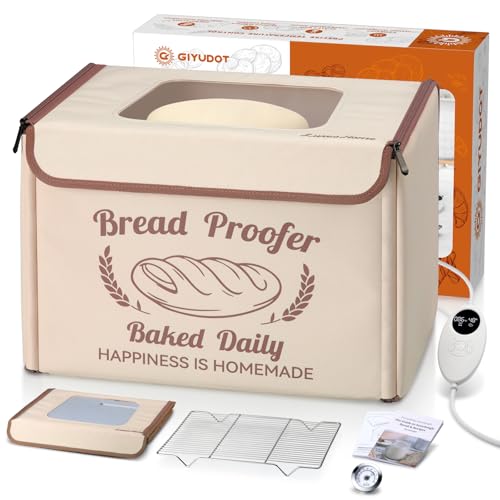
- 50–113°F temperature range with a 48-hour timer
- 36-liter interior with viewing window
- Folds flat and includes rack, humidor, and recipes
Best For: Home bakers wanting controlled, spacious, foldable proofing
Best Budget Option
Vababa 2-Pack Pizza Dough Proofing Boxes

- Includes two 16-liter BPA-free plastic boxes
- Fits most household refrigerator shelves
- Clip-on lids help retain moisture
Best For: Refrigerator proofing and storing multiple dough balls
Best Starter Kit
Folding Sourdough Proofer with Baking Accessories

- 68–131°F control with a 99-hour timer
- Includes basket, lame, scraper, rack, and recipes
- Folds flat for storage or travel
Best For: New sourdough bakers wanting an all-in-one setup
Best for Batch Baking
Commercial-Grade Pizza Dough Proofing Boxes
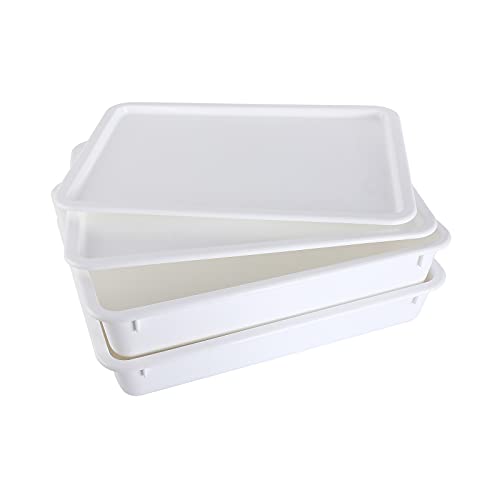
- Two 17.25-by-13-inch trays with covers
- Stackable BPA-free plastic construction
- Designed for covered pizza and bread dough storage
Best For: Batch pizza dough proofing and space-saving tray storage
Best Climate-Controlled Pick
CasaChic 2-Story Bread Proofing Box

- 70–158°F control with 48-hour timer
- Two racks and dual viewing windows
- Humidity gauge and fold-flat design
Best For: High-volume sourdough baking and cold kitchens
Best Compact Warmer
KomBella Foldable Bread Proofing Box

- 68–122°F control with 48-hour timer
- Three-sided heating and five-layer insulation
- Folds to 2.5 inches thick for storage
Best For: Space-conscious bakers and cooler-room fermentation
Best All-Rounder
FOHERE Folding Bread Proofing Box

- 32–113°F temperature range
- 0–48-hour timer for long ferments
- 34-liter collapsible design
Best For: Versatile home fermentation and sourdough baking
Best Extra-Large Option
Folding Dough Proofer with XL Window
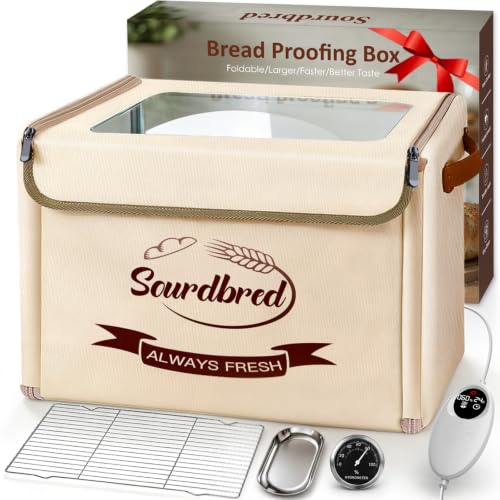
- 16.5 × 12 × 12-inch interior
- Three heating areas
- Folds to about 2 inches
Best For: Large batches and compact kitchen storage
Best Overall – Folding Bread Proofing Box with Precise Temperature Control
For home bakers comparing bread proofing boxes for home bakers, this folding model offers a useful balance of controlled warmth, capacity, and storage convenience. Its 50–113°F range, 48-hour timer, viewing window, and included rack make it adaptable for sourdough, pizza dough, and other fermentation projects.
Best For: Home bakers who want temperature-controlled proofing with a relatively spacious, foldable design.
Pros:
- Three heating zones and an NTC sensor help maintain consistent temperatures.
- 36-liter interior accommodates multiple dough batches.
- Folds for compact storage and includes a stainless steel rack, humidor, and recipes.
- Transparent viewing window lets you monitor dough without opening the box.
Cons:
- Requires an electrical outlet and has a 65-watt power rating.
- The 50–113°F range is narrower than some proofing models.
- Its fabric-based construction may require more careful handling than rigid plastic boxes.
Choose this model if consistent, adjustable warmth and fold-flat storage matter more than having a rigid container. The included humidity accessory and recipe guide add useful value for beginners and sourdough-focused bakers.
Best Budget Option – Vababa 2-Pack Pizza Dough Proofing Boxes
Among bread proofing boxes for home bakers, the Vababa set is a straightforward choice for cold proofing and covered dough storage rather than active temperature control. The two clear, BPA-free plastic boxes fit most household refrigerator shelves and can hold several dough balls each.
Best For: Bakers who prefer simple refrigerator proofing and need multiple reusable containers.
Pros:
- Two 16-liter boxes provide flexible capacity for separate dough batches.
- Clear plastic makes contents easy to see at a glance.
- Clip-on lids are designed to fasten tightly and help retain moisture.
- Suitable for dough, pizza crusts, marinating, and general food storage.
Cons:
- There is no built-in heating or temperature control.
- The 5.7-inch height may limit taller dough preparations.
- Hand washing is not specified as a care requirement, so cleaning may be less convenient than with dishwasher-safe containers.
This set makes sense when your refrigerator supplies the temperature control and you mainly need covered containers for dough balls. It is less suitable for bakers seeking a warm, programmable proofing environment.
Best Starter Kit – Folding Sourdough Proofer with Baking Accessories
This folding model stands out among bread proofing boxes for home bakers by combining a heated proofing chamber with several sourdough tools. It offers a 68–131°F temperature range, a 99-hour timer, and three heating zones, while the included basket, lame, scraper, and rack help you begin baking with fewer extra purchases.
Best For: New or returning sourdough bakers who want a heated proofer and basic shaping and scoring accessories in one package.
Pros:
- Adjustable 68–131°F temperature range and timer up to 99 hours.
- Three heating zones and layered insulation support even warming.
- Includes a 9-inch silicone basket, five-blade lame, scraper, metal rack, and recipes.
- Folds flat for cabinet storage or travel.
Cons:
- The supplied notes do not list a precise internal capacity.
- Its higher temperature range may be more than needed for basic dough proofing.
- Users must add water separately when they want humidity control.
This is a practical package for anyone building a sourdough setup from scratch. The accessories improve its ready-to-use value, while the foldable construction keeps the equipment manageable in a smaller kitchen.
Best for Batch Baking – Commercial-Grade Pizza Dough Proofing Boxes
For bakers who need simple batch organization, these commercial-style bread proofing boxes for home bakers provide two stackable plastic trays with covers. They do not heat dough, but their generous 17.25-by-13-inch footprint and durable BPA-free construction are well suited to covered refrigerator proofing and pizza preparation.
Best For: Home pizza makers and small-scale batch bakers who want stackable, covered dough trays.
Pros:
- Two large trays provide room for multiple dough portions.
- Stackable design saves space when trays are in use or stored.
- BPA-free food-grade plastic is designed for repeated kitchen use.
- Covers help protect dough while it rests.
Cons:
- No heating, timer, or temperature control is included.
- Hand wash only according to the supplied care instructions.
- The 3.54-inch height may not suit dough that needs substantial vertical clearance.
This set is a strong fit for organized cold proofing and pizza workflows, especially when you value sturdy stackable trays. Choose a heated proofer instead if your kitchen is cold or you need programmable fermentation conditions.
Best Climate-Controlled Pick – CasaChic 2-Story Bread Proofing Box
For home bakers comparing bread proofing boxes for home bakers, the CasaChic stands out with adjustable 70–158°F temperature control, humidity monitoring, and a water tray. Its two-story layout is useful when you want to proof multiple loaves, pans, or containers in a controlled environment.
Best For: Sourdough bakers who need large capacity, broad temperature control, and dependable proofing during cold-weather baking.
Pros:
- Wide 70–158°F temperature range with a 48-hour timer.
- Two removable racks provide a two-tier proofing layout.
- Humidity gauge, water tray, and dual viewing windows support closer monitoring.
- Folds flat for more convenient storage.
Cons:
- Its 16-by-18-inch footprint may be substantial for smaller counters.
- At 200 watts, it may use more power than smaller proofing setups.
The CasaChic is the most feature-rich option here for bakers who regularly manage multiple doughs or want finer control over warmth and humidity. The two-story design adds useful capacity, while the collapsible construction helps offset its larger operating size.
Best Dough Container – 5-Quart Stackable Dough Proofing Container
Among bread proofing boxes for home bakers, this 5-quart container takes a simpler approach: it gives dough a covered, trackable space for mixing, folding, and rising. The translucent walls and volume markings make it easier to follow fermentation without repeatedly lifting the lid.
Best For: Bakers who prefer a straightforward dough container for refrigerator storage, stretch-and-fold work, and proofing up to 6.6 pounds of dough.
Pros:
- 5-quart capacity holds up to 6.6 pounds of dough or six dough balls.
- Volume markings and translucent walls help monitor growth.
- Sealing lid helps retain moisture and reduce surface drying.
- Stackable polypropylene design is intended for refrigerators and proofing boxes.
Cons:
- This is a container, not a heated proofing chamber.
- The listing supplies one container, so larger batches may require additional units.
This container is a practical choice when your priority is organized dough handling rather than active temperature control. Its wide base supports folds, while the lid and stackable shape make it useful for both room-temperature fermentation and refrigerator storage.
Best Compact Warmer – KomBella Foldable Bread Proofing Box
For shoppers seeking bread proofing boxes for home bakers that balance controlled warmth with easy storage, the KomBella offers 68–122°F temperature control and a 48-hour timer. Its three-sided heating system and insulated fabric construction are designed to support more even fermentation in cooler rooms.
Best For: Home bakers who want a foldable, moderately sized proofer for sourdough, pizza dough, yogurt, or other fermentation projects.
Pros:
- NTC sensor maintains a 68–122°F range with a 0–48-hour timer.
- Three-sided heating helps reduce cold spots.
- Approximately 37-liter capacity accommodates several dough pieces.
- Folds to about 2.5 inches thick and includes a securing strap.
Cons:
- Its maximum temperature is lower than the CasaChic’s.
- The fabric construction may provide less rigid support than a hard-sided chamber.
- Only one metal rack is specified in the supplied details.
The KomBella is a sensible middle ground for bakers who need active proofing heat but do not want a permanently bulky appliance. Its insulation, viewing window, and fold-flat profile make it especially appealing for smaller kitchens and seasonal baking.
Best All-Rounder – FOHERE Folding Bread Proofing Box
For home bakers comparing bread proofing boxes for home bakers, the FOHERE stands out for its broad 32–113°F temperature range, long timer, and collapsible 34-liter design. It can support sourdough, pizza dough, yogurt, kombucha, and other fermentation projects while fitting more easily into a small kitchen than a rigid proofer.
Best For: Home bakers who want flexible temperature and timing controls for multiple fermentation tasks.
Pros:
- 32–113°F temperature range supports both cool and warmer fermentation.
- 0–48-hour timer suits long sourdough recipes.
- 34-liter interior accommodates one mixing bowl and four small jars.
- Folding design, viewing window, and waterproof liner simplify storage and cleanup.
Cons:
- Hand-wash care may require more attention than a removable machine-washable liner.
- The listed temperature range may not suit bakers seeking temperatures above 113°F.
The FOHERE is a practical pick when versatility and storage efficiency matter most. Its combination of a wide low-to-moderate temperature range, extended timer, and clear viewing window makes it especially useful for routine sourdough baking and occasional fermentation projects.
Best for Long Fermentation – LIFVCNT 99-Hour Dough Proofer
Among bread proofing boxes for home bakers, this foldable LIFVCNT model is geared toward extended fermentation and stable warming. Its 68–132°F controls, 0–99-hour timer, dual heating zones, and included rack and water tray give bakers a more structured setup for sourdough, pizza dough, yogurt, and kombucha.
Best For: Bakers who regularly use long fermentation schedules and want included humidity accessories.
Pros:
- 0–99-hour timer provides the longest timing range of the three options.
- 68–132°F temperature control covers standard proofing and warmer applications.
- Includes a metal rack and water tray for a ready-to-use setup.
- Seven-layer insulation and a front viewing window support stable, low-disturbance proofing.
Cons:
- The 68°F minimum is less suitable for cooler fermentation than models with lower settings.
- Its rectangular footprint is still sizable at 15.94 by 11.81 by 11.61 inches when set up.
This is the strongest choice for bakers who value timer range and warmer temperature capability. Choose it over the lower-temperature options if your recipes benefit from extended unattended fermentation or you want a metal rack and water tray included.
Best Extra-Large Option – Folding Dough Proofer with XL Window
This extra-large option is a useful contender among bread proofing boxes for home bakers who need generous interior space without giving up compact storage. It uses front, back, and bottom heating areas, includes a rack and water tray, and folds to about two inches thick for storage in a drawer or cabinet.
Best For: Bakers proofing larger dough batches or multiple containers in a space-conscious kitchen.
Pros:
- Large 16.5 by 12 by 12-inch interior accommodates one large bowl and four large bottles.
- Three heating areas are designed for fast, stable warming.
- 66–108°F control and a 1–48-hour timer cover common proofing needs.
- Extra-large viewing window, metal rack, and water tray improve usability.
Cons:
- Its maximum setting of 108°F is lower than the other two models.
- The 1-hour minimum timer does not support timer settings below one hour.
- At 2.34 kg, it is heavier than the listed LIFVCNT model.
Choose this model when capacity and storage are higher priorities than the widest temperature range. The XL viewing window and slim folded profile are particularly appealing for bakers who want to monitor sizable batches while keeping the proofer easy to put away.
How We Picked the Best Bread Proofing Boxes for Home Bakers
We focused on the features that matter during fermentation: usable temperature range, timer controls, interior capacity, temperature stability, cleanup, storage, and versatility. The selection includes electrically heated proofing boxes as well as passive containers, so you can match the design to your baking routine and budget.
We also considered practical details such as included racks, water trays, covers, baskets, lids, and folding construction. These accessories can affect how easily a proofer handles sourdough, pizza dough, multiple loaves, or enriched doughs.
Quick Comparison
- Best for precise fermentation: Choose a temperature-controlled box with a digital setting and timer.
- Best for limited storage: Folding proofers collapse when not in use.
- Best for pizza dough: Lidded trays or commercial-style boxes make portioned dough easy to organize.
- Best for large batches: Look for two-story designs, extra-large interiors, or high-capacity containers.
- Best for simplicity: A passive dough box works well when your kitchen already stays at a suitable temperature.
Key Buying Factors for Bread Proofing Boxes for Home Bakers
Temperature Range and Accuracy
Most dough ferments best in a moderate, consistent environment, while sourdough timing can vary with starter strength and recipe hydration. A broad adjustable range gives you more control, but stable readings and even heating are more useful than an unusually high maximum temperature. Check whether the unit uses a sensor or thermostat and whether its lowest setting is appropriate for your recipes.
Capacity and Layout
Match the interior to your typical batch size. Compact boxes suit one loaf or a small bowl, while large and two-tier models are better for multiple loaves. Pizza dough bakers may prefer shallow trays with individual portions rather than a tall chamber.
Timer, Controls, and Accessories
A long timer can help with overnight or slow fermentation, while a water tray supports a more humid environment. Racks are useful for separating containers, but they can reduce clearance for tall bowls. Confirm what is included before assuming baskets, trays, lids, or covers are part of the package.
Storage and Cleaning
Foldable proofers are convenient for small kitchens, but check how quickly they assemble and whether the interior is easy to wipe clean. For passive containers, prioritize BPA-free materials, a secure lid, and a footprint that fits your refrigerator or countertop.
Who Should Buy Which Bread Proofing Boxes for Home Bakers?
Choose a heated folding proofer if your kitchen temperature changes often or you want repeatable sourdough and bread results without dedicating permanent counter space.
Choose a large or two-story proofer if you regularly bake several loaves, proof multiple dough portions, or need room for bowls and baskets.
Choose a pizza dough box if you primarily ferment individual dough balls. Its shallow shape and fitted lid make portion management straightforward.
Choose a passive lidded container if you want an affordable, low-maintenance solution and already have a comfortably warm place for dough to rise. For most home bakers, the right choice comes down to whether temperature control, capacity, or compact storage is the top priority.