Consistent fermentation is easier when your dough has a stable, controlled environment. The best bread proofing boxes for small batches help reduce temperature swings while keeping dough protected during bulk fermentation and final proofing.
This roundup compares compact proofing containers, stackable dough boxes, and powered warming cabinets suited to sourdough, pizza, and everyday bread baking. Focus on usable capacity, temperature control, storage, and cleanup to find the right fit for your kitchen.
Best 10 Bread Proofing Boxes for Small Batches Picks for 2026
Best All-in-One Container
Brod & Taylor 6L Proofing Containers

- Two 6-liter containers hold up to 3,000 grams of dough
- Translucent walls and markings make rise easy to track
- Dishwasher-safe, stackable, and moisture-retaining
Best For: Home bakers proofing bread, sourdough, or pizza dough
Best Temperature-Controlled Option

- Maintains temperatures from 50–113°F
- Probe monitors the proofing body’s actual temperature
- 0–48-hour timer supports timed fermentation
Best For: Bakers seeking controlled proofing for one standard bowl
Best Stackable Pizza Dough Set

- Includes three stackable 13-liter proofing trays
- Vented lids help retain moisture without sealing airtight
- Food-grade BPA-free plastic supports fridge and freezer use
Best For: Pizza makers proofing multiple portions or batches
Best Foldable Proofer
MQUPIN Temperature-Controlled Box

- Controls temperature from 68–131°F with ±1°F precision
- Includes humidity gauge, water pan, rack, and clear window
- Folds flat and offers a 0–99-hour timer
Best For: Compact kitchens needing controlled, storable fermentation space
Best Collapsible Set
Lawei Silicone Dough Proofing Boxes

- Four 1,000 ml containers with airtight lids
- Sized for dough portions up to 300 g
- Collapsible and dishwasher safe
Best For: Individual pizza and bread dough portions
Best Temperature-Controlled Proofer

- 50–113°F adjustable temperature range
- Three heating zones and a 48-hour timer
- Foldable insulated design with viewing window
Best For: One-bowl proofing and controlled fermentation
Best Compact Heated Option
InnovifyHub Folding Dough Proofer

- 50–130°F range with Celsius/Fahrenheit toggle
- 24-hour timer with audible alarm
- Folds flat and fits one large bowl or banneton
Best For: Small kitchens and single-batch fermentation
Cold-Weather Sourdough Kit

- 68–131°F range with a 99-hour timer
- Includes basket, lame, scraper, rack, and recipes
- Folds flat and supports multiple fermentation uses
Best For: Home bakers wanting an all-in-one sourdough setup
Precision Compact Proofer
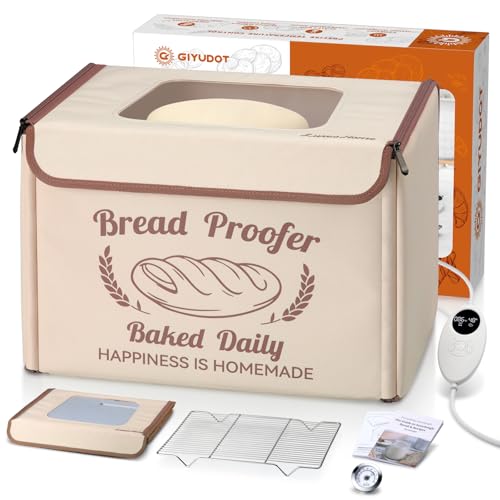
- 50–113°F control with a 48-hour timer
- NTC sensor and three heating zones support consistency
- 36-liter interior with acrylic viewing window
Best For: Small kitchens needing precise, visible fermentation
XL Multi-Use Warmer
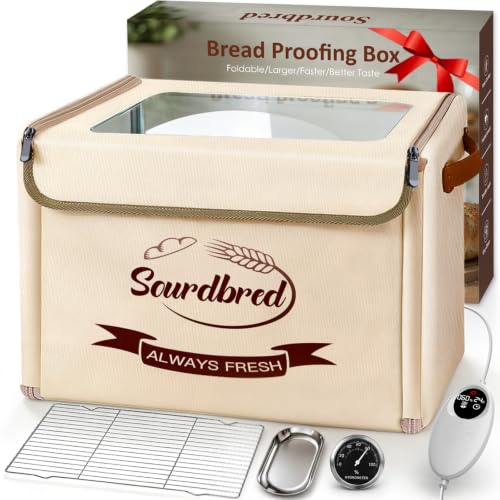
- 16.5 × 12 × 12-inch interior for bowls and bottles
- 66–108°F control with a 1–48-hour timer
- Wide viewing window and folds to about 2 inches
Best For: Bakers wanting extra capacity and versatile fermentation
Best All-in-One Container – Brod & Taylor 6L Proofing Containers
For bakers comparing bread proofing boxes for small batches, this two-pack offers a practical way to mix, fold, monitor, and proof dough in the same container. The translucent walls, volume markings, and moisture-sealing lids make it easier to track fermentation without repeatedly opening the container.
Best For: Home bakers who want stackable containers for bread, sourdough, or pizza dough.
Pros:
- 6-liter capacity can hold up to 3,000 grams of dough.
- Translucent walls and volume markings help monitor rise.
- Lids help retain moisture and prevent a dry dough skin.
- Dishwasher-safe, freezer-friendly, BPA-free polypropylene construction.
Cons:
- The containers are relatively wide and low-profile, so they require suitable shelf space.
- This is a container set rather than a temperature-controlled proofer.
Its two-container format is useful for managing multiple doughs or stages at once, while the broad base supports stretch-and-coil folds. It is a strong choice when straightforward dough visibility and easy cleanup matter more than active temperature control.
Best Temperature-Controlled Option – Bread Proofer Warming Box
Among bread proofing boxes for small batches, this warming box stands out for bakers who need more control over fermentation conditions. Its adjustable temperature range, probe-based monitoring, and timer are designed to help maintain a consistent environment for one standard proofing bowl.
Best For: Home bakers who want timed, temperature-controlled proofing and fermentation.
Pros:
- Adjustable 50–113°F temperature range.
- Sensor can monitor the actual temperature of the proofing container.
- 0–48-hour auto-off timer helps limit over-proofing.
- Also supports yogurt and other fermentation applications.
Cons:
- Its 15.75-by-13-by-9.8-inch footprint may be substantial for compact counters.
- The open-top vinyl design does not provide a lidded dough container.
The temperature and timer controls make this more precise than a basic proofing tub, especially when room conditions vary. It is best suited to users willing to dedicate counter or storage space to a powered fermentation setup.
Best Stackable Pizza Dough Set – Zopnny 3-Pack Proofing Boxes
For bread proofing boxes for small batches that can also handle pizza dough, this three-pack provides roomy, stackable trays with vented lids. The covers help retain moisture while allowing gases to escape, making the set convenient for refrigerator proofing and dough storage.
Best For: Home pizza makers and bakers proofing several dough portions or batches.
Pros:
- Three stackable boxes provide capacity for multiple dough portions.
- Vented lids help prevent dough surfaces from drying while allowing gas release.
- BPA-free, food-grade plastic is described as durable and temperature-resistant.
- Suitable for refrigerator and freezer storage.
Cons:
- The 17.32-by-12.63-inch tray size needs considerable storage space.
- Vented lids are not airtight.
- The set is especially sized for pizza dough and may be oversized for a single small loaf.
This set makes sense when batch organization and stacking are priorities. Its generous footprint is less convenient for very tight kitchens, but the three trays can simplify portioned pizza dough preparation and other food storage tasks.
Best Foldable Proofer – MQUPIN Temperature-Controlled Box
For bakers seeking bread proofing boxes for small batches with active environmental control, the MQUPIN combines adjustable heat, humidity monitoring, and a countdown timer. Its foldable design is particularly useful when a full-size proofing appliance would be difficult to store.
Best For: Compact-kitchen users who want a foldable proofer for dough and other fermentation projects.
Pros:
- Temperature control spans 68–131°F with stated ±1°F precision.
- Built-in humidity gauge and water pan support condition monitoring.
- 0–99-hour timer automatically stops heating when time expires.
- Folds flat and includes a clear window, rack, thermometer, and storage pockets.
Cons:
- The 15.7-by-11.8-by-11.8-inch setup still needs dedicated operating space.
- It is a powered proofing enclosure rather than a simple lidded container.
- The supplied capacity information varies between 35 and 36 liters.
This model offers more fermentation control than a basic box while remaining easier to put away than a rigid cabinet. The humidity gauge and included water pan are useful additions for bakers who want to adjust the proofing environment deliberately.
Best Collapsible Set – Lawei Silicone Dough Proofing Boxes
For bakers seeking bread proofing boxes for small batches, this four-piece Lawei set offers individual 1,000 ml containers sized for dough portions up to 300 g. The airtight lids help retain moisture, while the silicone bodies collapse for compact storage.
Best For: Home bakers proofing individual pizza or bread dough portions, especially where storage space is limited.
Pros:
- Includes four individual containers with airtight lids.
- Each box is sized for approximately 300 g of dough.
- Collapses to about 1.2 inches tall and is dishwasher safe.
- Suitable for freezer, refrigerator, and microwave use, but not ovens.
Cons:
- Not designed for oven use.
- The 1,000 ml capacity may be limiting for larger dough batches.
This is a practical choice for portioning dough before proofing, with four containers that stack or fold away easily. Its main advantage is convenience rather than temperature control.
Best Temperature-Controlled Proofer – Folding Bread Proofing Box
This folding bread proofing box suits small-batch bakers who want more consistent fermentation conditions. Its adjustable 50–113°F range, three heating zones, and 48-hour timer provide controlled warming for dough, starters, and other fermentation projects.
Best For: Bakers who want a foldable, temperature-controlled chamber for one standard proofing bowl or starter container.
Pros:
- Adjustable temperature from 50–113°F with a timer up to 48 hours.
- Three heating zones are designed for even warming.
- Insulated construction helps maintain a stable temperature.
- Includes a metal rack and viewing window.
Cons:
- Its interior is described as fitting one standard proofing bowl, limiting batch size.
- It is larger and more equipment-focused than individual dough containers.
Choose this model when temperature management matters more than maximum portability. The folding design helps offset its countertop footprint, while the timer supports longer fermentation schedules.
Best Compact Heated Option – InnovifyHub Folding Dough Proofer
For small kitchens, this heated folding proofer combines a compact footprint with a broad 50–130°F temperature range. It can hold one large mixing bowl, a banneton, or several mason jars, making it a versatile option for small-batch dough and starter maintenance.
Best For: Apartment, RV, and small-kitchen bakers who need one compact chamber for dough, starters, or other low-temperature fermentation tasks.
Pros:
- Offers 50–130°F control with a Celsius/Fahrenheit switch.
- Includes a 24-hour timer and audible completion alarm.
- Uses three-sided heat, an NTC sensor, and automatic overheat protection.
- Folds flat and accommodates one large bowl, banneton, or multiple jars.
Cons:
- The 24-hour timer is shorter than the 48-hour timer on some proofers.
- Its capacity is intended for compact, single-batch use rather than large production.
This model is a strong fit when you want active temperature control without committing to a bulky appliance. Its alarm and wide temperature range are useful for scheduled proofing and starter care.
Cold-Weather Sourdough Kit – Foldable 9-Inch Proofer
For bakers comparing bread proofing boxes for small batches, this foldable model offers adjustable 68–131°F heating, a long 99-hour timer, and included sourdough tools. Its 9-inch basket and viewing panel make it practical for individual loaves or compact dough projects.
Best For: Home bakers who want an all-in-one sourdough setup with broad temperature control and accessories included.
Pros:
- Three heating zones and five-layer insulation support steady warming.
- Temperature adjusts from 68–131°F with a timer of up to 99 hours.
- Includes a proofing basket, lame with five blades, scraper, rack, and recipe ebook.
- Folds flat for cabinet or travel storage and can also be used for yogurt, kefir, and kombucha.
Cons:
- The included basket is 9 inches, so larger loaves may need separate bakeware.
- Its fabric construction requires care when cleaning, despite the waterproof interior.
This is a strong choice when convenience matters as much as temperature control. The accessory bundle reduces the need for additional purchases, while the foldable design suits kitchens with limited storage.
Precision Compact Proofer – 36-Liter Folding Dough Box
Among bread proofing boxes for small batches, this 36-liter model combines a compact footprint with enough interior room for multiple dough batches. Its 50–113°F temperature range, 48-hour timer, acrylic window, and sensor-based control are designed for repeatable proofing.
Best For: Small-kitchen bakers who prioritize precise temperature maintenance and visibility during fermentation.
Pros:
- NTC temperature sensing continuously monitors the interior air temperature.
- Three heating zones and five-layer insulation promote even warming.
- Offers a 50–113°F range, 48-hour timer, and automatic shutoff at 131°F.
- Includes a stainless steel rack, humidor, manual, and sourdough recipe guide.
Cons:
- The temperature range begins at 50°F and tops out below the warmer models’ maximums.
- Only one shelf is listed, which may limit vertical organization.
This model stands out for controlled, observable fermentation rather than a large accessory bundle. The 16 × 12 × 12-inch interior and foldable construction balance batch capacity with easier storage.
XL Multi-Use Warmer – Extra-Large Folding Proofer
For bread proofing boxes for small batches that can also handle larger containers, this extra-large folding proofer provides a 16.5 × 12 × 12-inch interior and a wide viewing window. It uses three heating areas, five-layer insulation, and a 66–108°F controller for dough, starters, and other kitchen fermentation tasks.
Best For: Bakers who want generous interior capacity, easy viewing, and a proofer that can double as a food-warming and fermentation box.
Pros:
- Large interior can accommodate a big bowl and up to four large bottles.
- Temperature adjusts from 66–108°F with a 1–48-hour timer.
- Extra-large 12.8 × 9-inch viewing window makes monitoring convenient.
- Includes a metal rack, water tray, and user guide; folds to about 2 inches thick.
Cons:
- The temperature range is narrower than some competing models.
- Hand-wash care is specified for the Oxford fabric construction.
This is the most capacity-focused option in the group. Its water tray supports added humidity, while the slim folded profile and handles make the larger box easier to store and move.
How We Picked These Bread Proofing Boxes for Small Batches
We focused on products suited to home bakers who typically ferment one or a few dough portions at a time. The selection includes simple lidded containers for low-cost organization, collapsible boxes for easier storage, and powered proofers with adjustable heat and timers. We also considered stated capacity, temperature range, included racks or accessories, portability, and how practical each design is for sourdough and pizza dough.
Because product specifications can vary by seller and production run, confirm the current dimensions, controls, and included accessories before ordering. Temperature accuracy matters more than a large number on the control panel, so a separate oven thermometer can be useful when dialing in a new proofer.
Quick Comparison
| Type | Best For | Main Advantage | Potential Limitation |
|---|---|---|---|
| Stackable dough containers | Several pizza or bread portions | Simple, compact organization | Usually no active temperature control |
| Folding proofing boxes | Small kitchens and occasional bakers | Store flat when not in use | May have less interior space than fixed cabinets |
| Temperature-controlled proofers | Sourdough and repeatable fermentation | More consistent warmth and timing | Requires counter space and electricity |
| Large warming cabinets | Multiple loaves or larger batches | Greater capacity and flexibility | Can be oversized for one or two doughs |
Key Buying Factors for Bread Proofing Boxes for Small Batches
Capacity and Interior Shape
Check both the listed volume and the usable interior dimensions. Dough expands, so a container that barely fits the starting weight may not provide enough headroom. For pizza, individual stackable containers can be more convenient than one deep bin; for sourdough, verify that baskets or bowls fit without touching the sides or lid.
Temperature Range and Control
Adjustable warmth is valuable in a cool kitchen, particularly for sourdough starters and long fermentation schedules. Look for clear controls and a range appropriate for your recipes. Avoid excessive heat, which can speed fermentation unevenly or weaken dough structure. A timer is helpful, but it should not replace checking dough readiness by volume and feel.
Storage, Cleaning, and Moisture
Folding models are practical when cabinet space is limited. Smooth, food-contact surfaces and removable racks are easier to clean than cramped interiors. A lid or humidity-friendly enclosure can prevent skin formation, but condensation should be managed so the dough surface does not become wet.
Power and Safety
Powered proofers need a stable, dry counter and a cord that can reach a suitable outlet without an extension hazard. Confirm whether the heating element is shielded, whether the unit has automatic shutoff, and whether the temperature display is easy to read.
Who Should Buy Which Bread Proofing Boxes for Small Batches?
Choose a simple dough container if you mainly need covered fermentation and want the lowest-cost, easiest-to-clean solution. Choose stackable pizza boxes if you portion dough frequently and want separate containers for multiple balls.
Choose a folding temperature-controlled proofer if your kitchen is cool, your baking schedule changes with the seasons, or you need compact storage between uses. Choose a larger cabinet-style model if you regularly proof several loaves, use large baskets, or want room for different fermentation vessels.
For most small-batch home bakers, capacity that leaves expansion room and dependable low-temperature control are more important than maximum size. Match the box to your usual dough quantity, available counter space, and storage routine rather than buying the largest model.