When you need consistent doughnuts at events, cafés, food trucks, or concession stands, a household appliance can quickly become a bottleneck. The best doughnut makers for large batches combine useful capacity with dependable heating, straightforward controls, and construction suited to frequent use.
This roundup compares 10 commercial-style options, including compact electric bakers and higher-output automatic machines. Use the guide below to match output, footprint, automation, and maintenance requirements to your operation.
Best 10 Doughnut Makers for Large Batches Picks for 2026
High-Throughput Pick
Kolice 6-Row Automatic Mini Donut Machine

- Automates forming, frying, flipping, collecting, and counting
- Produces up to 2,600 mini doughnuts per hour
- Includes five thickness settings and a 17L oil tank
Best For: Commercial kitchens prioritizing maximum mini doughnut output
Compact Batch Baker
6-Hole Commercial Donut Waffle Maker
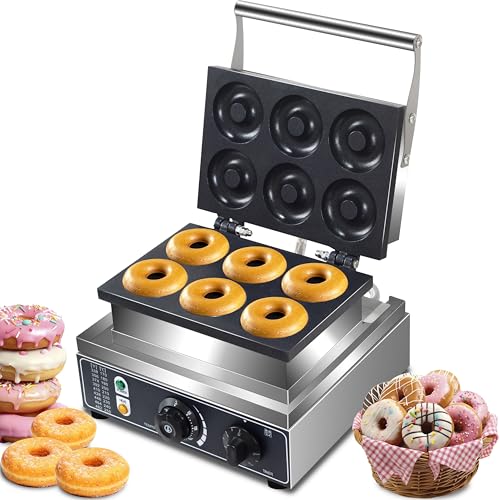
- Uses 1,600W dual-sided heating
- Offers adjustable temperature and 1–5 minute timing
- Compact stainless steel design with a non-stick tray
Best For: Small commercial spaces needing controlled baked doughnut batches
Flexible Frying Choice
VEVOR Automatic Single-Row Donut Machine

- Automates frying, flipping, and counting
- Supports mini, standard, and large doughnut sizes
- Uses a 5.5L hopper and 14.5L oil tank
Best For: Businesses serving multiple doughnut sizes with automated frying
High-Capacity Countertop Baker
12-Hole Commercial Doughnut Machine
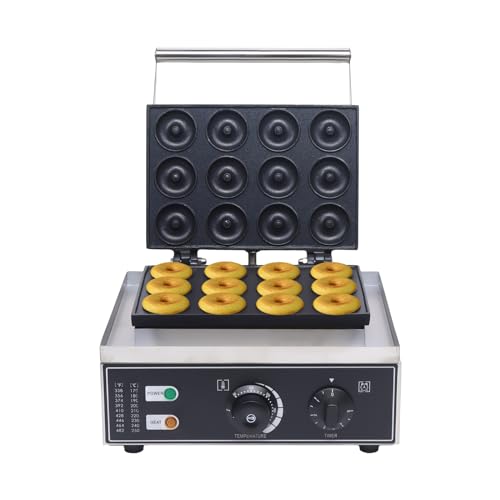
- Bakes 12 doughnuts per tray
- Uses 1,550W double-sided heating
- Has independent temperature and timer controls
Best For: Small businesses wanting larger countertop baked-doughnut batches
High-Output Pick
VEVOR 4-Row Automatic Doughnut Maker

- Approx. 240 pieces per hour
- Automatic flipping and smart controls
- 3L hopper and 6.1L oil tank
Best For: Small commercial operations needing consistent ring doughnuts
Compact Batch Pick
12-Hole Double-Sided Doughnut Maker
- Makes 12 doughnuts per batch
- 1550W double-sided heating
- Non-stick plates and dual controls
Best For: Compact kitchens and small shops making repeated dozen batches
Maximum Automation Pick
Kolice Commercial Doughnut Fryer

- Rated for 450–800 pieces per hour
- Automatic counting, flipping, and collection
- Three molds and a 15L oil tank
Best For: Commercial kitchens requiring high-volume fried-doughnut production
High-Output Countertop Pick
12-Cavity Commercial Donut Maker

- Bakes 12 doughnuts per batch
- 1550W double-sided heating
- Adjustable temperature and time controls
Best For: Busy home kitchens, parties, and small commercial settings
Maximum Throughput Pick
Automatic 4-Row Mini Donut Fryer

- Produces up to 250 mini doughnuts per hour
- Automates forming through output
- 3L hopper with four-row processing
Best For: Commercial shops and food-service operations
Versatile Value Pick
12-Hole Electric Mini Donut Maker

- Makes 12 bite-sized doughnuts per batch
- 1550W heating with a stated 1–5-minute cycle
- Non-stick plates and independent controls
Best For: Families, parties, and small cafés
High-Throughput Pick – Kolice 6-Row Automatic Mini Donut Machine
For businesses comparing doughnut makers for large batches, the Kolice 6-row machine is built for automated, continuous production. It combines forming, frying, flipping, collecting, counting, and outputting, with a stated capacity of up to 2,600 mini doughnuts per hour.
Best For: Bakeries, dessert shops, cafes, buffets, hotels, and other commercial kitchens needing high-volume mini doughnut production.
Pros:
- Six-row automatic operation supports high output and reduces manual handling.
- 304 stainless steel construction is designed for sanitation, durability, and easier cleaning.
- Includes temperature control, timer control, automatic counting, and five thickness settings.
- Offers adjustable doughnut sizes from approximately 1.18 to 1.97 inches.
Cons:
- Large footprint may require substantial counter or floor space.
- Temperature is displayed in Celsius and cannot exceed 250°C.
- Requires oil or water in the tank before operation.
This is the strongest choice here for maximum automated throughput, provided your kitchen has the space, 110V power connection, and workflow to support a commercial six-row fryer.
Compact Batch Baker – 6-Hole Commercial Donut Waffle Maker
This 6-hole electric donut waffle maker is a practical option among doughnut makers for large batches when you need a compact baking appliance rather than an automatic fryer. Its 1,600W dual-sided heating and adjustable controls are designed for consistent, repeatable batches.
Best For: Cafes, bakeries, restaurants, and snack shops that want a compact commercial doughnut baker with straightforward operation.
Pros:
- Dual-sided heating helps promote even baking across the mold.
- Adjustable temperature from 50°C to 300°C and a 1-to-5-minute timer support recipe flexibility.
- Non-stick baking tray is intended to simplify release and cleanup.
- Compact 33 × 32 × 23.5 cm design is easier to fit into smaller work areas.
Cons:
- Six-hole capacity is lower than the multi-row automatic machines in this roundup.
- It bakes doughnuts rather than automatically forming and frying them.
- Supplied notes do not specify an hourly production rate.
Choose this model when counter space, controlled baking, and simple operation matter more than fully automated frying or the highest possible production volume.
Flexible Frying Choice – VEVOR Automatic Single-Row Donut Machine
The VEVOR automatic single-row machine is a versatile option for doughnut makers for large batches, combining automated frying and flipping with three interchangeable doughnut size ranges. Its 3,000W motor, 14.5L oil tank, and 5.5L hopper are suited to sustained commercial production.
Best For: Cafes, bakeries, food stands, and other businesses that need automatic frying with flexibility across mini, standard, and large doughnut formats.
Pros:
- Automatic operation includes smart controls and automated flipping for more consistent cooking.
- Three mold ranges support mini, standard, and large doughnuts.
- 304 stainless steel construction is designed for easier cleaning and maintenance.
- Large hopper and oil tank help reduce frequent refilling during production.
Cons:
- Single-row production may be slower than a multi-row machine for maximum-volume operations.
- At approximately 41.34 inches wide and 61.7 pounds, it requires significant space and handling.
- Supplied notes do not state an exact hourly doughnut capacity.
This model stands out when product variety is as important as batch volume. It gives operators more size flexibility than many dedicated mini-doughnut machines while retaining automated frying and counting.
High-Capacity Countertop Baker – 12-Hole Commercial Doughnut Machine
For buyers seeking doughnut makers for large batches in a compact format, this 12-hole countertop machine provides a larger baking surface than six-hole models. Its 1,550W double-sided heating, independent temperature and time controls, and 1-to-5-minute tray time are suited to quick, repeatable baked doughnut batches.
Best For: Restaurants, snack shops, and home or small-business users who want to bake up to 12 doughnuts per tray without a full automatic frying system.
Pros:
- Twelve-compartment pan increases the number of doughnuts made per batch.
- Double-sided constant-temperature heating supports more even baking.
- Independent temperature and timer knobs make operation straightforward.
- Stainless steel and aluminum construction combines durability with heat conductivity.
Cons:
- It is a baking machine, not an automated forming, frying, and flipping system.
- Supplied notes do not provide an hourly output rating.
- Temperature range is listed as 122–572°F, which may require recipe adjustment.
This is a sensible countertop choice for increasing baked doughnut batch size without moving to a large commercial fryer. Its 12-hole layout is the main advantage over smaller baking plates.
High-Output Pick – VEVOR 4-Row Automatic Doughnut Maker
For businesses comparing doughnut makers for large batches, the VEVOR ZDT-4 is built around automated production. Its four rows, 1,750-watt motor, and stated capacity of about 240 pieces per hour make it a practical option for cafés, bakeries, and food stands that need consistent ring doughnuts with less hands-on work.
Best For: Small commercial operations that want automated flipping and steady ring-doughnut production.
Pros:
- Four-row design supports higher output, with production listed at approximately 240 pieces per hour.
- Smart controls and automatic flipping simplify operation and promote even cooking.
- 304 stainless-steel construction, a 3L hopper, and a 6.1L oil tank suit repeated batches.
Cons:
- Produces one ring-doughnut format, approximately 50 mm wide and 25 mm thick.
- Its 21.85-by-15-by-14.5-inch footprint may require dedicated counter space.
The VEVOR is a focused production machine rather than a compact home appliance. Choose it when automated workflow and batch throughput matter more than mold variety.
Compact Batch Pick – 12-Hole Double-Sided Doughnut Maker
Among doughnut makers for large batches, this 12-hole electric model offers a simpler way to produce a dozen doughnuts per cycle. Its 1,550-watt double-sided heating system, adjustable 50–300°C temperature range, and non-stick plates make it suited to small commercial kitchens and home bakers serving repeated batches.
Best For: Home bakers, cafés, and small dessert shops that need compact dozen-at-a-time production.
Pros:
- Twelve compartments allow a full dozen doughnuts in one batch.
- Independent time and temperature knobs provide straightforward control.
- Non-stick coating supports easier release and cleanup, while anti-slip feet help stabilize the unit.
Cons:
- Its 12-doughnut capacity is lower than fully automated commercial fryers.
- It is a baking-style unit, so it may not suit buyers specifically seeking fried doughnuts.
- Users should confirm compatibility with a 110V US plug before ordering.
This machine trades industrial throughput for a smaller footprint and simpler controls. It is a reasonable fit when countertop space and easy cleanup are priorities, but larger operations may need a more automated system.
Maximum Automation Pick – Kolice Commercial Doughnut Fryer
For high-volume doughnut makers for large batches, the Kolice combines forming, dropping, frying, flipping, collecting, counting, and outputting in one machine. With a listed production range of 450–800 pieces per hour, multiple mold sizes, and a 15L oil tank, it is designed for professional food-service environments.
Best For: Bakeries, cafés, dessert shops, hotels, and other commercial kitchens requiring automated fried-doughnut production.
Pros:
- Integrated forming, frying, flipping, collection, counting, and output reduces manual handling.
- Three included molds support small, medium, and large doughnut sizes.
- 304 stainless steel, a 7L hopper, 15L oil tank, timer control, and oil drain valve support commercial use.
- Listed output ranges from 450 to 800 pieces per hour.
Cons:
- Its 41.34-by-15.75-by-25.6-inch size requires substantial installation space.
- The 3,000-watt load may require direct connection through a circuit breaker, according to the seller’s recommendation.
- Temperature settings use Celsius and cannot exceed 250°C.
The Kolice offers the broadest automation and size flexibility of these options, but it also demands the most space and electrical planning. It is best suited to established commercial operations rather than casual countertop use.
High-Output Countertop Pick – 12-Cavity Commercial Donut Maker
For shoppers comparing doughnut makers for large batches, this 1550W electric model offers a straightforward way to bake 12 doughnuts at once. Its double-sided heating, adjustable controls, and non-stick plates suit busy home kitchens, parties, and lower-volume commercial use.
Best For: Home bakers, parties, tea shops, and small commercial kitchens that need a dozen baked doughnuts per batch.
Pros:
- 12-cavity pan supports efficient batch baking.
- Adjustable temperature and time controls provide flexible operation.
- Stainless steel and aluminum construction, non-stick plates, heat-resistant handles, and anti-slip feet support practical daily use.
Cons:
- It bakes doughnuts rather than automatically forming and frying them.
- The 13.38-by-10.63-by-9.05-inch footprint requires dedicated counter space.
This is a solid choice when consistent baked doughnuts and simple manual control matter more than fully automated production. The 1–5-minute stated baking time can help keep batches moving during gatherings or service.
Maximum Throughput Pick – Automatic 4-Row Mini Donut Fryer
Among doughnut makers for large batches, the FOHERE stands out for automated mini-doughnut production. It combines forming, dropping, frying, flipping, collecting, counting, and outputting, with a stated capacity of up to 250 mini doughnuts per hour.
Best For: Bakeries, cafés, dessert shops, buffets, and other commercial operations needing continuous mini-doughnut production.
Pros:
- Automates the main production steps for reduced hands-on work.
- Four-row processing and a 3L hopper support high-volume output.
- 304 food-grade stainless steel construction, overheating protection, adjustable frying speed, and automatic counting add commercial-focused features.
Cons:
- At 21.85 by 14.76 by 14.57 inches and about 35 pounds, it needs substantial space.
- The machine must not be switched on without oil in the tank.
- It is designed for 40 mm mini doughnuts rather than standard large doughnuts.
This is the strongest option here for production speed and automation, but it is also the most specialized. Buyers should have adequate counter space, oil-handling procedures, and a clear need for mini-doughnut volume before choosing it.
Versatile Value Pick – 12-Hole Electric Mini Donut Maker
This 1550W model is a practical choice for shoppers seeking doughnut makers for large batches without a fully automatic fryer. It makes 12 bite-sized doughnuts per batch, heats in a stated 1–5 minutes, and includes independent temperature and time controls for home or commercial use.
Best For: Families, hosts, and small cafés that want quick batches of customizable mini doughnuts.
Pros:
- 12-hole capacity helps produce multiple mini doughnuts at once.
- Double-sided constant-temperature heating supports even baking.
- Non-stick plates, indicator lights, anti-scald handles, and stainless steel and aluminum construction make operation and cleanup more convenient.
Cons:
- Manual filling and removal require more involvement than an automatic production machine.
- It is intended for bite-sized doughnuts, not full-size doughnuts.
With a compact 13.38-by-10.63-by-9.05-inch design and 110V power, this maker fits users who want repeatable small batches in a home kitchen or modest commercial setting. Its adjustable controls also make it easier to experiment with different recipes and toppings.
How We Picked the Best Doughnut Makers for Large Batches
We focused on the specifications that matter most when producing doughnuts repeatedly: stated capacity, number of rows or cavities, heating power, temperature control, automation, construction, and ease of cleaning. The selection includes both countertop machines for smaller commercial workloads and automatic fryers designed for higher-volume service.
Because advertised output can vary with dough size, cooking time, operator speed, and workflow, treat capacity figures as useful comparisons rather than guaranteed results. Confirm voltage, plug type, dimensions, and included molds before ordering.
Quick Comparison
| Machine type | Best for | What to prioritize |
|---|---|---|
| 12-hole electric baker | Cafés, breakfast service, and smaller batches | Nonstick plates, even heating, and simple temperature control |
| Four-row automatic fryer | Events and continuous production | Rated hourly output, hopper size, and oil handling |
| Single-row automatic machine | Flexible production with multiple sizes | Interchangeable molds and reliable portion control |
| Six-row or high-capacity fryer | Busy concession and street-food operations | Throughput, footprint, safety features, and cleaning access |
Key Buying Factors for Doughnut Makers for Large Batches
Capacity and Workflow
Choose a machine based on your busiest realistic service period, not just its maximum advertised rate. Multi-row models can reduce labor, while 12-hole countertop units may be easier to reload, reposition, and operate in a compact kitchen.
Heating and Temperature Control
Higher wattage can support faster recovery between batches, but insulation, thermostat accuracy, and heat distribution also affect results. Adjustable temperature controls are valuable when switching between recipes or dough thicknesses.
Automation and Consistency
Automatic dispensing, flipping, counting, and dropping can improve portion consistency and reduce hands-on labor. These features are most useful when one operator must manage cooking, finishing, packaging, or customer service at the same time.
Cleaning, Safety, and Installation
Look for stainless-steel surfaces, accessible cooking areas, removable components where available, and clear oil-drain or crumb-management procedures. Verify that the electrical requirements match your location; a high-powered commercial machine may need a dedicated circuit.
Who Should Buy Which Doughnut Makers for Large Batches?
Choose a 12-hole electric baker if you want a compact, approachable machine for cafés, breakfast counters, school events, or made-to-order service. It is generally easier to fit and maintain than an automated fryer.
Choose a multi-row automatic fryer if speed and repeatability are your priorities. These models suit food trucks, concessions, catering, and other operations serving continuous queues, provided you have enough counter space, ventilation, and electrical capacity.
Choose a model with multiple molds if your menu may expand beyond one doughnut size. This adds flexibility, but check how quickly molds can be changed and how replacement parts are sourced.
Before buying, compare the machine’s real footprint, output claims, power requirements, cleaning routine, warranty, and available support. The right choice is the one that fits your complete production workflow—not simply the model with the highest number on the box.