Fresh pasta is easier to make when an electric machine handles the mixing, kneading, rolling, or shaping. The right model can reduce prep time while giving you better control over texture, thickness, and portion size.
This roundup compares 10 electric pasta machines across automatic extruders, powered rollers, combination designs, and compact home appliances so you can choose the best fit for your kitchen and cooking habits.
Best 10 Electric Pasta Machines Picks for 2026
Best Compact Stainless-Steel Pick
Newhai 135W Electric Pasta Maker

- Two noodle sizes: 1.5 mm and 4 mm
- 0.5–3 mm adjustable dough thickness
- Compact stainless-steel home-use design
Best For: Simple homemade noodles and pasta sheets
Best High-Capacity Automatic Pick
Philips 7000 Series Pasta Maker

- Makes up to eight portions per batch
- Includes eight shaping discs
- Dishwasher-safe parts and HomeID recipe guidance
Best For: Family-size batches and varied pasta shapes
Best Italian-Made Motorized Pick
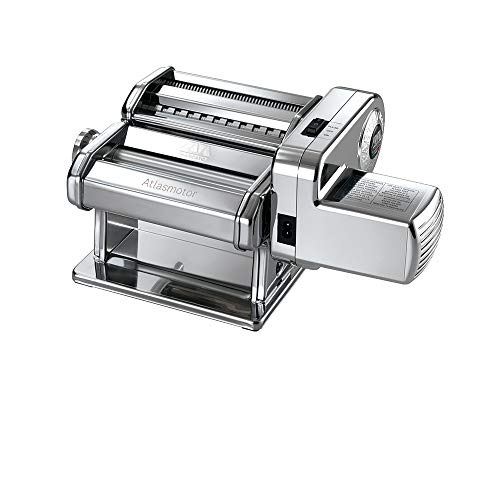
- Includes electric motor and hand crank
- 10 thickness positions for sheets
- Compatible with 11 Marcato accessories
Best For: Hands-on cooks wanting manual and electric control
Best Small-Batch Value Pick
Philips Viva Compact Pasta Maker
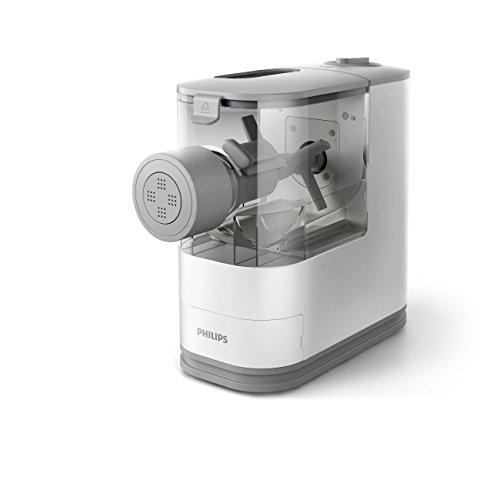
- Makes two to three servings automatically
- Includes spaghetti, penne, and fettuccini discs
- Compact body with built-in disc storage
Best For: Small households and everyday fresh pasta
Best Stainless-Steel Electric Pick

- 700W Pmax motor with two speeds and reverse
- Eight thickness settings from 0.4–2 mm
- Stainless-steel housing with sheet, fettuccine, and spaghetti functions
Best For: Home cooks wanting a powered roller-and-cutter machine
Best Manual Alternative

- Seven adjustable thickness settings
- Two cutter widths for spaghetti and fettuccine
- Manual stainless-steel design for pasta and dumpling wrappers
Best For: Hands-on cooks seeking a non-electric pasta maker
Best Automatic Extruder

- Automatic modes with 500g flour capacity
- Eight discs for different pasta shapes
- Includes measuring cups and dishwasher-safe parts
Best For: Beginners and families making automatic extruded noodles
Best Manual Value

- Nine thickness settings from 0.5 to 3 mm
- Two cutter widths for varied pasta
- Lightweight stainless steel and aluminum build
Best For: Hands-on home cooks seeking adjustable pasta thickness
Best Compact Automatic Option
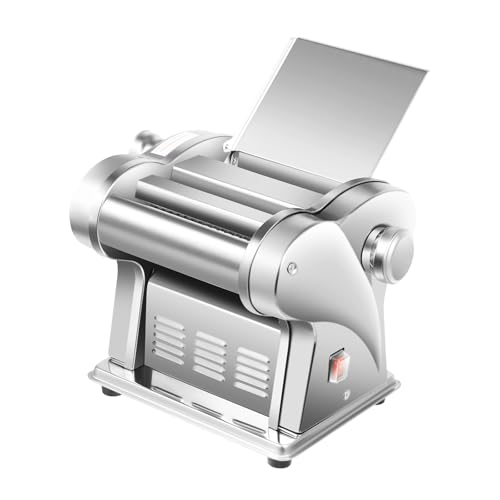
- 135W motor with one-click operation
- Eight thickness gears from 0.5 to 3.5 mm
- Dual 2 mm and 4 mm flat-noodle cutters
Best For: Home kitchens wanting powered pasta making in a compact body
Best for Variety and Volume
WICHEMI 4-in-1 Electric Pasta Maker

- Four noodle formats, including round and flat styles
- 0.3–3 mm dough thickness range
- 135W motor with stated 22 lb/h efficiency
Best For: Families and small businesses making varied noodles in larger batches
Best Compact Stainless-Steel Pick – Newhai 135W Electric Pasta Maker
For shoppers comparing electric pasta machines for regular home use, the Newhai offers a compact stainless-steel design with automatic dough pressing and cutting. It makes two noodle styles—1.5 mm round noodles and 4 mm flat noodles—while providing adjustable dough-sheet thickness from 0.5 to 3 mm.
Best For: Home cooks who want a relatively lightweight countertop machine for simple noodles, pasta sheets, dumpling wrappers, and wonton wrappers.
Pros:
- Automatic switching between dough pressing and noodle cutting.
- Food-contact components are made from 430 stainless steel.
- Adjustable thickness with a compact, 135W design.
Cons:
- Limited to two noodle sizes.
- Designed for home use rather than commercial production.
- Very thin dough may not cut cleanly.
The Newhai is a focused option rather than a highly versatile pasta system. Its straightforward controls, low-noise operation, and stainless-steel construction make it practical for everyday home batches, provided two noodle formats are enough for your recipes.
Best High-Capacity Automatic Pick – Philips 7000 Series Pasta Maker
The Philips 7000 Series is one of the more versatile electric pasta machines for family cooking, producing up to eight portions in one batch. Its automatic mixing and extrusion system is designed to make pasta in under 10 minutes, and the included eight discs expand the available shapes.
Best For: Families and hosts who want large batches, multiple pasta shapes, and guided recipe support.
Pros:
- Large capacity of up to eight portions.
- Includes eight shaping discs for greater variety.
- Dishwasher-safe, non-stick parts simplify cleanup.
- HomeID app provides step-by-step recipes, including vegan and gluten-free options.
Cons:
- At 20 pounds, it is relatively substantial for a countertop appliance.
- Its plastic-and-metal construction may appeal less to shoppers seeking an all-metal machine.
With its capacity, recipe guidance, and broad selection of discs, the Philips 7000 Series is well suited to frequent family use. It is a strong choice when convenience and variety matter more than a minimal footprint.
Best Italian-Made Motorized Pick – Marcato Atlasmotor 110V
The Marcato Atlasmotor combines a traditional Atlas 150 pasta machine with an electric Pastadrive motor, giving home cooks the choice of powered or hand-cranked operation. It rolls sheets up to 6 inches wide and uses a 10-position thickness adjustment for controlled sheet preparation.
Best For: Pasta makers who want an Italian-made roller with both electric and manual operation, plus the option to add Marcato accessories.
Pros:
- Made and assembled in Italy.
- Includes the machine, motor, hand crank, clamp, and manual.
- Offers 10 thickness positions and dual manual/electric use.
- Compatible with 11 separately available Marcato accessories.
Cons:
- It is primarily a sheet-rolling machine rather than a fully automatic kneading and extrusion appliance.
- Additional pasta shapes require separately available accessories.
- Cleaning requires removing residue with a dry brush after the dough dries.
The Atlasmotor suits cooks who prefer hands-on control with motorized assistance. Its compact 9.5-pound format and accessory compatibility provide a flexible foundation, but shoppers seeking one-touch mixing and extrusion should consider a fully automatic model instead.
Best Small-Batch Value Pick – Philips Viva Compact Pasta Maker
The Philips Viva Compact is a fully automatic option for smaller households, kneading and extruding two to three servings in about 18 minutes. It includes discs for spaghetti, penne, and fettuccini, while its compact design and built-in disc storage help it remain convenient for frequent countertop use.
Best For: Individuals or couples who want automatic fresh pasta in modest batches without a large appliance.
Pros:
- Automatically kneads and extrudes two to three servings.
- Includes three shaping discs for spaghetti, penne, and fettuccini.
- Compact design supports everyday countertop storage.
- Supports ingredient variations such as eggs, herbs, spinach, and carrot juice.
Cons:
- Its capacity is smaller than that of family-size machines.
- Only three shaping discs are included.
- Its 18-minute preparation time is longer than some larger Philips models.
The Viva Compact is a practical entry point among electric pasta machines for smaller portions and routine use. Its automatic kneading, extrusion, and built-in disc storage make it convenient, though larger households may prefer a higher-capacity model.
Best Stainless-Steel Electric Pick – GVODE 3-in-1 Pasta Maker
Among electric pasta machines, the GVODE stands out for its stainless-steel housing, powered roller-and-cutter design, and adjustable controls. Its 700W Pmax motor offers two speeds, reverse, and eight thickness settings for sheets, fettuccine, and spaghetti.
Best For: Home cooks who want a powered roller-and-cutter machine with a durable metal exterior and broad thickness control.
Pros:
- Stainless-steel housing and rollers are designed to resist discoloration and maintain alignment.
- Eight thickness settings cover 0.4–2 mm, from delicate noodles to thicker lasagna sheets.
- Two speeds and reverse help manage dough that bunches or sticks.
- Includes sheet roller, fettuccine and spaghetti cutters, brush, and manual.
Cons:
- Requires 15-minute batches followed by a 5-minute cool-down for motor longevity.
- This is a roller-and-cutter machine, not an extruder for shaped pasta.
The GVODE is a practical choice if you prioritize powered rolling, stainless-steel construction, and thickness flexibility. Follow the recommended cooling rhythm and progressively thin the dough for the cleanest cuts.
Best Manual Alternative – Nuvantee 3-in-1 Pasta Maker
Although it is not electric, the Nuvantee is a useful comparison for shoppers considering electric pasta machines. This manual stainless-steel pasta maker provides seven thickness settings and two cutter widths for spaghetti, fettuccine, lasagna, dumpling wrappers, and similar preparations.
Best For: Pasta makers who prefer hands-on operation, adjustable rolling, and a lower-tech alternative to powered equipment.
Pros:
- Seven settings adjust dough from about 0.5 mm to 3 mm.
- Two cutters produce 2 mm spaghetti or 6 mm fettuccine-style noodles.
- Stainless-steel construction is easy to use without a motor or electrical controls.
- Suitable for pasta sheets, noodles, and dumpling wrappers.
Cons:
- Manual operation requires more hands-on effort than an electric machine.
- Aluminum blades may not offer the same material consistency as an all-stainless-steel cutting system.
The Nuvantee makes sense when control and simplicity matter more than automation. It will not provide the speed or powered convenience of the other machines here, but its seven settings and two cutter widths cover several everyday pasta projects.
Best Automatic Extruder – VEVOR 8-Shape Pasta Maker
For shoppers comparing electric pasta machines that mix and extrude dough, the VEVOR offers a different approach from roller-based models. Its automatic operation includes four intelligent modes, a 500g flour capacity, and eight pasta discs for producing various noodle shapes in a home kitchen.
Best For: Beginners and families who want automatic mixing and extrusion with enough capacity for roughly four people.
Pros:
- Automatic modes simplify mixing and noodle-making with one-click operation.
- 500g flour capacity can make approximately four servings in about 14 minutes.
- Eight included discs provide multiple pasta shapes.
- Includes flour and liquid measuring cups, spatula, cleaning brush, and dishwasher-safe parts.
Cons:
- Accurate flour-to-water ratios are important; incorrect amounts can cause sticking or prevent extrusion.
- Its 11-inch height and 11-pound weight make it larger and heavier than a manual roller.
- At 150W, it is designed for automatic extrusion rather than powered sheet rolling.
The VEVOR is the strongest fit for convenience and shaped noodles rather than traditional rolled sheets. Its measuring accessories and automatic modes help beginners, but careful adherence to the supplied ratio table is essential for smooth operation.
Best Manual Value – Sailnovo 3-in-1 Pasta Maker
For shoppers comparing electric pasta machines but who prefer a hands-on option, the Sailnovo offers a compact manual alternative with adjustable thickness and two cutting widths. Its stainless steel and aluminum construction is suited to homemade spaghetti, fettuccine, lasagna, and dumpling skins.
Best For: Home cooks who want broad thickness control without a motor.
Pros:
- Offers nine thickness settings, from 0.5 to 3 mm.
- Includes 2 mm and 4.5 mm cutting widths for different pasta styles.
- Rust-resistant stainless steel and aluminum construction is lightweight for storage.
Cons:
- Manual operation requires turning the roller and cutter by hand.
- The blade attachment should not be washed in water or placed in a dishwasher.
The Sailnovo is a practical choice if you value control and simple construction more than automated operation. Its cleaning requirements call for brushing away dough residue rather than rinsing the blade assembly.
Best Compact Automatic Option – 135W Electric Pasta Maker
This electric pasta maker is designed for shoppers who want automated dough pressing and noodle cutting in a relatively compact countertop body. Its 135W motor, one-click start, eight thickness gears, and dual cutters support several everyday pasta and dumpling preparations.
Best For: Home users who want powered operation and compact storage.
Pros:
- 135W motor supports automatic dough pressing and noodle cutting.
- Eight thickness adjustments cover 0.5 to 3.5 mm sheets.
- Dual cutters make 2 mm and 4 mm flat noodles.
- Cooling holes are designed to help with heat dissipation during operation.
Cons:
- At 14.8 pounds, it is less lightweight than a basic manual machine.
- The supplied details identify automatic operation but do not list additional noodle shapes beyond the two cutters.
With a 10.24-by-8.07-by-8.46-inch footprint, this model balances powered convenience with storage-friendly dimensions. It is a sensible fit for cooks who want to reduce manual rolling effort without moving to a larger machine.
Best for Variety and Volume – WICHEMI 4-in-1 Electric Pasta Maker
The WICHEMI is a versatile automatic pasta maker for shoppers prioritizing multiple noodle shapes and higher stated output. Its 135W motor presses dough and cuts four noodle styles, while the adjustable range also supports dumpling and wonton skins.
Best For: Families or small food businesses that need varied noodle formats and higher production.
Pros:
- Four-in-one cutting functions make 2.5 mm round noodles and 2 mm, 4 mm, and 9 mm flat noodles.
- Adjustable dough thickness ranges from 0.3 to 3 mm for dumpling and wonton skins.
- 135W power and a stated efficiency of up to 22 pounds per hour support larger batches.
- 304 stainless steel body and blades are designed to resist rust and aging.
Cons:
- At 22 pounds, it is notably heavier than many compact home appliances.
- The higher stated output may be more capability than occasional pasta makers need.
The WICHEMI stands out among these electric pasta machines for its four noodle formats and broad stated use, from home kitchens to noodle shops. Its heavier construction and commercial-oriented output make it most appealing when versatility and batch capacity matter.
How We Picked the Best Electric Pasta Machines
We compared these machines by looking at motor power, pasta-making method, shaping or cutting options, capacity, controls, included accessories, footprint, and likely maintenance needs. We also considered whether each design suits beginners, frequent homemade-pasta cooks, or households that want more control over sheet thickness and noodle width.
Automatic extruders generally offer the simplest workflow: add ingredients, select a shape, and let the machine mix and press the dough. Roller-and-cutter machines require more hands-on preparation but can produce pasta sheets for lasagna, ravioli, and different noodle styles.
Quick Comparison
| Machine type | Best for | What to look for |
|---|---|---|
| Automatic extruder | Fast, mostly hands-off batches | Disc selection, capacity, mixing performance, and cleanup |
| Electric roller and cutter | Sheet pasta and adjustable thickness | Roller settings, cutter widths, motor strength, and clamp stability |
| Hybrid or 3-in-1 model | Versatile home use | Attachment quality, control layout, and storage |
| Compact machine | Small kitchens and occasional use | Counter footprint, batch size, and removable parts |
Key Buying Factors for Electric Pasta Machines
Extrusion or Rolling
Choose an extruder if convenience and repeatable shapes matter most. Choose a roller-and-cutter machine if you want thin sheets, adjustable thickness, spaghetti, fettuccine, or more traditional pasta-making control.
Power and Capacity
Higher wattage can help with thicker dough, but motor power alone does not determine performance. Check the stated flour or dough capacity and match it to your typical batch size. A smaller machine may be more practical for one or two servings, while larger models are better for family meals.
Attachments and Settings
More discs, cutters, or thickness settings provide flexibility, but only if they are easy to change and clean. Confirm which accessories are included rather than assuming every pictured attachment comes with the machine.
Cleanup and Storage
Dried dough can be difficult to remove from small openings and shaping parts. Removable components, cleaning tools, and accessible surfaces are valuable advantages. Also measure your counter and cabinet space before choosing a larger appliance.
Who Should Buy Which Electric Pasta Machines?
Buy an automatic extruder if you want the fastest route from ingredients to shaped pasta and prefer minimal manual work. It is a strong choice for busy households, beginners, and cooks who make pasta in consistent shapes.
Choose an electric roller-and-cutter model if you enjoy hands-on preparation or regularly make lasagna sheets, ravioli, spaghetti, and fettuccine. Adjustable rollers are especially useful when texture and thickness are more important than speed.
A hybrid 3-in-1 machine is the best compromise for cooks who want several pasta styles without buying multiple appliances. For occasional users or smaller kitchens, prioritize a compact design, straightforward controls, and easy-clean parts over maximum capacity or a long list of accessories.