Choosing the right oil press can help a small food business produce fresher, specialty oils while controlling ingredient quality and operating costs.
These 10 options range from compact automatic machines to higher-output commercial models, covering hot and cold pressing, adjustable temperature controls, and stainless-steel construction.
Best 10 Oil Presses for Small Businesses Picks for 2026
Best Temperature Control
610W Stainless Steel Oil Press

- 50–250°C adjustable temperature range
- Automatic heating and temperature display
- 3–6 kg-per-hour stated processing rate
Best For: Small businesses with moderate production needs and varied seed inputs
Best Balanced Commercial Option

- Hot and cold pressing modes
- Up to 9–13.5 pounds per hour stated capacity
- Real-time temperature display and countdown control
Best For: Small commercial operations processing several common seed types
Best for Dual-Batch Processing

- Two independent motors and oil outlets
- Four-stage gearing for up to 24-hour operation
- Below-70 dB stated working noise
Best For: Businesses wanting to process separate batches simultaneously
Best High-Output Option
1800W Automatic Seed Oil Press
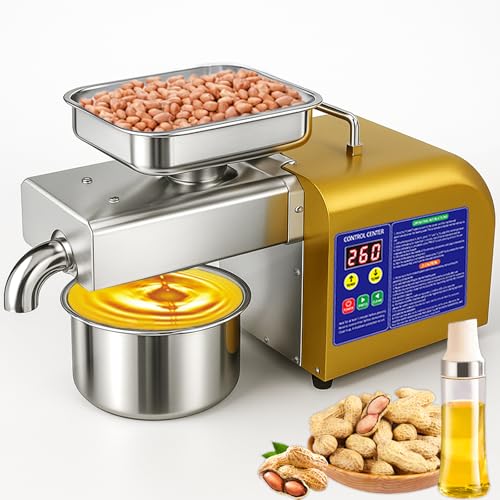
- 11–20 pounds-per-hour stated output
- 40–300°C adjustable temperature range
- Automatic panel with real-time monitoring
Best For: Higher-volume small businesses processing common oil seeds
Balanced Commercial Control
610W Stainless Steel Oil Press

- Cold and hot pressing modes
- 104–410°F intelligent temperature control
- Up to 8.8 lb/hour stated capacity
Best For: Small commercial kitchens needing flexible batch processing
High-Power Automatic Extractor

- 1500W maximum power
- Automatic operation with on-off control
- 2-liter oil fill cup and broad seed compatibility
Best For: Small operations prioritizing simple, high-power extraction
Precision Temperature Production

- 32–572°F intelligent temperature control
- Up to 10 lb/hour for peanuts
- Two-year warranty and auto-reversing feature
Best For: Small producers needing precise, repeatable processing
Smart Temperature Control

- Cold- and hot-pressing modes
- 104°F–410°F temperature range
- Up to 8.8 lb/h with residue separation
Best For: Small businesses needing flexible, controlled oil pressing
Versatile Stainless Steel Press
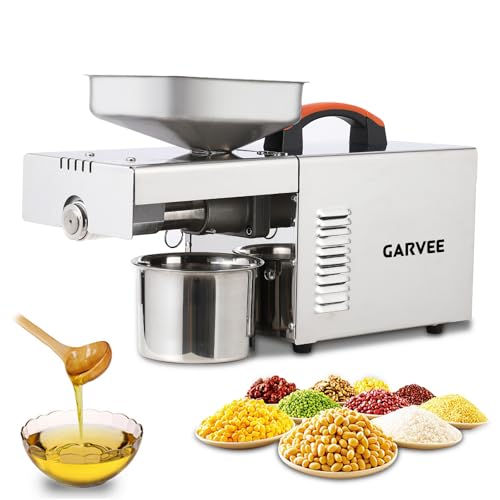
- 900-watt corded electric motor
- Cold, hot, and frying settings
- Includes gloves, brush, barrel, and colander
Best For: Small businesses pressing diverse nuts and seeds
High-Capacity Commercial Option

- Up to 11 lb/h stated hot-pressing capacity
- 122°F–572°F adjustable temperature
- Designed for 30+ ingredient types
Best For: Small commercial operations prioritizing throughput
Best Temperature Control – 610W Stainless Steel Oil Press
For small businesses looking for flexible oil presses, this 610W model offers adjustable hot or cold-style processing with a 50–250°C temperature range. Its stainless steel construction, automatic heating, and stated 3–6 kg-per-hour processing rate make it a practical option for modest production volumes.
Best For: Small businesses pressing peanuts, sesame, canola, soybeans, sunflower seeds, walnuts, and similar materials.
Pros:
- Adjustable pressing temperature from 50–250°C.
- Automatic heating with temperature display and control.
- Stainless steel shell is rust-resistant and easier to clean.
- Includes an oil cup, filter, gloves, and instruction manual.
Cons:
- Listed throughput of 3–6 kg per hour is lower than the higher-powered options here.
- Hand-wash care may require additional cleanup time.
This machine is a sensible fit when temperature flexibility and a compact small-business workflow matter more than maximum output. Confirm that its stated capacity matches your expected daily volume.
Best Balanced Commercial Option – 820W Hot and Cold Oil Press
This 820W model is a versatile choice among oil presses for small businesses, combining hot and cold pressing modes with real-time temperature monitoring. The manufacturer states continuous operation for up to 24 hours and output of up to 9–13.5 pounds per hour.
Best For: Small commercial operations that need flexible processing for peanuts, walnuts, sunflower seeds, sesame, soybeans, and flaxseed.
Pros:
- Offers both hot and cold pressing modes.
- Intelligent panel displays temperature and supports countdown operation.
- Stated capacity reaches up to 9–13.5 pounds per hour.
- Includes a filter, cleaning brush, gloves, hopper, and oil cup.
Cons:
- Not intended for olives, cocoa beans, spices, flowers, herbs, or coffee beans.
- Hand-wash care can add to maintenance time.
With its two pressing modes and included cleaning accessories, this is a well-rounded option for businesses serving different seed oils. Review the material restrictions carefully before ordering.
Best for Dual-Batch Processing – 1500W Double-Outlet Oil Press
Businesses needing higher power and simultaneous processing may prefer this 1500W oil press. It has two independent motors and double oil outlets, allowing different materials to be pressed at the same time or each side to operate independently.
Best For: Small businesses that want dual-batch flexibility, continuous-duty gearing, and a stainless steel commercial-style build.
Pros:
- Two independent 1500W motors and double oil outlets.
- Four-stage gears are designed for continuous operation up to 24 hours.
- Claimed energy use is 0.5–0.6 kWh per hour.
- Working noise is listed below 70 dB.
Cons:
- The supplied notes do not provide a processing-rate figure.
- Its dual-motor design may be more machine than a very low-volume operation needs.
- Preheating takes about eight minutes before pressing.
This model stands out when workflow flexibility is more important than a simple single-feed setup. Its dual outlets and motors could help separate batches, but buyers should verify actual throughput for their preferred seeds.
Best High-Output Option – 1800W Automatic Seed Oil Press
For small businesses prioritizing production capacity, this 1800W automatic press is the highest-powered option in this roundup. It is rated for continuous operation up to 24 hours, with a stated output of 11–20 pounds per hour and temperature adjustment from 40–300°C.
Best For: Higher-volume small businesses pressing common oil seeds and needing automatic temperature monitoring.
Pros:
- 1800W motor and stated output of 11–20 pounds per hour.
- Temperature range of 40–300°C supports hot and cold extraction settings.
- Intelligent panel provides real-time temperature monitoring and countdown control.
- Includes a cleaning brush, gloves, filter, hopper, oil cup, and press components.
Cons:
- Freshly pressed oil should settle for 24 hours before separation and use.
- Not suitable for cocoa beans, spices, flowers, herbs, or coffee beans.
- The notes clarify that olives cannot be extracted, despite mentioning olive kernels.
This is the strongest fit for businesses that can use its higher stated throughput and manage settling time after pressing. Check the accepted-material list carefully, particularly if olive processing is part of your plan.
Balanced Commercial Control – 610W Stainless Steel Oil Press
For small businesses seeking versatile oil presses for small businesses, this 610W model combines cold and hot pressing with adjustable temperature control. Its stated 8.8-pound-per-hour capacity and stainless-steel construction make it a practical option for varied seed and nut batches.
Best For: Small commercial kitchens that need dual pressing modes, temperature adjustment, and straightforward cleanup.
Pros:
- Supports both cold and hot pressing.
- Temperature control spans 104–410°F with a display for monitoring.
- Rated for up to 8.8 pounds per hour and includes a filter screen.
- SUS304 stainless-steel body is designed for durability and easier cleaning.
Cons:
- Hand-wash care is specified, which may add cleanup time.
- The supplied information does not state a warranty or exact footprint.
This model stands out when process flexibility matters more than maximum motor power. Its included bowl, filter, brush, and insulated gloves provide a useful starting setup for a small production workspace.
High-Power Automatic Extractor – 1500W Electric Oil Press
This 1500W automatic machine is a strong candidate among oil presses for small businesses that prioritize simple operation and broad ingredient compatibility. Feed seeds or nuts into the hopper, press the start control, and let the machine process them into oil.
Best For: Small businesses wanting high input power, automatic operation, and a portable stainless-steel design.
Pros:
- 1500W maximum power supports demanding pressing tasks.
- Automatic feed-and-process operation is controlled by a simple on-off switch.
- Works with ingredients including coconut, flax, peanut, sesame, sunflower, and pumpkin seeds.
- Food-grade 304 stainless steel and a 2-liter oil fill cup suit routine kitchen use.
Cons:
- The notes specify hot and cold pressing but do not provide a cold-press temperature range.
- Hand-wash care may require additional cleaning effort.
- A 20-pound weight could make frequent relocation less convenient.
Choose this model when throughput power and ease of operation are the main priorities. Its 110V corded design and portable feature make it suitable for a dedicated small-business workstation, provided the 18-inch width fits your counter.
Precision Temperature Production – CGOLDENWALL 1000W Oil Press
For oil presses for small businesses that need repeatable processing, the CGOLDENWALL combines automatic heating with an intelligent temperature controller. It supports cold and hot pressing, handles a wide range of oil-bearing materials, and is rated at up to 10 pounds per hour for peanuts.
Best For: Small producers who want precise temperature adjustment, broad ingredient support, and a stated two-year warranty.
Pros:
- Temperature can be set and monitored from 32–572°F.
- Supports both cold and hot pressing for different yield and flavor goals.
- Rated for 10 pounds per hour when pressing peanuts.
- Includes auto-reversing, stainless-steel construction, and a two-year warranty.
Cons:
- Raw materials must be sufficiently dry, and the empty machine requires preheating.
- At 29 pounds, it is heavier than some compact options.
- The 15.7-inch depth requires adequate counter space.
This is the most control-oriented option of the three, especially for businesses processing different ingredients in repeatable batches. Its included pots, filter, brush, gloves, and tool set also reduce the need for immediate accessory purchases.
Smart Temperature Control – Upgraded Automatic Oil Press
For small businesses seeking flexible oil presses, this model combines automatic operation, cold- and hot-pressing modes, and adjustable temperature control. Its 610-watt motor is rated for continuous operation and processing of up to 8.8 pounds per hour.
Best For: Small food businesses that need versatile pressing, temperature adjustment, and built-in oil-residue separation.
Pros:
- Supports both cold and hot pressing for different ingredients and desired results.
- Adjustable temperature range from 104°F to 410°F.
- Rated processing capacity of up to 8.8 pounds per hour with a stated 2% residual oil rate.
- Includes a filter and residue conduit to help separate solids from extracted oil.
Cons:
- At 20.3 pounds, it may be less convenient to move frequently.
- Hand-wash care may add cleanup time in a small-business setting.
This is a practical choice when control and cleaner oil separation matter more than maximum throughput. Its stainless-steel construction and portable design suit lower-volume commercial or home-based production.
Versatile Stainless Steel Press – Garvee 900W Oil Press
Garvee’s 900-watt machine is one of the more versatile oil presses for small businesses, with cold, hot, and frying settings. Its 304 food-grade stainless-steel construction and included accessories support regular pressing of common nuts and seeds.
Best For: Small culinary businesses pressing a variety of ingredients such as peanuts, sesame, walnuts, almonds, pumpkin seeds, and rapeseed.
Pros:
- Offers cold pressing, hot pressing, and frying settings.
- Uses 304 food-grade stainless steel.
- Built-in thermostat heating device supports hot pressing.
- Includes insulation gloves, cleaning brush, oil barrel, and colander.
Cons:
- The supplied specifications do not state a processing rate or hourly capacity.
- Its 21.46-inch depth may require substantial counter space.
Choose this model if ingredient flexibility and included accessories are priorities. It offers useful operating modes, though businesses needing a clearly documented throughput should compare capacity specifications before buying.
High-Capacity Commercial Option – VEVOR 11 LBS/H Oil Press
For businesses that prioritize throughput, this VEVOR machine is rated to hot-press up to 11 pounds per hour. It also provides adjustable temperatures from 122°F to 572°F and is designed for more than 30 types of nuts, seeds, and oil-rich ingredients.
Best For: Restaurants, market vendors, and small commercial operations that need higher stated capacity and broad ingredient compatibility.
Pros:
- Rated for up to 11 pounds per hour of flaxseed hot pressing.
- Offers adjustable temperatures from 122°F to 572°F.
- Supports more than 30 types of nuts, seeds, and other oil-rich ingredients.
- Includes an oil cup, filter screen, heat-insulating gloves, and cleaning brush.
Cons:
- At 28.7 pounds, it is relatively heavy to relocate.
- The listed 220-volt requirement may not suit every small-business electrical setup.
- Hand-wash care is specified.
This is the strongest capacity-focused option in the group, but buyers should verify electrical compatibility before ordering. Its broad temperature range and included accessories make it well suited to varied commercial pressing tasks.
How We Picked the Best Oil Presses for Small Businesses
We focused on features that matter in daily small-business production: motor power, stated throughput, hot- and cold-press capability, temperature adjustment, construction, controls, oil and residue separation, and ease of cleaning. We also considered whether each machine appears better suited to occasional production, market sales, specialty oils, or more demanding commercial workloads.
Because manufacturer capacity claims can vary by seed type, moisture, preparation, and operating conditions, treat published output as a comparison point rather than a guarantee. Harder seeds and cooler pressing generally require more time than softer, well-prepared ingredients.
Quick Comparison
| Best For | What to Prioritize |
|---|---|
| Small-batch specialty oils | Adjustable temperature, cold-press capability, and easy cleaning |
| Frequent production | Higher wattage, durable stainless-steel parts, and reliable cooling |
| Multiple seed varieties | Broad temperature control and compatible pressing attachments |
| Limited counter space | Compact footprint, simple controls, and manageable weight |
| Higher-volume sales | Published hourly capacity, continuous-feed design, and residue separation |
Key Buying Factors for Oil Presses for Small Businesses
Capacity and Motor Power
A 610W to 900W machine may suit a café, farm stand, or small specialty-oil operation. Higher-powered 1,000W to 1,800W models can be more appropriate when production volume is a priority, but they may use more electricity and require additional counter or ventilation space.
Temperature Control
Cold pressing typically emphasizes lower heat, while hot pressing can improve flow and extraction for some ingredients. Look for a clearly stated temperature range and controls that make adjustments repeatable. Intelligent controls, LCD panels, or preset programs can reduce guesswork during busy periods.
Cleaning and Food-Contact Materials
Oil residue can harden quickly, so removable components and accessible pressing chambers are valuable. Stainless-steel construction is generally preferable for durability and routine food preparation, but confirm which parts are actually food-contact surfaces and whether they are dishwasher safe.
Output and Workflow
Consider how you will feed seeds, collect oil, filter it, and handle press cake. Separate oil and residue outlets can speed production, while a stable base and straightforward controls improve safety and consistency.
Who Should Buy Which Oil Presses for Small Businesses?
Choose a compact, lower-wattage automatic model if you produce small batches and value a smaller footprint. Select a midrange machine with adjustable temperature and intelligent controls for a varied menu of seed and nut oils. For regular market, restaurant, or wholesale production, prioritize the highest credible capacity, stronger motor, durable construction, and easy residue removal over extra display features.
Before buying, verify the seller’s dimensions, warranty, replacement-part availability, voltage requirements, and return policy. Those details can matter as much as wattage when an oil press becomes part of your daily business workflow.