Making fresh oil at home is easier when your press fits your workspace, matches your preferred ingredients, and does not create more cleanup than convenience. This roundup compares 10 compact manual and electric options for home cooks.
Use the buying guide below to weigh capacity, temperature control, power requirements, cleaning, and everyday practicality before choosing an oil press for your kitchen.
Best 10 Oil Presses for Small Kitchens Picks for 2026
High-Capacity Electric Pick
820W Automatic Hot & Cold Oil Press

- Hot and cold pressing modes
- Temperature display and controls
- Includes filter and cleaning accessories
Best For: Automatic, higher-volume home oil pressing
Electricity-Free Compact Choice
Manual Stainless Steel Oil Press

- No electricity required
- Hand-crank operation
- Includes collection bottle
Best For: Hands-on, occasional home pressing
Versatile Stainless Steel Option
Garvee 900W Hot & Cold Oil Press
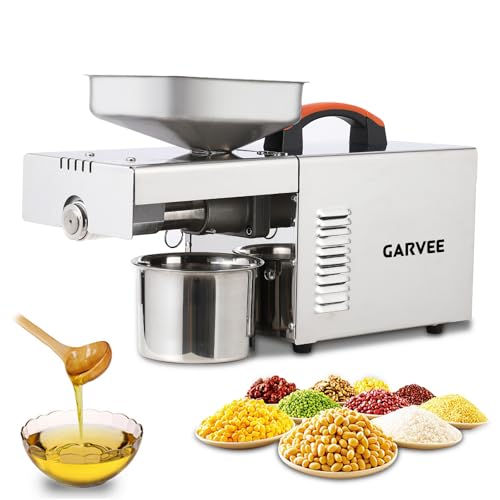
- Hot, cold, and frying settings
- 304 food-grade stainless steel
- Works with many nuts and seeds
Best For: Flexible electric pressing and varied ingredients
Lightweight Manual Tool
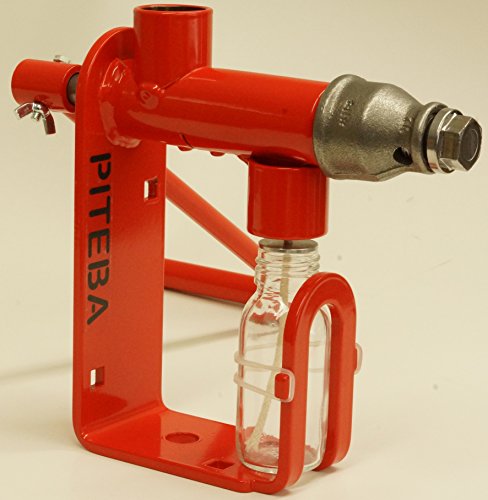
- No external power required
- Weighs 4.14 pounds
- Compact and low maintenance
Best For: Portable, manual nut and seed pressing
Compact Hand-Crank Pick
Manual Stainless Steel Oil Press
- Electricity-free hand-crank operation
- Handles several common nuts and seeds
- Stainless steel body with collection bottle
Best For: Beginners and small households making modest batches
Best for Everyday Use

- Presses up to 8.27 pounds per hour
- Adjustable 122°F–572°F hot-press range
- Includes filtering and cleaning accessories
Best For: Frequent home pressing with electric convenience
Portable Manual Pick
CGOLDENWALL Household Oil Press

- Physical pressing without chemical ingredients
- 304 stainless steel body and handle
- Portable one-liter manual design
Best For: Small batches of compatible oil-rich crops
Best Adjustable-Temperature Pick
Dual-Mode Stainless Steel Oil Press

- Hot- and cold-press operation
- Digital temperature management
- Processes up to 13.22 lb/h
Best For: Home users wanting flexible control over pressing temperature
Best Foolproof Design
Household Low-Temperature Oil Press

- Simple automatic operation
- No pre-roasting required
- Low-temperature physical extraction
Best For: Beginners seeking an easy home oil-pressing routine
Best High-Capacity Option

- Up to 8.8 lb/h stated capacity
- 104–410°F adjustable temperature
- Includes filter and cleaning tools
Best For: Frequent home users pressing varied seeds and nuts
High-Capacity Electric Pick – 820W Automatic Hot & Cold Oil Press
For shoppers comparing oil presses for small kitchens, this 820W stainless steel model offers automatic operation with both hot- and cold-press settings. Its temperature display, included filter, and broad seed compatibility make it a practical choice when convenience and output matter, though its listed capacity and dimensions are better suited to kitchens with dedicated counter space.
Best For: Home users who want automatic pressing, adjustable temperature control, and higher-volume oil extraction from seeds and nuts.
Pros:
- Hot and cold modes let you prioritize higher output or natural flavor retention.
- Temperature can be monitored and adjusted on the intelligent panel.
- Stainless steel construction and a powerful 820W motor support repeated use.
- Includes a filter, oil cup, cleaning brush, gloves, hopper, and press components.
Cons:
- Its 14.9-inch width and 13.5-pound capacity may be substantial for a very small kitchen.
- It is not intended for olives, cocoa beans, spices, flowers, herbs, or coffee beans.
- Hand washing is required.
This is the most feature-rich option in the group for buyers who value automation and throughput. Confirm the available counter space and your preferred ingredients before choosing it for a compact kitchen.
Electricity-Free Compact Choice – Manual Stainless Steel Oil Press
Among oil presses for small kitchens, this manual stainless steel model stands out for its electricity-free design and direct hand-crank operation. It is intended for home use and comes with a collection bottle, making it a straightforward option for shoppers who prefer hands-on control over automated processing.
Best For: Small households wanting a manual press for occasional batches of peanuts, rapeseed, walnuts, tea seeds, or sunflower seeds.
Pros:
- Requires no electricity, so it can be used wherever a stable surface is available.
- Hand-crank operation provides direct control over the pressing process.
- Stainless steel construction is designed for repeated daily kitchen use.
- Includes a collection bottle for gathering extracted oil.
Cons:
- Manual cranking requires more physical effort than an electric press.
- The listed dimensions are unusually large for a product described as small, so measure your space carefully.
- Hand washing is required.
This press is best suited to buyers who value simplicity and independence from an outlet more than speed. Its manual format can work well in a small setup, provided the listed dimensions fit your counter or storage area.
Versatile Stainless Steel Option – Garvee 900W Hot & Cold Oil Press
This Garvee model is a versatile contender among oil presses for small kitchens, combining 900W electric power with hot, cold, and frying settings. Its 304 food-grade stainless steel build and included cleaning accessories support regular use, but the roughly 21.46-inch depth means it needs more than a minimal counter footprint.
Best For: Home cooks who want multiple pressing modes and a broad range of compatible nuts and seeds.
Pros:
- Offers hot, cold, and frying settings for flexible use.
- 304 food-grade stainless steel construction is designed for food-contact use.
- Supports peanuts, sesame, flaxseed, perilla seeds, walnuts, almonds, pumpkin seeds, and rapeseed.
- Includes insulation gloves, a cleaning brush, oil barrel, colander, and power cable.
Cons:
- The listed 21.46-inch depth may be challenging in a very small kitchen.
- Olive flesh must be removed from the pit and dried before extraction.
- The supplied details list microwave-safe care instructions, while oil-press cleaning accessories are also included; verify the manufacturer’s cleaning guidance.
Choose this model when operating flexibility and ingredient range are more important than the smallest footprint. For compact kitchens, plan a dedicated storage location or measure the counter depth before buying.
Lightweight Manual Tool – Nut & Seed Oil Expeller
For buyers seeking oil presses for small kitchens without adding another powered appliance, this manually operated nut and seed expeller is a compact, lightweight alternative. It weighs 4.14 pounds, needs no external power source, and is described as suitable for continuous expelling with minimal maintenance.
Best For: Small kitchens, healthy-lifestyle projects, and small-farm users who want a simple manual expeller for nuts and seeds.
Pros:
- Manual operation eliminates the need for an external power source.
- Compact tool weighing 4.14 pounds is easier to move and store than larger electric machines.
- Designed for continuous expelling with almost no maintenance required.
- Simple operation suits users who prefer a straightforward tool.
Cons:
- Manual operation may require more effort than an electric oil press.
- The supplied notes do not specify hot- or cold-press settings.
- The notes do not provide a detailed list of compatible ingredients or included accessories.
This is the most space-conscious choice in the roundup for shoppers who prioritize portability and low-maintenance manual use. It is a better fit for modest batches and simple operation than for users seeking automated temperature control or higher powered throughput.
Compact Hand-Crank Pick – Manual Stainless Steel Oil Press
For shoppers comparing oil presses for small kitchens, this manual model offers a straightforward, electricity-free way to make oil from selected nuts and seeds. Its hand-crank design suits occasional home use and gives you direct control over the pressing process.
Best For: Beginners and small households that want a compact manual setup for fresh oil without electricity.
Pros:
- Works without electricity, making it useful in simple home setups.
- Suitable for peanuts, rapeseed, walnuts, tea seeds, and sunflower seeds.
- Stainless steel construction is designed for repeated use and easy wipe-clean maintenance.
- Includes a collection bottle for collecting pressed oil.
Cons:
- Hand-crank operation requires more effort than an automatic electric press.
- Hand-wash-only care may take more time.
- Its listed dimensions are relatively large for a manual appliance, so measure your counter space first.
This is a practical choice when low-tech operation and ingredient control matter more than speed. It fits the small-kitchen category best for users who expect modest batches rather than high-volume production.
Best for Everyday Use – VEVOR Automatic Oil Press
If you want oil presses for small kitchens with less manual effort, this automatic VEVOR machine provides electric pressing with adjustable hot-press temperatures. Its stated capacity and broad ingredient support make it suitable for users who plan to press oil more frequently.
Best For: Home users who want faster electric pressing and the flexibility to work with many nuts and seeds.
Pros:
- Rated to hot-press up to 8.27 pounds of flaxseed per hour.
- Offers adjustable temperature settings from 122°F to 572°F for hot pressing.
- Supports more than 30 types of nuts, seeds, and oil-rich ingredients.
- Includes an oil cup, filter screen, heat-insulating gloves, and cleaning brush.
Cons:
- At 23.8 pounds, it is substantially heavier than the manual alternatives here.
- Its 20.47-by-6.3-by-11.42-inch footprint may require dedicated counter or storage space.
- The supplied information focuses on hot pressing, so it may be less suitable if cold pressing is your priority.
This model trades compact portability for speed, temperature control, and versatility. Check your available kitchen space before buying, especially if you plan to store it between uses.
Portable Manual Pick – CGOLDENWALL Household Oil Press
Among oil presses for small kitchens, this CGOLDENWALL model stands out for its portable manual format and stainless steel construction. It uses physical pressing for oil-rich crops and is designed for users comfortable with manual operation and continuous heating during use.
Best For: Users seeking a portable manual press for peanuts, sunflower seeds, sesame, walnuts, coconut, and similar oil-rich crops.
Pros:
- Uses physical pressing without chemical ingredients.
- 304 stainless steel body and handle are designed to resist rust.
- Portable design with a listed one-liter capacity.
- Includes a one-year warranty and English instructions.
Cons:
- Manual operation requires hands-on effort.
- The manufacturer does not recommend flaxseed, rapeseed, or olives.
- Continuous heating is required during use, so careful operation is important.
This press is a focused option for smaller batches and compatible oil-rich crops. Its portability and one-year warranty add practical value, but ingredient limitations and heating requirements should guide your decision.
Best Adjustable-Temperature Pick – Dual-Mode Stainless Steel Oil Press
For shoppers comparing oil presses for small kitchens, this stainless steel model offers flexible hot- and cold-press settings in a relatively compact countertop format. Its digital temperature controls, 150W copper motor, and stated capacity of 6.61–13.22 pounds per hour make it suited to regular home batches of nuts and seeds.
Best For: Home users who want adjustable temperature control and the option to cold- or hot-press a variety of oil-rich ingredients.
Pros:
- 304 stainless steel construction with polished surfaces and detachable parts for easier cleaning.
- Hot- and cold-press modes support ingredients including peanuts, sesame, walnuts, sunflower seeds, and soybeans.
- Digital temperature display, preset controls, and thermostatic regulation simplify operation.
- Stated processing capacity reaches 6.61–13.22 pounds per hour, with up to 45% oil yield.
Cons:
- Hand-wash care may require more cleanup time than fully dishwasher-friendly equipment.
- The machine’s commercial-style construction may be more than occasional users need.
This is a strong choice when flexibility matters more than the simplest possible setup. The dual pressing modes and temperature management make it particularly appealing for cooks who plan to experiment with different seeds and recipes.
Best Foolproof Design – Household Low-Temperature Oil Press
Among oil presses for small kitchens, this household model emphasizes straightforward operation: preheat, add the oilseeds, and press start. Its 304 stainless steel pressing chamber, low-temperature operation, and 6-pound-per-hour stated processing speed make it a practical option for routine home oil extraction.
Best For: Beginners who want an automatic, low-temperature press that can handle dry or moist nuts and seeds without pre-roasting.
Pros:
- Simple preheat-and-start controls support easy everyday use.
- Constant-temperature heating and an integrated cooling fan support continuous squeezing.
- Food-grade 304 stainless steel screw and pressing chamber are designed for physical extraction.
- Works with peanuts, sesame, walnuts, almonds, pumpkin seeds, rapeseed, and other oilseeds.
Cons:
- At 22 pounds, it is relatively heavy for a small-kitchen appliance.
- The listed dimensions and hopper-style design may require dedicated counter or storage space.
- Olives require pit removal before pressing.
Its main advantage is ease of use rather than advanced customization. If you prefer a guided process and do not want to roast seeds first, this is one of the more approachable options in the group.
Best High-Capacity Option – 610W Hot and Cold Oil Press
This 610W electric press is worth considering when shopping for oil presses for small kitchens that still need useful batch capacity. It combines hot- and cold-press modes with adjustable temperatures from 104–410°F, a built-in filter, and a stated output of up to 8.8 pounds per hour.
Best For: Home cooks who want faster pressing, broad seed compatibility, and temperature settings for both aromatic hot-pressed oil and lower-temperature extraction.
Pros:
- Hot- and cold-press modes accommodate peanuts, sesame, flaxseeds, walnuts, coconut, soybeans, sunflower seeds, and more.
- Adjustable 104–410°F temperature range offers ingredient-specific control.
- 610W copper motor and 80rpm press screw support steady operation up to 8.8 pounds per hour.
- Includes a bowl, filter, cleaning brush, insulated gloves, and residue conduit for a more complete setup.
Cons:
- Its higher power and larger stated capacity may be unnecessary for occasional small batches.
- Hot pressing can produce more aromatic oil but may not suit users focused exclusively on lower-temperature extraction.
This model balances versatility and throughput well. Its included accessories and wide temperature range make it a convenient pick for users who expect to press several types of seeds rather than only one household staple.
How We Picked These Oil Presses for Small Kitchens
We focused on the features that matter most in a home setting: countertop footprint, power source, pressing method, stated capacity, temperature range, material quality, and cleaning demands. The selection includes hand-crank presses for occasional use and electric models for cooks who want faster, more consistent extraction.
Because product specifications and included accessories can vary, verify the current listing for dimensions, voltage, hopper size, supported seeds, warranty coverage, and replacement parts before ordering. A high wattage or commercial-style label does not automatically mean a machine is the best fit for a small kitchen.
Quick Comparison
| Type | Best for | Main advantage | Trade-off |
|---|---|---|---|
| Manual press | Occasional batches and off-grid use | No electricity required | Slower and more hands-on |
| Compact electric press | Regular home use | Convenient, repeatable pressing | Needs counter space and power |
| Higher-capacity electric press | Frequent or larger batches | Faster throughput | Usually larger, louder, and more expensive |
Key Buying Factors for Oil Presses for Small Kitchens
Counter Space and Storage
Measure both the footprint and the height needed to open the hopper or remove parts. A machine that must be stored after every use should have manageable weight and accessible components.
Manual Versus Electric Operation
Manual models are simple and quiet, but pressing requires effort and time. Electric presses are more convenient for peanuts, sesame, walnuts, and other suitable seeds, though they may produce motor noise and require a stable outlet.
Temperature Control
Cold pressing generally uses lower heat, while hot pressing can improve flow for some ingredients. Adjustable temperature is useful, but confirm the actual control range and whether the setting is regulated automatically or manually.
Capacity and Cleanup
Choose capacity based on batch frequency rather than headline output alone. Removable food-contact parts, included tools, and straightforward access to the press chamber can make more difference than maximum wattage. Check whether parts are hand-wash only and allow the machine to cool fully before cleaning.
Safety and Compatibility
Confirm the voltage matches your outlet and look for stable construction, heat-resistant handles, overload protection, and clear operating instructions. Use only ingredients approved by the manufacturer; moisture, hard materials, or unsuitable seeds can reduce performance or damage the press.
Who Should Buy Which Oil Presses for Small Kitchens?
Choose a manual press if you press small quantities, want a no-electricity option, or value mechanical simplicity. It is best for patient users who do not mind turning a crank and cleaning the press by hand.
Choose a compact electric model if you want convenient homemade oil without processing large commercial batches. These are the most practical starting point for many small kitchens, especially when adjustable heat and removable parts are included.
Choose a higher-capacity electric press if you process seeds frequently or need quicker batches. Before buying, make sure the larger body, heat output, and cleanup requirements are genuinely manageable on your countertop.