Making fresh pasta at home is easier when you choose a machine that matches your cooking style, available space, and preferred level of control. The best pasta machines under $300 range from durable manual rollers to electric models that mix and extrude dough with less hands-on effort.
Our roundup compares 10 noteworthy options for rolling sheets, cutting noodles, shaping specialty pasta, or simplifying larger batches. Use the buying guide below to narrow your choices by construction, settings, capacity, cleanup, and convenience.
Best 10 Pasta Machines Under 300 Picks for 2026
Classic Italian Pick
Marcato Atlas150 Manual Pasta Maker

- 10 adjustable thickness settings
- Makes lasagna, fettuccine, and tagliolini
- Chrome-steel manual design made in Italy
Best For: Hands-on pasta makers who want traditional control
Fast Family Option
Philips 7000 Series Pasta Maker

- Automatic 150W operation
- Makes up to eight portions
- Eight discs plus dishwasher-safe parts
Best For: Families seeking quick, largely automated pasta making
Traditional Roller Choice

- 10 manual thickness settings
- Rolls and cuts three pasta styles
- Compact chrome-steel and aluminum design
Best For: Cooks who prefer classic manual pasta rolling
Budget-Friendly Beginner Pick
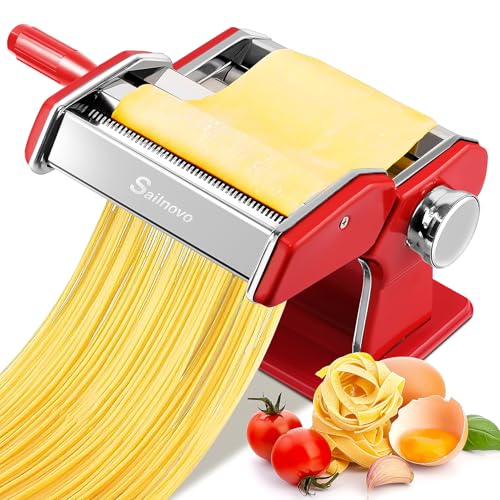
- Nine thickness settings from 0.3–3 mm
- Two cutter widths for varied noodles
- Includes a securing desk clip
Best For: Beginners wanting flexible manual pasta making
Classic Italian Roller
Atlas 180 Manual Pasta Machine

- Italian-made chrome-plated steel construction
- Makes lasagne, fettuccine, and tagliolini
- 10 settings with anodized aluminum rollers
Best For: Hands-on home pasta making
Motorized Multitasker
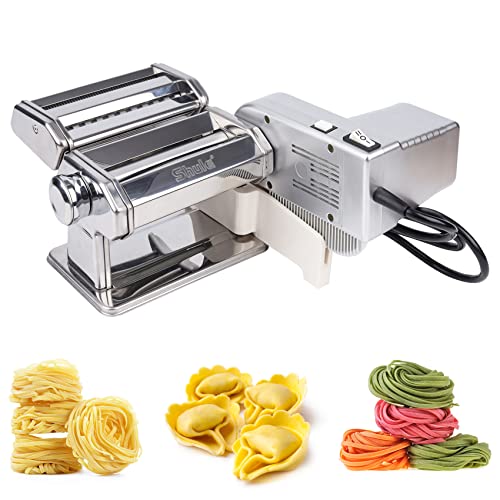
- Electric and hand-crank operating modes
- Includes pasta cutter and ravioli roller
- Seven thickness settings from 0.5 to 3 mm
Best For: Faster noodles and homemade ravioli
Expandable Italian Classic
Imperia IPasta Classic Line Pasta Maker

- Italian-made chromed steel construction
- Makes sheets, fettuccine, and tagliolini
- Compatible with optional motor and accessories
Best For: Durable manual pasta making with upgrade options
Best Adjustable Option
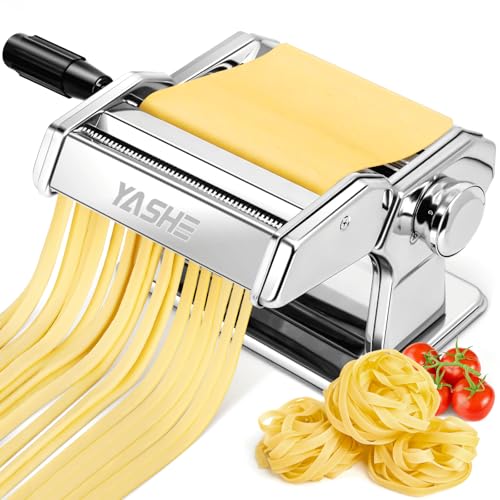
- Nine thickness settings from 0.3mm to 3mm
- 2mm and 6.5mm cutters included
- Cleaning kit and sturdy clamp included
Best For: Cooks seeking versatile manual pasta making
Best Italian-Made Upgrade

- Made in Italy with metal rollers and components
- Ten thickness settings and double cutter
- Supports optional Atlas 150 accessories and motor
Best For: Dedicated cooks wanting an expandable pasta setup
Classic Italian Pick – Marcato Atlas150 Manual Pasta Maker
MARCATO Atlas150 Manual Pasta Maker Machine-LASAGNA, FETTUCCINE & TAGLIOLINI. Made in Italy
Check Price On AmazonIf you want one of the more traditional pasta machines under 300, the Marcato Atlas150 offers manual control with 10 thickness settings. Its chrome-steel construction and included cutters are suited to making lasagna, fettuccine, and tagliolini at home.
Best For: Home cooks who prefer hands-on pasta making and adjustable sheet thickness.
Pros:
- 10 thickness settings, from 0.8 to 4.8 mm
- Includes lasagna, fettuccine, and tagliolini functions
- Chrome- and nickel-plated steel construction
- Made in Italy with a manual crank operation
Cons:
- Manual operation requires more hands-on effort
- Hand washing and careful cleaning are needed
The Atlas150 is a straightforward choice for shoppers seeking durable-feeling materials, classic pasta shapes, and fine control without an electric motor.
Fast Family Option – Philips 7000 Series Pasta Maker
For shoppers comparing automatic pasta machines under 300, the Philips 7000 Series emphasizes speed and capacity. Its 150W design can prepare up to eight portions, with eight discs and app-based recipe guidance for added variety.
Best For: Families and busy cooks who want automated pasta preparation with minimal hands-on work.
Pros:
- Designed to prepare pasta in under 10 minutes
- Makes up to eight portions in one batch
- Includes eight discs for different pasta shapes
- Dishwasher-safe parts help simplify cleanup
Cons:
- At 20 pounds, it is relatively heavy to move
- Sheet thickness range is limited to 1–1.5 mm
The Philips is a practical pick when convenience and batch size matter more than traditional hand-cranked preparation or broad sheet-thickness adjustment.
Traditional Roller Choice – Marcato Atlas 150 Roller
This Marcato Atlas 150 is a focused manual roller for shoppers seeking pasta machines under 300 with classic functionality. It rolls sheets for lasagne and cuts fettuccine or tagliolini, while its 10 settings provide hands-on thickness control.
Best For: Cooks who want a compact manual roller for traditional pasta sheets and noodles.
Pros:
- 10 manual thickness settings
- Supports lasagne, fettuccine, and tagliolini
- Compact 8 x 5.5 x 8-inch design
- Anodized aluminum components are intended for food processing
Cons:
- Hand wash is recommended
- Manual rolling requires physical effort
- Cleaning is limited to wiping with a dry brush or cloth
Choose this Atlas when you value a compact footprint and straightforward manual control for everyday pasta rolling and cutting.
Budget-Friendly Beginner Pick – Sailnovo 3-in-1 Pasta Maker
The Sailnovo 3-in-1 is a versatile option among pasta machines under 300, combining a hand-cranked roller with two cutter widths. Its nine thickness settings cover 0.3–3 mm, making it useful for spaghetti, fettuccine, lasagna, dumplings, and other dough-based dishes.
Best For: Beginners and families who want an affordable manual machine with broad thickness control.
Pros:
- Nine adjustable thickness settings from 0.3 to 3 mm
- Two cutting widths: 2 mm and 6.25 mm
- Aluminum-alloy rollers are described as rust-resistant
- Detachable design supports dry-brush cleaning
Cons:
- Manual operation requires hand cranking
- Only two cutter widths are included
- A desk clip is required to secure the machine during use
With its red stainless-steel body, clamp, and wide thickness range, the Sailnovo offers a flexible starting point for cooks learning to make fresh pasta at home.
Classic Italian Roller – Atlas 180 Manual Pasta Machine
For shoppers comparing pasta machines under 300, the MARCATO Atlas 180 is a straightforward manual option for rolling lasagne sheets and cutting fettuccine or tagliolini. Its chrome-plated steel construction and 10 settings offer a traditional, hands-on approach to fresh pasta.
Best For: Home cooks who want an Italian-made manual machine for classic pasta shapes.
Pros:
- Made and assembled in Italy with chrome-plated steel construction.
- Produces lasagne, fettuccine, and tagliolini.
- Offers 10 settings for adjusting the pasta dough.
- Anodized aluminum rollers are designed for food processing.
Cons:
- Manual operation requires hand cranking.
- Hand washing is recommended.
The Atlas 180 suits buyers who value traditional preparation and a durable metal build. It is less appropriate if you specifically want motorized operation or ravioli-making capability.
Motorized Multitasker – Shule Electric Pasta Maker
Among pasta machines under 300, the Shule Electric Pasta Maker stands out for combining motorized rolling with a hand-crank option. It includes a pasta cutter and ravioli roller, while seven thickness settings support different dough preferences.
Best For: Cooks who want electric assistance plus the flexibility to make noodles or square ravioli.
Pros:
- Offers both automatic motor operation and manual hand-crank use.
- Includes a pasta cutter and ravioli roller.
- Provides seven dough thickness settings from 0.5 to 3 mm.
- Includes an adjustable clamp and product instructions.
Cons:
- The machine can make noticeable sound during operation.
- The cutters need cleaning after each use.
- Its stated maximum dough width is 150 mm.
This model is a practical choice if speed and versatility matter more than quiet operation. The included ravioli roller gives it broader functionality than a basic noodle-and-sheet machine.
Expandable Italian Classic – Imperia IPasta Classic Line Pasta Maker
For shoppers seeking pasta machines under 300 with room to expand, the Imperia IPasta Classic Line combines a heavy-duty chromed steel body with adjustable rollers and accessory compatibility. It makes sheets, fettuccine, and tagliolini manually, with an optional path to motorized operation.
Best For: Traditional pasta makers who want durable construction and future accessory options.
Pros:
- Made entirely in Italy with solid chromed steel construction.
- Produces pasta sheets up to 150 mm wide, fettuccine, and tagliolini.
- Offers six roller heights from 0.5 to 5 mm.
- Compatible with an optional motor and additional pasta accessories.
Cons:
- Motor and specialty accessories are not included.
- Manual operation requires hand cranking.
- Its pasta width is limited to 150 mm.
The IPasta Classic Line is a strong fit for cooks who want a traditional machine that can grow with their skills. Its included brush, pouch, non-slip base, and table support add useful convenience for storage and setup.
Best Adjustable Option – YASHE 3-in-1 Pasta Maker
If you want one of the more versatile pasta machines under 300, the YASHE 3-in-1 manual maker offers nine thickness settings and two cutter widths. Its stainless steel and aluminum construction, included clamp, and cleaning kit make it a practical choice for regular homemade pasta sessions.
Best For: Home cooks who want adjustable sheets, spaghetti, fettuccine, lasagna, or dumpling skins from one manual machine.
Pros:
- Nine settings adjust dough thickness from 0.3mm to 3mm.
- Includes 2mm and 6.5mm cutters for spaghetti and fettuccine-style pasta.
- Food-grade stainless steel and aluminum construction with a firm table clamp.
- Cleaning brush and cloth are included for easier maintenance.
Cons:
- Manual operation requires turning the hand crank.
- At 2.9kg, it is heavier than some compact kitchen tools.
The YASHE stands out for its broad thickness range and useful cleaning accessories. It is a strong fit if flexibility matters more than motorized convenience.
Best Italian-Made Upgrade – Marcato Atlas+ Pasta Machine
Among pasta machines under 300, the Marcato Atlas+ is a premium manual option for shoppers who value Italian manufacture and future expandability. It includes a double cutter for lasagna, fettuccine, and spaghetti, plus ten thickness settings for precise dough preparation.
Best For: Serious home pasta makers who want a durable manual machine with compatibility for additional Atlas 150 accessories or a motor drive.
Pros:
- Made in Italy with anodized aluminum rollers and stainless-steel components.
- Ten adjustable thickness settings support fine to thicker pasta sheets.
- Double cutter attachment handles lasagna, fettuccine, and spaghetti.
- Compatible with Atlas 150 attachments and optional motor drives.
Cons:
- The motor drive is optional rather than included.
- Its premium feature set may be more than occasional users need.
The Atlas+ is the most upgrade-friendly choice in this group. Its accessory compatibility makes it appealing for cooks who expect their pasta-making setup to grow over time.
Best Simple Value – 7-Setting Pasta Maker
For shoppers comparing pasta machines under 300, this manual model keeps the setup straightforward while covering the most common pasta styles. Its seven thickness levels, detachable two-width cutter, hand crank, and table clamp provide the essentials for fresh pasta without unnecessary complexity.
Best For: Families, beginners, and occasional pasta makers who want an affordable manual machine for spaghetti, fettuccine, lasagna, and wrappers.
Pros:
- Seven thickness settings accommodate several pasta and wrapper styles.
- Detachable 2mm spaghetti and 4.5mm fettuccine cutters are included.
- Heavy-duty stainless steel and food-grade materials support regular use.
- Non-slip clamp and compact design aid stability and storage.
Cons:
- It offers fewer thickness settings than the YASHE and Marcato models.
- Manual hand-crank operation is not hands-free.
This machine is a practical entry point for homemade pasta. It focuses on core functions, making it suitable when you want useful versatility and uncomplicated operation.
How We Picked the Best Pasta Machines Under 300
We selected these machines based on the features that matter most for home pasta making: dough-handling capability, roller or extrusion options, construction, thickness control, ease of use, cleaning, storage, and overall versatility. The list includes established Italian manual machines, compact multi-function models, and electric pasta makers designed to reduce kneading and rolling work.
Because pasta preferences vary, we did not treat one design as universally best. A sturdy manual roller can offer excellent control and reliability, while an electric model may be more practical for frequent batches or cooks with limited hand strength.
Quick Comparison
| Machine type | Best suited to | Main advantage | Potential trade-off |
|---|---|---|---|
| Manual roller and cutter | Traditional pasta makers | Control, simplicity, and durable operation | Requires hand cranking and a stable work surface |
| Electric mixer and extruder | Convenience-focused cooks | Less manual kneading and shaping | More parts and a larger cleaning routine |
| Multi-function roller | Beginners and varied pasta styles | Adjustable thickness and multiple cutters | Build quality can vary by model |
Key Buying Factors for Pasta Machines Under 300
Manual Versus Electric Operation
Manual machines are straightforward, quiet, and generally easy to maintain. They work well if you enjoy the process and want precise control over sheet thickness. Electric machines are better for reducing physical effort and preparing larger batches, but check motor power, mixing capacity, attachment storage, and cleaning requirements before buying.
Roller Settings and Cutting Options
More thickness settings give you greater control for lasagna sheets, filled pasta, noodles, and delicate dough. Confirm which cutters are included rather than assuming every machine supports the same shapes. Some models focus on flat sheets and common noodles, while others add ravioli or extrusion accessories.
Construction and Stability
Chrome-plated steel, aluminum rollers, and sturdy internal components can improve durability, especially with firm dough. A clamp, non-slip base, or broad footprint also matters because the machine should stay steady while rolling. Check countertop clearance and storage space before purchasing.
Cleaning and Maintenance
Most traditional pasta rollers should be brushed or wiped clean rather than washed under running water. Removable electric components may simplify cleanup, but extruder discs and dough channels can require extra attention. Follow the manufacturer’s cleaning instructions to avoid damaging rollers or motors.
Who Should Buy Which Pasta Machines Under 300?
Choose a Classic Manual Machine
Choose a manual Italian-style roller if you value longevity, hands-on control, and classic pasta shapes. These machines are especially appealing to experienced cooks who already have a reliable dough recipe and want consistent sheets and noodles.
Choose an Electric Model
An electric machine makes more sense for frequent pasta nights, larger households, or anyone who wants to reduce rolling and kneading. Prioritize capacity, motor performance, included discs, and the ease of washing removable parts.
Choose a Budget Multi-Function Option
A compact multi-function model can be a practical starting point for beginners who want adjustable thickness settings and more than one cutting style without committing to a premium setup. Look for solid stability, clear instructions, and readily available replacement parts.
Before ordering, compare the included accessories, dimensions, warranty, and current price. The right choice among Pasta Machines Under 300 is the one that fits how often you make pasta—not simply the machine with the most settings.