Making smooth tomato sauce at home does not require an expensive appliance. The best tomato presses under $100 can separate seeds and skins from ripe tomatoes efficiently, helping you prepare sauce, juice, and purée with less manual straining.
This roundup compares electric and manual models, including compact food mills, high-capacity presses, and stainless-steel options. Focus on capacity, construction, cleanup, and the amount of produce you typically process before choosing.
Best 10 Tomato Presses Under 100 Picks for 2026
Best Electric Pick
Weston Deluxe Electric Tomato Strainer

- 250-watt motor with forward and reverse speeds
- One-gallon hopper for larger batches
- Three stainless steel screens included
Best For: Large-batch sauces, purees, and canning
Best Compact Italian Option

- Made in Italy for sauces and purees
- Separates peels, pulp, and seeds
- Compact manual design with stainless steel handle
Best For: Small kitchens and basic manual straining
Best Manual Batch Pick
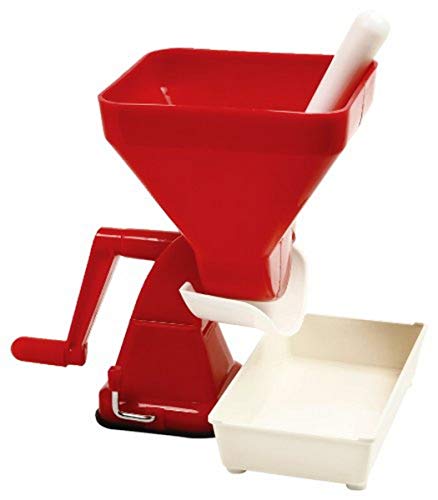
- 2.25-quart hopper for larger manual batches
- Suction base helps prevent slipping
- Mesh strainer separates seeds, skins, and stems
Best For: Sauce making, applesauce, and canning prep
Best Small-Batch Press
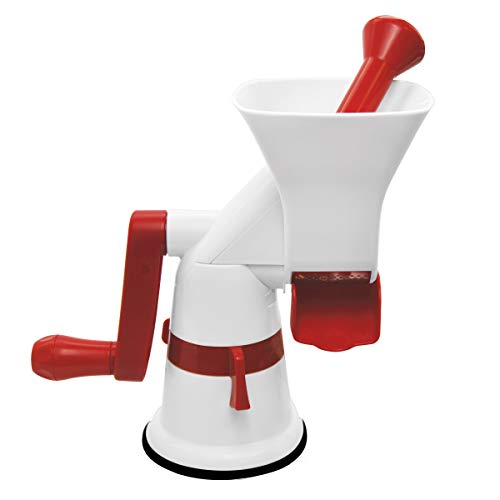
- Compact 3-cup capacity
- 2mm stainless steel screen
- Auger helps reduce jamming and leaking
Best For: Small batches of sauce, juice, and jam
Simple Sauce Milling
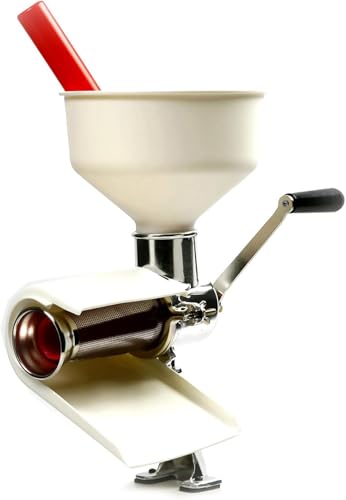
- Dedicated for tomato sauce and juicing
- Simple one-piece set
- Straightforward option for home cooks
Best For: Occasional homemade tomato sauce
Adjustable Manual Performance

- Aluminum alloy and ABS construction
- Separates peels from pulp
- Manual, adjustable, and dishwasher safe
Best For: Versatile non-electric sauce and juice making
Countertop Stability

- Filter helps block tomato skins
- Removable countertop clamp
- Handles sauces, purees, jams, and juices
Best For: Home canning and multi-purpose food processing
Large-Batch Pick

- Stainless steel filter for separating peels and seeds
- Oversized feed inlet for larger quantities
- Disassembles easily and is dishwasher safe
Best For: Batch sauce and juice preparation
Versatile Kitchen Mill
ABS Stainless Steel Tomato Press

- Handles sauces, soups, jams, juices, and fillings
- Tabletop clamp helps prevent wobbling
- Funnel opening supports steady feeding
Best For: Multi-purpose manual food processing
Simple Manual Option
Stainless Steel Filter Tomato Press
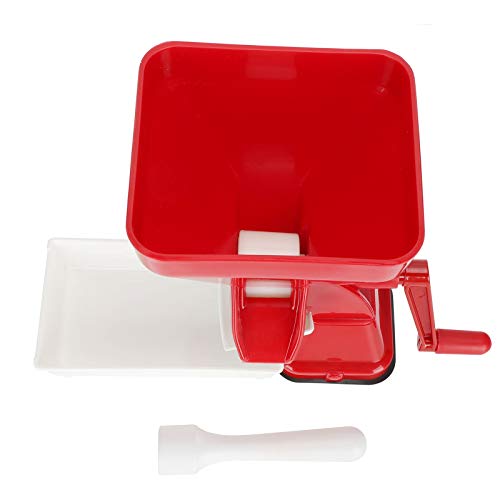
- Separates seeds and peels with a steel filter
- Large inlet accepts more produce at once
- Dishwasher safe and electricity free
Best For: Straightforward homemade tomato sauces
Best Electric Pick – Weston Deluxe Electric Tomato Strainer
If you want tomato presses under 100 that can handle larger batches with less manual effort, the Weston Deluxe is a practical electric option. Its 250-watt motor, one-gallon hopper, reverse function, and three screens suit sauces, purees, jellies, salsa, and canning projects.
Best For: Garden harvests, bulk produce, and shoppers who want electric processing with adjustable screen sizes.
Pros:
- 250-watt motor offers forward and reverse speeds to help process produce and reduce jamming.
- One-gallon hopper supports larger batches.
- Includes 1.5mm, 3mm, and 6mm stainless steel screens for different textures.
- Stomper helps feed produce safely into the hopper.
Cons:
- Requires access to a 120-volt AC power source.
- Its 14 x 12 x 17-inch size may require more storage space than a manual press.
The Weston stands out when speed and batch capacity matter most. The multiple screens add flexibility, while the reverse setting is useful during longer processing sessions.
Best Compact Italian Option – HOME Pachino Tomato Press
Among tomato presses under 100, the HOME Pachino is a compact manual choice for straightforward sauce and puree preparation. Its stainless steel handle and straining design separate tomato peels from pulp and seeds without relying on electricity.
Best For: Simple kitchen use and shoppers seeking a small manual tomato press made in Italy.
Pros:
- Separates peels from tomato pulp and seeds.
- Manual design needs no electrical outlet.
- Stainless steel handle is paired with a plastic-coated grip.
- Compact 5.91 x 5.91-inch dimensions suit limited storage space.
Cons:
- The supplied notes do not specify a hopper or batch capacity.
- Manual operation requires turning the handle for processing.
The Pachino is best suited to buyers who prioritize a compact footprint and basic manual straining. It is a less suitable fit if you need documented high-volume capacity or electric operation.
Best Manual Batch Pick – Norpro Jumbo Tomato Strainer
For shoppers comparing tomato presses under 100, the Norpro Jumbo offers a sturdy manual setup for processing tomatoes and cooked apples. Its stainless steel mesh strainer, suction base, large hopper, and receiving tray are designed to support sauce, puree, applesauce, and canning preparation.
Best For: Manual batch processing on smooth countertops, especially for tomato sauce, salsa, paste, or applesauce.
Pros:
- 2.25-quart hopper handles larger loads than many compact manual presses.
- Strong suction base helps keep the unit stable on smooth surfaces.
- Stainless steel mesh separates seeds, skins, and stems.
- Includes a receiving tray, food pestle, instructions, and starter recipes.
Cons:
- Manual cranking requires more effort than an electric model.
- Its listed dimensions are relatively substantial for storage.
- The suction base is intended for smooth countertops or tables.
The Norpro is a strong manual option when stability and batch capacity are priorities. Its included tray and accessories make it especially practical for organized canning preparation.
Best Small-Batch Press – Weston Fruit & Tomato Press
If you are comparing tomato presses under 100 for occasional use, the compact Weston Fruit & Tomato Press is designed for small batches. Its manual handle, 3-cup capacity, stainless steel screen, and anti-jamming auger suit sauces, juices, jams, and baby food.
Best For: Small households and cooks who need a compact manual press for modest quantities.
Pros:
- 3-cup capacity is suited to small batches.
- Stainless steel screen uses 2mm holes to separate seeds and skins from pulp.
- Innovative auger helps prevent jamming and leaking.
- Includes a stomper for feeding produce.
Cons:
- Limited capacity is less convenient for large harvests.
- Manual winding requires hands-on operation.
- The supplied notes identify one screen size rather than multiple texture options.
The Weston compact press makes sense when storage space and batch size matter more than speed. It offers useful anti-jamming features without the footprint or power requirements of an electric model.
Simple Sauce Milling – Tomato Sauce Mill
If you want one of the more straightforward tomato presses under 100, this food mill is designed for tomato sauce, juicing, and milling. Its single-piece format keeps the setup uncomplicated for home cooks processing tomatoes into sauce.
Best For: Home cooks who want a dedicated tomato sauce mill with a simple, compact setup.
Pros:
- Designed specifically for tomato sauce and tomato juicing.
- Simple one-piece set for uncomplicated use.
- Compact product format may be convenient for occasional kitchen tasks.
Cons:
- The supplied details do not list construction materials or included accessories.
- Its notes do not specify adjustment settings or dishwasher-safe care.
The Sauce Master is a focused option rather than a broadly specified food processor. Consider it when your main goal is making tomato sauce and you prefer a dedicated mill without extra components.
Adjustable Manual Performance – Tbest Manual Tomato Press
Among tomato presses under 100, the Tbest manual tomato press stands out for its aluminum alloy and ABS construction, hand-crank operation, and adjustable feature. It separates peels from pulp and can also process other fruits and vegetables without requiring electricity.
Best For: Cooks seeking a manually operated, versatile press for tomato sauce, juices, and vegetable processing.
Pros:
- Aluminum alloy and ABS construction is designed for regular kitchen use.
- Manual crank operation works without electricity.
- Separates tomato peels from pulp for smoother juices and sauces.
- Adjustable and dishwasher safe according to the supplied details.
Cons:
- Manual operation requires hands-on cranking.
- The supplied details do not list included components beyond the main item.
- Its approximately 11.02-by-10.24-by-5.12-inch footprint may need dedicated storage space.
This is a practical choice if versatility and non-electric operation matter. Its adjustable design and dishwasher-safe care add convenience, while the larger stated dimensions are worth checking against your available storage.
Countertop Stability – Hand Crank Tomato Juicer
For shoppers comparing tomato presses under 100, this hand-crank tomato juicer offers a filter for blocking skins and a removable countertop clamp to help limit wobbling. It is also designed for processing fruits and vegetables into sauces, purees, jams, juices, and pie fillings.
Best For: Home canners and cooks who want a clamped, hand-powered tool for sauces, purees, and juices.
Pros:
- Filter blocks tomato skins while allowing pulp to flow through.
- Removable clamp helps secure the unit to a countertop edge.
- Funnel supports a steady feed during repeated batches.
- Versatile for sauces, purees, jams, juices, and pie fillings.
Cons:
- Hand-crank operation requires manual effort.
- Countertop use depends on having a suitable edge for the clamp.
- The supplied details do not specify an adjustable setting.
The removable clamp makes this model particularly useful when stability is a priority, while the filter and broad food-processing range support more than tomato sauce alone. Its red ABS and stainless-steel construction is suited to regular kitchen projects.
Large-Batch Pick – Hidyliu Tomato Press
If you are comparing tomato presses under 100 for sauces, juices, or seasonal preserving, the Hidyliu model is designed for efficient manual processing. Its stainless steel filter separates peels and seeds, while the oversized feed inlet helps handle larger quantities.
Best For: Home cooks who want a large-capacity press for family meals or batch sauce preparation.
Pros:
- Stainless steel filter separates peels and seeds.
- Oversized feed inlet supports larger batches.
- Disassembles easily and is dishwasher safe.
- Includes the main body, base, handle, press hammer, tray, and accessories.
Cons:
- Manual operation requires hand effort.
- The supplied notes do not specify the included components beyond the listed package pieces.
With a durable PP shell, adjustable design, and large working capacity, this Hidyliu press is a practical option for cooks who value straightforward cleanup and higher-volume preparation.
Versatile Kitchen Mill – ABS Stainless Steel Tomato Press
Among tomato presses under 100, this manual food mill stands out for its broad kitchen use. The hand crank extracts juice and pulp, while the filter blocks tomato skins for sauces, soups, jams, juices, and pie fillings.
Best For: Cooks seeking one hand-crank tool for tomato sauces and a range of fruit and vegetable preparations.
Pros:
- Suitable for sauces, cream soups, jams, juices, and pie fillings.
- Tabletop clamp helps keep the press steady.
- Funnel-shaped opening supports continuous feeding.
- ABS and stainless steel construction.
Cons:
- Manual hand-crank operation is slower than an electric appliance.
- The clamp-on design requires a compatible countertop edge.
- Its listed dimensions may provide less capacity than larger presses.
This is a flexible choice for everyday kitchen prep, especially if you want a compact, clamp-on mill that can turn tomatoes and other produce into smooth mixtures without electricity.
Simple Manual Option – Stainless Steel Filter Tomato Press
For shoppers comparing tomato presses under 100, this manual model focuses on simple operation and low-energy food preparation. Its stainless steel filter separates seeds and peels, and the large-capacity inlet is designed to accept more produce at once.
Best For: Home cooks who want an easy-to-use, electricity-free press for tomato sauces and juices.
Pros:
- Stainless steel filter supports durable straining.
- Large feed inlet accommodates more fruits or vegetables.
- PP and stainless steel construction is designed for regular use.
- Dishwasher safe and supplied with a handle, tray, base, and accessories.
Cons:
- Manual pressing requires physical effort.
- The supplied notes do not provide a specific capacity measurement.
The straightforward, electricity-free design makes this press a sensible fit for cooks who want a basic tomato strainer with a high-yield focus and uncomplicated cleanup.
How We Picked the Best Tomato Presses Under 100
We focused on the features that matter most when processing fresh tomatoes: separation performance, construction, capacity, ease of operation, cleanup, and overall value. The selection includes electric and hand-crank designs so shoppers can compare speed and convenience with control and portability.
We also considered useful details such as stainless-steel screens, stable bases or clamps, comfortable handles, interchangeable parts, and whether a press is better suited to occasional batches or larger harvests. Because product specifications can vary by seller, confirm dimensions, included screens, and care instructions before ordering.
Quick Comparison
| Type | Best For | Main Advantage | Potential Trade-Off |
|---|---|---|---|
| Electric strainer | Frequent or large batches | Faster processing with less hand effort | Requires counter space and power |
| Manual crank press | Small to medium batches | Control, portability, and simple operation | Requires more physical effort |
| Food mill | Sauces, purées, and occasional use | Compact and versatile | Usually processes smaller amounts at a time |
| Large-capacity press | Garden harvests and canning preparation | Fewer reloads during batch work | Can be bulkier to store and clean |
Key Buying Factors for Tomato Presses Under 100
Manual or Electric Operation
Manual presses are typically affordable, quiet, and easy to store. They work well for occasional sauce making and give you direct control over the feed rate. Electric models are more convenient when processing several pounds of tomatoes, but they need an outlet and may have more parts to wash.
Screen and Construction
A stainless-steel screen is a useful choice for durability and repeated contact with acidic foods. Aluminum and plastic components can also perform well, but check whether the material is corrosion-resistant and whether replacement screens or parts are available. A sturdy frame matters because cranking creates torque.
Capacity and Yield
Capacity affects how often you must reload the hopper or bowl. Larger models can save time during harvest season, while compact mills are easier to store and better for small kitchens. Remember that advertised capacity does not always equal continuous processing capacity.
Cleaning and Setup
Look for removable screens and food-contact parts that rinse easily. A clamp or nonslip base can make setup safer, especially with firm or underripe produce. If you plan to can sauce, choose a design that is simple enough to clean thoroughly between batches.
Who Should Buy Which Tomato Presses Under 100?
Choose an electric strainer if you regularly process garden tomatoes, want to reduce hand fatigue, or prepare large quantities for freezing or canning.
Choose a manual crank model if you value portability, low operating cost, and straightforward operation. These are practical for home cooks making occasional batches.
Choose a compact food mill if storage space is limited or you want one tool for tomatoes, soft fruits, soups, and vegetable purées. It is often the most flexible option for smaller households.
Choose a larger-capacity press if minimizing reloads is more important than compact storage. Before buying, verify that your counter or table can support the clamp or base securely.