Freshly milled wheat can bring more flavor and control to homemade bread, pasta, and pastries. The right grain mill makes that process easier while matching your preferred batch size, texture, and workload.
These 10 options include powerful electric mills, hand-operated designs, stand-mixer attachments, and compact grinders. Use the guide below to compare their strengths and choose a practical fit for your kitchen.
Best 10 Grain Mill for Wheat Picks for 2026
Best Electric Stone Mill

- 450-watt motor with thermal protection
- Corundum milling stones
- Adjustable texture control
Best For: Home bakers milling wheat and other grains
Best Manual Mill

- Heavy-duty cast-iron body
- Adjustable grind setting
- Clamps to tables 1/2–2 inches thick
Best For: Coarse grinding and manual food preparation
Best Heavy-Duty Grinder

- 3000-watt motor
- Dry and wet grinding capability
- Adjustable thickness and dual discs
Best For: High-output wheat, grain, and wet grinding
Best Stand Mixer Attachment

- Fits household KitchenAid mixers
- 12 coarse-to-fine grind levels
- Includes cleaning brush
Best For: KitchenAid owners milling low-moisture grains
Best High-Capacity Electric Pick
NutriMill Impact Compact Grain Mill

- 1200-watt motor for hard wheat
- Fine bread flour from impact milling heads
- Large hopper and flour canister
Best For: Frequent home bread bakers needing larger electric batches
Best Manual Heavy-Duty Option

- Operates without electricity
- Adjustable coarse-to-fine grinding
- Large hopper and stainless steel discs
Best For: Off-grid, camping, and hands-on home grinding
Best Compact Adjustable Burr Mill
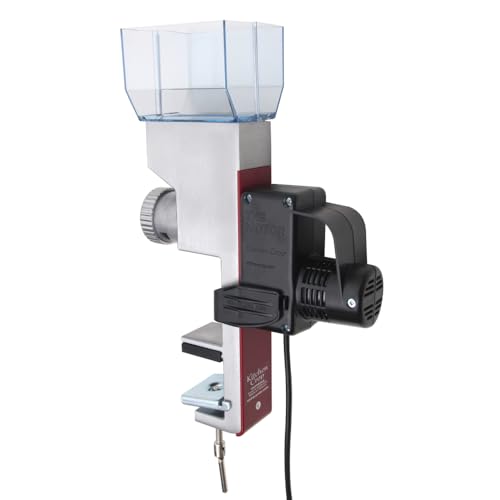
- Stainless steel burrs for multiple dry grains
- Adjustable coarse-to-fine grinding
- Compact design with 5-year warranty
Best For: Small-batch home milling with adjustable texture
Best Manual Pick

- Manual, electricity-free operation
- Three adjustable grinding settings
- Large 0.53-gallon hopper
Best For: Manual wheat grinding and versatile home food preparation
Best Heavy-Duty Pick
750g Stainless Steel Grain Grinder
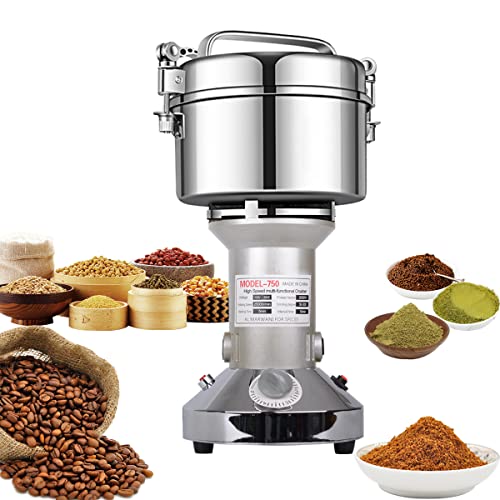
- 2,000-watt, 25,000-RPM motor
- 750-gram grinding capacity
- Designed for dry ingredients
Best For: Fast, larger-batch grinding of dry wheat and other foods
Best Compact Option
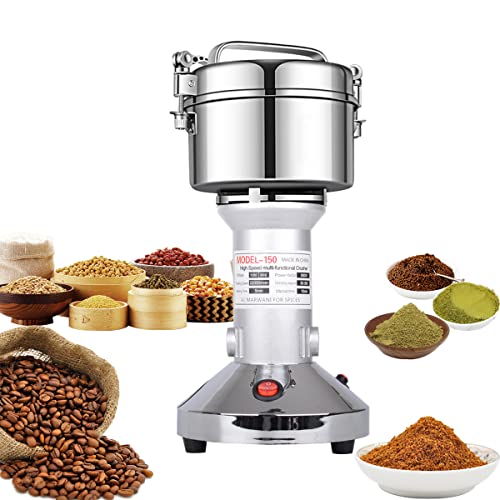
- Compact 150-gram capacity
- 900-watt, 22,000-RPM motor
- Overload protection and non-slip base
Best For: Small-batch dry wheat grinding in compact kitchens
Best Electric Stone Mill – NutriMill Harvest
If you want a dedicated grain mill for wheat, the NutriMill Harvest combines a 450-watt motor with near-diamond-hard corundum milling stones. Its texture control knob lets you adjust the grind, while thermal protection and auto-shutoff support regular kitchen use.
Best For: Home bakers who want an electric stone mill for wheat and other grains.
Pros:
- 450-watt heavy-duty motor
- Corundum Grainmaster milling stones
- Adjustable texture control
- Thermal protection with auto-shutoff
Cons:
- Heavier than a compact attachment, at 18.7 pounds
- Designed for kitchen use rather than wet grinding
The Harvest is a strong all-purpose choice when consistent electric milling and adjustable texture matter more than portability.
Best Manual Mill – Victoria Cast Iron Grain Mill
The Victoria is a manual grain mill for wheat and other grains, built around a cast-iron body, hand crank, and adjustable grinding screw. It clamps to tables from 1/2 to 2 inches thick and includes a high hopper for loading grain.
Best For: Shoppers seeking a manually operated mill for coarse grinding, corn, brewing, and general food preparation.
Pros:
- Durable cast-iron construction
- Adjustable coarseness and fineness
- High 2400-gram hopper capacity
- Clamp and non-slip protector included
Cons:
- Cannot grind whole wheat into a fine powder
- Does not produce a superfine texture
- Manual operation requires physical effort
This mill is versatile and straightforward for coarse work, but buyers specifically seeking fine wheat flour should choose an electric stone or dedicated flour mill instead.
Best Heavy-Duty Grinder – VEVOR 3000W Grain Mill
For high-output milling, this VEVOR grain mill for wheat uses a 3000-watt motor, a solid iron body, and adjustable thickness control. It supports both dry and wet grinding, making it suitable for wheat, grains, soaked soybeans, rice, and feed applications.
Best For: Users who need an industrial-style grinder for larger-volume dry or wet milling.
Pros:
- Powerful 3000-watt motor
- Supports dry and wet grinding
- Adjustable thickness control
- Includes cast-iron and sand milling discs
Cons:
- Large industrial design at 27.56 inches tall
- May be more machine than a typical home kitchen needs
- Intended for milling rather than compact countertop storage
The VEVOR stands out for power and versatility, especially when wet grinding or continuous high-capacity operation is part of the plan.
Best Stand Mixer Attachment – KitchenAid KGM Grain Mill
If you already own a KitchenAid stand mixer, the KGM attachment offers a space-saving way to use it as a grain mill for wheat, corn, rice, and other low-moisture, low-oil grains. Its 12 grind levels cover settings from coarse to fine.
Best For: KitchenAid owners who want occasional grain milling without buying a separate motorized mill.
Pros:
- Fits household KitchenAid stand mixers
- 12 grind levels from coarse to fine
- Handles wheat, corn, rice, and other suitable grains
- Includes a cleaning brush
Cons:
- Requires a compatible KitchenAid stand mixer
- Limited to low-moisture, low-oil grains
- Does not function as a standalone mill
The KGM is a practical, compact choice for KitchenAid households, provided the grains you plan to mill fit its low-moisture and low-oil requirements.
Best High-Capacity Electric Pick – NutriMill Impact Compact Grain Mill
If you want a grain mill for wheat that can handle regular bread-making, the NutriMill Impact Compact combines a 1200-watt motor with impact milling heads designed for fine bread flour. Its large hopper and canister make it suited to bigger batches while the nesting design helps simplify storage.
Best For: Frequent home bread bakers who want an electric mill for larger wheat-flour batches.
Pros:
- 1200-watt motor is designed to mill hard grains such as wheat.
- Impact milling heads produce fine-textured bread flour.
- 8-cup hopper and 12-cup flour canister support larger batches.
- Nesting parts and cyclone air filtration support convenient storage and airflow.
Cons:
- Requires access to electricity.
- Its larger batch capacity may be more than occasional users need.
The NutriMill is a practical choice when speed, capacity, and bread-flour texture matter more than manual operation. Its compact nesting design helps offset the footprint of a higher-capacity electric setup.
Best Manual Heavy-Duty Option – Hand Crank Wheat Grain Mill
For shoppers seeking a grain mill for wheat without electricity, this manual hand-crank model offers adjustable grinding and stainless steel discs for dry grains. Its large hopper and flywheel are suited to hands-on grinding at home, while the design also works for camping or emergency use.
Best For: Users who want a manual wheat mill for home, camping, survival, or everyday grinding.
Pros:
- Manual operation works without electricity.
- Adjustable grind supports coarse meal through finer flour and spice grinding.
- Stainless steel grinding discs and a large hopper are built for dry materials.
- Can grind wheat, corn, oats, rice, coffee beans, spices, and other dry ingredients.
Cons:
- Manual cranking requires physical effort.
- It is relatively large and heavy at 28.6 pounds.
- Not suitable for wet, fresh, oily, or sticky materials.
This mill stands out for off-grid flexibility and broad dry-ingredient capability. Choose it when electricity-free operation and adjustable results are more important than compact weight or automated speed.
Best Compact Adjustable Burr Mill – Kitchen Crop Grain Mill
The Kitchen Crop is a compact grain mill for wheat with stainless steel burrs, motorized operation, and a dial for adjusting the grind. It can process wheat and other dry, non-oily grains from coarse cracked grain to fine bread-quality flour, making it a flexible option for smaller batches.
Best For: Home cooks who want a compact electric mill with adjustable texture and multi-grain capability.
Pros:
- Stainless steel burrs grind wheat, rice, oats, barley, rye, and other dry grains.
- Dial adjustment allows coarse cracked grains through fine bread-quality flour.
- Compact body stores in a drawer or cupboard.
- Includes a mounting clamp and is backed by a 5-year warranty.
Cons:
- Its 2-cup capacity is smaller than the high-capacity electric option.
- Designed for dry, non-oily grains, limiting some ingredients.
- Requires secure countertop or table mounting during use.
With its small storage footprint and adjustable burr grinding, the Kitchen Crop is well suited to routine home use where counter space is limited. Its 2-cup capacity favors modest batches rather than high-volume baking.
Best Manual Pick – VEVOR Flywheel Grain Mill
If you want a grain mill for wheat without relying on electricity, this VEVOR manual model offers adjustable grinding and a large hopper. Its hand-crank design is suited to home baking, food preparation, and occasional milling.
Best For: Manual wheat grinding, home baking, and users who want a versatile mill for grains, spices, coffee beans, and nuts.
Pros:
- Operates without electricity and is designed to reduce heat buildup during grinding.
- Three settings provide coarse, medium, and fine textures; repeated grinding can produce a finer result.
- Stable base, powder-coated carbon steel construction, and a 0.53-gallon hopper support steady use.
Cons:
- Hand-cranking requires more effort than an electric mill.
- At 32.2 pounds, it is relatively heavy and less convenient to move.
- The flywheel can support belt or motor drive, but a motor is not included.
This is a practical choice when control, electricity-free operation, and batch capacity matter more than speed. The adjustable settings add flexibility, while the heavy construction favors a more permanent countertop setup.
Best Heavy-Duty Pick – 750g Stainless Steel Grain Grinder
For shoppers seeking a fast electric grain mill for wheat, this stainless steel grinder combines a 2,000-watt motor with a 750-gram capacity. It is designed for dry grains and other ingredients when you need fine powder in short grinding cycles.
Best For: Larger household batches of dry wheat, grains, spices, herbs, coffee, and similar ingredients.
Pros:
- High-speed 2,000-watt motor spins at 25,000 RPM and can produce 50- to 300-mesh fineness.
- 750-gram capacity is substantially larger than the compact model in this roundup.
- Food-grade stainless steel body and overload shutoff add durability and protection during use.
Cons:
- Only dry ingredients should be processed; wet, moist, or oily materials are unsuitable.
- Grinding cycles should be limited to three minutes, followed by a five- to ten-minute rest.
- The grinding container should be cleaned with a cloth rather than rinsed directly with water.
This model prioritizes speed and capacity, making it a strong fit for repeated dry-ingredient jobs. Its timed-use requirements and manual cleaning routine are important trade-offs for anyone comparing it with a slower manual mill.
Best Compact Option – 150g Electric Wheat Grinder
This compact electric grain mill for wheat is intended for smaller portions, with a 150-gram capacity and 900-watt motor. Its stainless steel design and compact footprint make it useful when you want quick batches of dry grains, spices, or herbs without a larger machine.
Best For: Small household portions, compact kitchens, and occasional grinding of dry wheat, grains, spices, seeds, and herbs.
Pros:
- Compact 150-gram capacity suits small grinding jobs and takes up less space.
- 900-watt motor reaches 22,000 RPM and is rated for 50- to 300-mesh fineness.
- Stainless steel construction, overload shutoff, snap-on cover, and non-slip base support convenient operation.
Cons:
- Its 150-gram capacity is limiting for larger wheat batches.
- Use is restricted to dry ingredients, with the container filled no more than two-thirds.
- Three-minute grinding cycles require a five- to ten-minute rest, and the tank must not be rinsed directly.
This grinder is best viewed as a small-batch appliance rather than a high-volume flour mill. It offers quick, fine processing in a compact package, but frequent wheat milling may require multiple cycles.
How We Picked the Best Grain Mill for Wheat
We focused on the features that matter most when milling wheat at home: grinding power, adjustability, construction, capacity, cleanup, and ease of use. The selection includes stone-burr and impact-style electric mills, manual cast-iron grinders, stand-mixer attachments, and compact stainless-steel machines.
Because “best” depends on how you bake and shop, we considered different use cases rather than ranking every model by wattage alone. A high-powered machine may suit frequent large batches, while a manual mill can be more useful during power outages or for occasional small quantities.
Quick Comparison
| Type | Best For | Main Advantage | Potential Trade-Off |
|---|---|---|---|
| Electric stone mill | Regular home baking | Consistent flour and traditional milling | Heavier and typically more expensive |
| Impact electric mill | Fast everyday batches | Speed and convenient operation | Can be louder and produce warmer flour |
| Manual mill | Off-grid use or occasional milling | No electricity required | Requires physical effort |
| Stand-mixer attachment | Existing KitchenAid owners | Uses equipment already on the counter | Depends on mixer compatibility and power |
| Compact grinder | Small portions and multipurpose use | Small footprint and often lower cost | Limited capacity and batch size |
Key Buying Factors for a Grain Mill for Wheat
Grinding Mechanism and Flour Texture
Stone mills are appealing for traditional whole-grain milling and adjustable textures. Impact mills use fast-moving components to pulverize grains quickly, often producing fine flour efficiently. Burr-based designs can offer useful control, but results vary by model and adjustment system.
Capacity and Batch Size
Check both the hopper size and the recommended continuous run time. If you regularly bake several loaves, choose a full-size electric mill or a sturdy manual model with a larger hopper. Small grinders are better for modest batches and occasional use.
Power, Speed, and Heat
Higher wattage does not automatically mean better flour, but it can help with demanding workloads. Fast mills save time, while slower operation may help limit heat during extended grinding. Follow the manufacturer’s duty-cycle instructions to avoid overheating.
Adjustability and Grain Compatibility
Look for clear fineness controls if you make both coarse meal and fine flour. Confirm that the mill supports hard wheat berries as well as other grains you plan to use. Some multipurpose grinders also handle spices, seeds, rice, or coffee, but those uses may require separate cleaning.
Cleanup, Storage, and Noise
Removable parts, accessible milling chambers, and simple controls make frequent use more practical. Electric mills can be noisy, and larger models need permanent counter or cabinet space. Manual mills avoid motor noise but require a stable mounting surface and more effort.
Who Should Buy Which Grain Mill for Wheat?
- Choose an electric stone mill if you bake with whole wheat regularly and want a dedicated appliance with a traditional milling approach.
- Choose an impact mill if speed, fine flour, and convenient push-button operation matter most.
- Choose a manual grain mill if reliability without electricity, long-term durability, or emergency preparedness is your priority.
- Choose the KitchenAid attachment if you already own a compatible stand mixer and want to reduce the number of separate appliances.
- Choose a compact stainless-steel grinder if you mill small quantities and also want to process dry spices, seeds, or other ingredients.
Before buying, compare the mill’s stated capacity with your normal recipe size, verify compatibility with your preferred wheat berries, and leave enough space for safe operation and cleaning. The best Grain Mill for Wheat is the one that fits your batch habits closely enough to become a tool you will use often.